
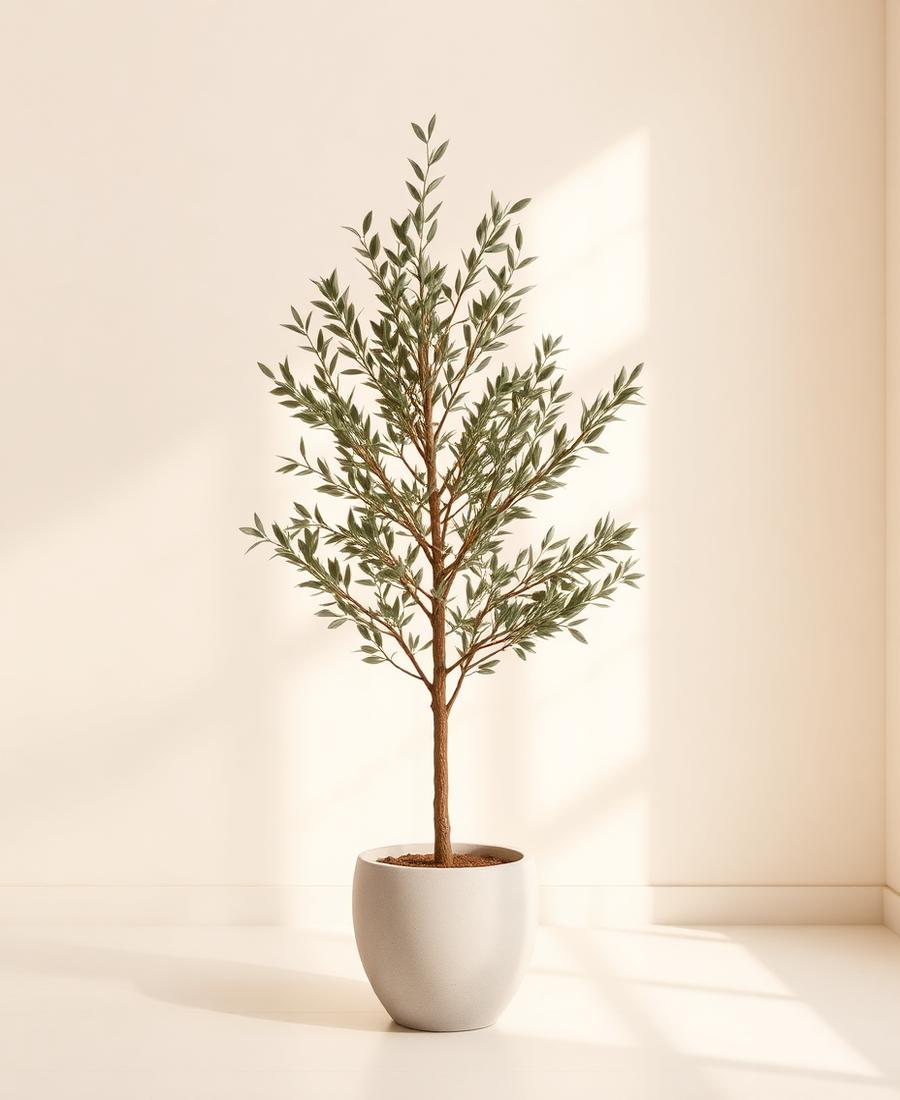

Artificial Olive Tree — 5.25 to 7 ft, Natural Wood Trunk
5.25 ft – 7 ft
From $249 CAD — request a quote
Questions before you order? Email support@eververda.com
High end faux plants earn the description at three feet, not thirty. The tells are leaf variation, a trunk with real texture and a silhouette that has been shaped rather than stamped.
Showing 24 of 125 products
5.25 ft – 7 ft
From $249 CAD — request a quote


5 ft – 7 ft (60–84 in)
From $319 CAD — request a quote

52 in (about 132 cm)
From $739 CAD — request a quote

130 cm – 150 cm (4.3 ft – 5 ft)
From $139 CAD — request a quote

6.5 ft
From $999 CAD — request a quote

From $459 CAD — request a quote

24 in
From $349 CAD — request a quote

35 in (about 89 cm)
From $419 CAD — request a quote

5.2 ft
From $419 CAD — request a quote


5 ft (1524 mm)
From $439 CAD — request a quote

4 ft
From $419 CAD — request a quote

60 in
From $289 CAD — request a quote


5 ft
From $319 CAD — request a quote

6 ft
From $409 CAD — request a quote

6 ft, single size
From $529 CAD — request a quote


5 ft – 7 ft (152–213 cm)
From $509 CAD — request a quote

43.3 in
From $579 CAD — request a quote

120 cm – 210 cm (4–7 ft)
From $339 CAD — request a quote

4–7 ft
From $229 CAD — request a quote
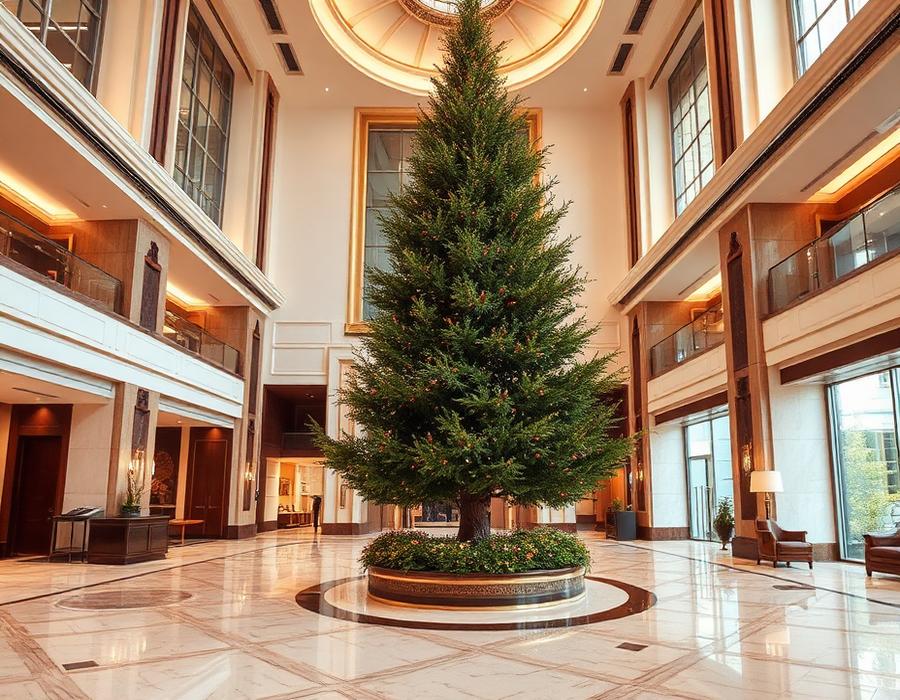
High end faux plants earn the description at three feet, not thirty. The tells are leaf variation, a trunk with real texture and a silhouette that has been shaped rather than stamped. This page collects the range built to that standard, from four-foot floor plants sized for a Canadian living room up to fifteen-foot specimens for a stairwell or an atrium.
Leaf variation first. A convincing faux olive carries several hundred leaves across two or three greens, with paler undersides that catch the light as you walk past it. A cheaper tree carries fewer leaves in one flat green, all facing the same direction. The second tell is the trunk. Real wood and moulded fiberglass hold up under raking light in a way that moulded plastic does not, and where a listing names one of those materials, that is the detail you are paying for. The materials are written plainly on every product page rather than described as premium and left at that.
Not the way they once were. The objection was always to the object rather than the idea - flat leaves, a visible seam, a mould line running down the trunk. Better moulding and real-touch coatings have removed most of that. What still looks cheap is scale and pot: a tree too small for the wall behind it, or a good tree left standing in its shipping pot. Both are fixable, and both are covered in Are Artificial Plants Tacky.
Usually not, and it is better to say so. Most trees here arrive in a plain black nursery pot, which is what the trade expects, because it is meant to be dropped straight into a planter you choose. Budget for that planter as part of the piece. Where a pot or planter is included it is named in the product title or in the variant options, and those pieces are gathered in Potted Artificial Trees with Planters. For the species that suit a room rather than a lobby, start with artificial olive trees or faux trees for the living room.
Not special, just gentle. Real-touch leaves have a soft coating that gives them their texture, and that coating is best cared for with a dry or barely damp cloth rather than a spray cleaner, which can leave streaking or dull the matte finish over time. Dust with a soft cloth or feather duster, working leaf by leaf on a piece with only a few hundred leaves, or a low-heat hairdryer for a denser canopy. Avoid glass cleaners entirely.
Not inherently, but a piece with several shades of green from paler undersides to darker top leaves can show uneven fading more visibly than a flat single-colour leaf would, simply because there is more colour variation to begin with. A bright room without hours of direct afternoon sun is fine for most of this range. If the intended spot gets strong all-day sun, rotating the piece occasionally keeps the shading even rather than letting one side fade first.
More attention than a lower-detail tree, since the branch structure is denser and the trunk is often real wood or fiberglass rather than moulded plastic. Separate and shape branches gradually from the trunk outward rather than forcing them into position all at once, which protects both the join points and the finish on a textured trunk. This takes longer than a simple piece but no tools are needed. See our unboxing and shaping guide.
Yes, the height stated is the finished, potted height as the tree will stand, measured to the top of the foliage, unless a listing states trunk-only. Because leaf count and branch density vary between pieces at this level of detail, two trees of the same nominal height can differ slightly in visual mass even when the measurement is identical. Treat the listed height as accurate to within an inch or two of natural variation.
A real specimen with comparable leaf density and trunk character, such as a mature olive or fiddle leaf fig, needs bright direct light most Canadian rooms do not have, plus consistent watering and periodic repotting as it grows, and it can still decline for reasons that are hard to diagnose. A high-end faux version holds that same leaf variation and trunk texture indefinitely, in any light the room actually offers, without a watering schedule or the risk of losing an expensive, hard-to-replace specimen.