
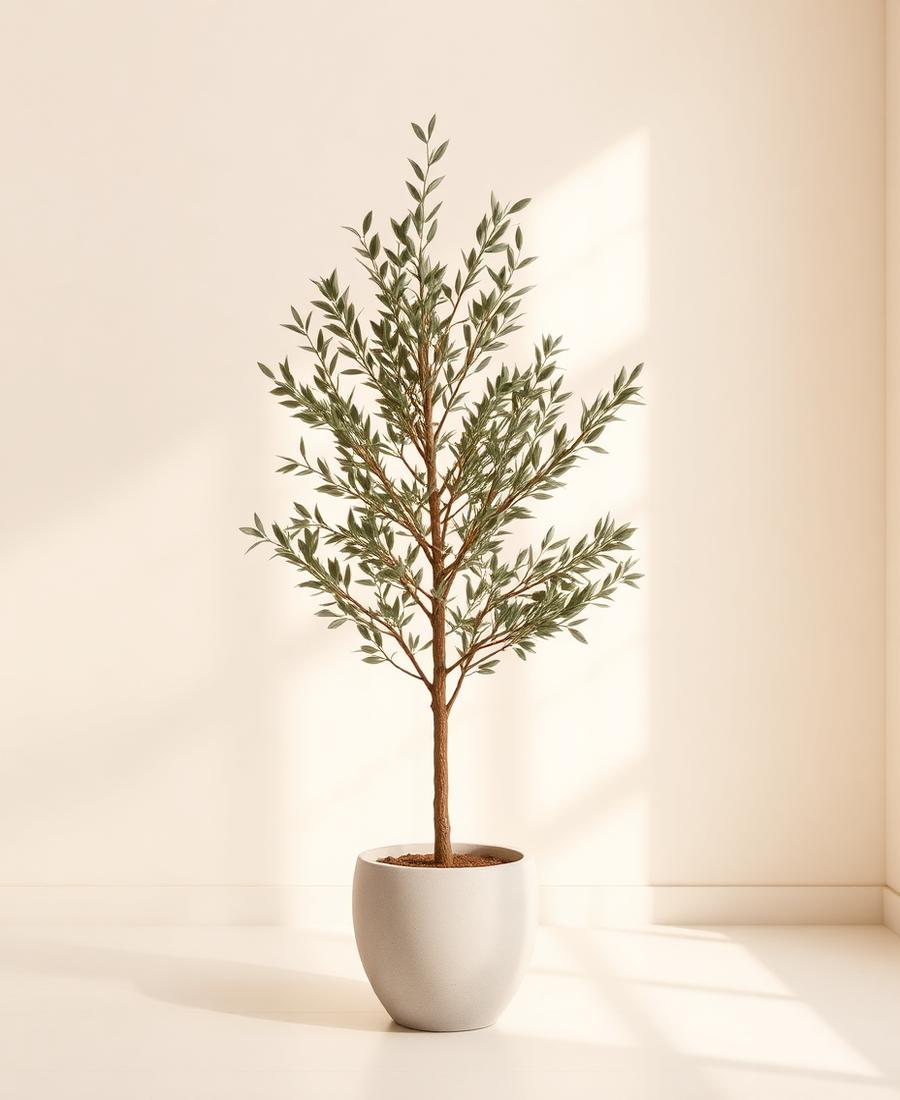
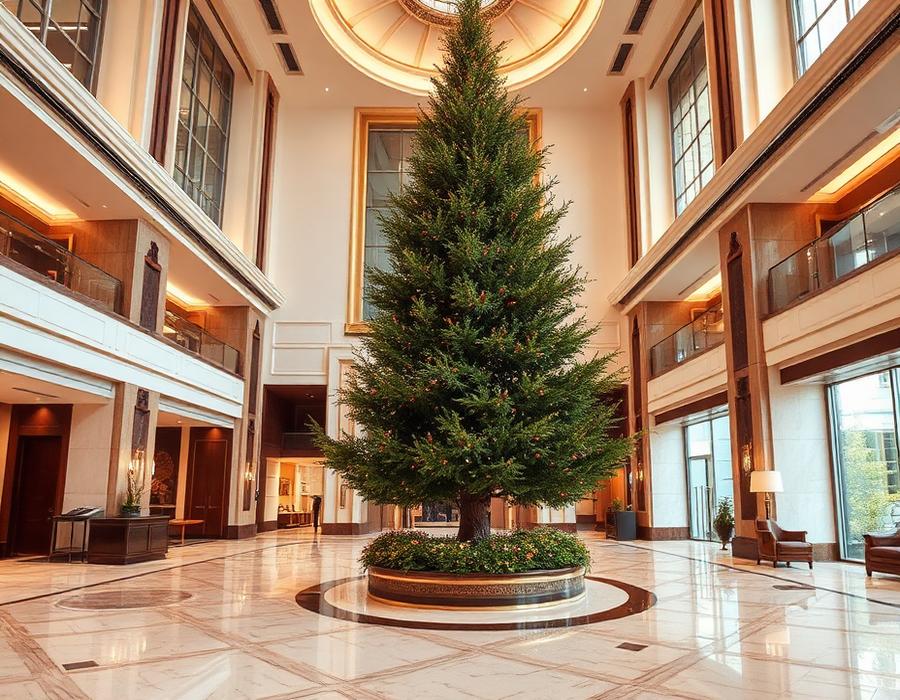

Artificial Olive Tree — 5.25 to 7 ft, Natural Wood Trunk
5.25 ft – 7 ft
From $249 CAD — request a quote
Questions before you order? Email support@eververda.com
Mediterranean-style artificial plants are the olive, cypress and citrus palette: silver-green foliage, slim trunks and terracotta. It reads instantly as coastal southern Europe, and it is the most requested look in this catalogue - used in courtyards, restaurant terraces, sunlit kitchens and pool surrounds where greenery should feel warm and dry rather than lush.
Showing 24 of 25 products
5.25 ft – 7 ft
From $249 CAD — request a quote

60 cm - 180 cm
From $169 CAD — request a quote

120 cm – 180 cm (3.9 ft – 5.9 ft)
From $289 CAD — request a quote

150 cm (59 in)
From $119 CAD — request a quote

3 ft – 5 ft
From $129 CAD — request a quote

7 ft (213 cm)
From $689 CAD — request a quote

7 ft
From $569 CAD — request a quote


6 ft (183 cm)
From $459 CAD — request a quote

180 cm (~5.9 ft)
From $379 CAD — request a quote

5 ft (152 cm)
From $239 CAD — request a quote

7 ft (213 cm) — single size
From $489 CAD — request a quote

5 ft (152 cm) — single size
From $349 CAD — request a quote

5 ft (152 cm) — single size
From $339 CAD — request a quote

5 ft (152 cm) — single size
From $309 CAD — request a quote

5 ft – 7 ft
From $219 CAD — request a quote

5 ft – 8 ft
From $389 CAD — request a quote

1.5 m – 2.1 m (approx. 4.9–6.9 ft)
From $259 CAD — request a quote

5.25 ft – 8 ft
From $229 CAD — request a quote

17.3 in - 23.2 in diameter
From $249 CAD — request a quote

36 in - 60 in
From $329 CAD — request a quote

4 ft – 6 ft
From $199 CAD — request a quote

5.25 ft – 8 ft (160–244 cm)
From $249 CAD — request a quote

Mediterranean-style artificial plants are the olive, cypress and citrus palette: silver-green foliage, slim trunks and terracotta. It reads instantly as coastal southern Europe, and it is the most requested look in this catalogue - used in courtyards, restaurant terraces, sunlit kitchens and pool surrounds where greenery should feel warm and dry rather than lush.
Yes, and they have outlasted most people's predictions. The faux olive became ubiquitous around 2020 and there has been a steady expectation since that it would date, but it has not, for a structural reason: the olive is not a trend shape. Its silhouette is open and irregular, its colour is a muted grey-green that sits happily with almost any palette, and it does not belong to one decade of interior design the way the fiddle leaf fig briefly did. What has changed is scale. The 6 foot olive in a woven basket is now everywhere; the pieces that still look considered are either much larger, in a proper planter, or set out in matched pairs. Browse Artificial Olive Trees.
For most Canadian buyers, yes, and the arithmetic is straightforward. A real olive will not survive a Canadian winter outdoors and struggles indoors without strong direct light, so the honest comparison is not faux tree against real tree. It is a faux tree against replacing a declining live specimen every year or two, or against leaving the corner empty. The variable that decides satisfaction is trunk quality. Foliage is cheap to make well; a convincing trunk is not, and the trunk is the part you actually look at. Buy the best trunk you can afford and accept a smaller size rather than the reverse.
Olive and citrus are read from across a room, so scale up. In a courtyard or on a terrace, a pair of matched trees either side of a door or a seating group does more than one larger specimen on its own. Cypress is the exception - it is a vertical accent, and it should be tall and narrow, sized to frame an opening or mark a corner rather than to fill floor space. See Artificial Cypress Trees and Pools and Patios.
A soft feather duster or a vacuum brush attachment along the branch handles most of it, since the fine silver-green leaves typical of this style hold dust visibly. A cool hair dryer setting works into denser foliage such as boxwood or cedar topiary. Avoid a soaked cloth on real-touch leaves, since standing moisture in the leaf coating can leave a dull patch.
Yes, a substantial share of the pieces here are rated for a covered outdoor spot such as a courtyard or a terrace, and a smaller number for full outdoor exposure, which suits the style, since Mediterranean planting is meant to feel like it belongs on a sunny patio. The rating is stated on each product page, so check it before moving an indoor-rated piece outside.
The trunk arrives sectioned with the branches folded flat, and topiary forms such as cedar balls or spirals usually ship closer to their finished shape. Setup means standing the trunk, then working out along each branch to open the foliage and separate the leaves by hand. Topiary shapes need little more than a light fluff to settle back into form after transit.
Yes, treat the stated height as the full assembled piece, tree plus pot, unless the product page says the figure is foliage only. Since Mediterranean pieces are often bought in matched pairs either side of a doorway, that combined number is what tells you whether both will clear the frame.
Moulded fruit accents are generally more fade-resistant than leaf colour, since they carry less surface area exposed to light and are usually a denser material, but any coloured piece kept in strong, unshaded sun will lose some saturation over years rather than stay fixed indefinitely. Dust fruit the same way as the foliage, and rotate the piece occasionally if it sits in a bright window.