
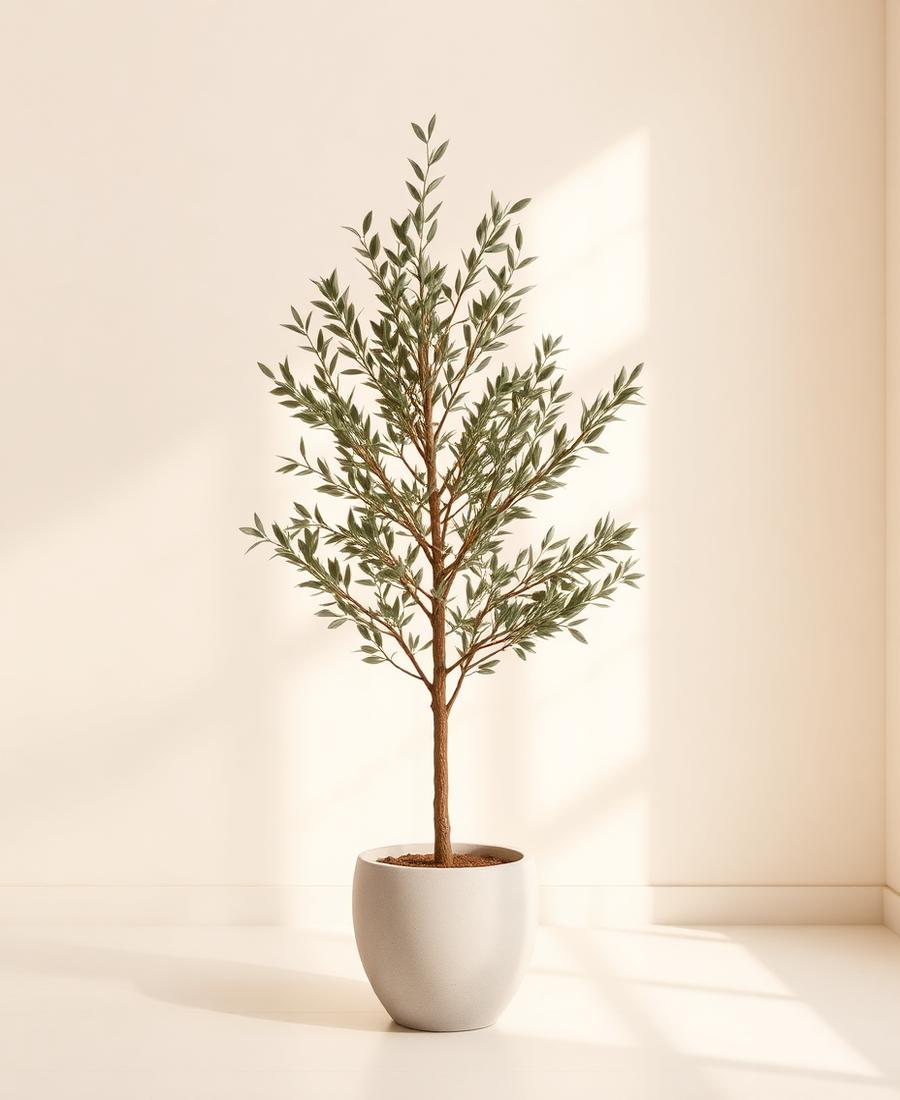

Potted Artificial Trees with Planters
Most faux trees ship in a plain black plastic nursery pot. This page is the exception.
Showing 24 of 73 products

Artificial Magnolia Tree — 5 to 7 ft, S-Curve Trunk, White Planter
5 ft – 7 ft (60–84 in)
From $319 CAD — request a quote

Artificial Cherry Blossom Trees — 6.5 ft, Set of 2 in Cement Pots
6.5 ft
From $999 CAD — request a quote

Artificial Monstera Plant — 24 in, Real-Touch, White Tabletop Pot
24 in
From $349 CAD — request a quote


Artificial Areca Palm Tree — 5 ft, 12-Stem, White Tall Planter
5 ft (1524 mm)
From $439 CAD — request a quote

Artificial Areca Palm Tree — 5 ft, Square or Round White Planter
60 in
From $289 CAD — request a quote


Artificial Palm Tree, 6 ft, Coconut-Coir Base, Black Pot in Hand-Woven Basket
6 ft
From $409 CAD — request a quote

Artificial Fiddle Leaf Fig Tree — 6 ft, White Pot with Moss-Topped Soil
6 ft, single size
From $529 CAD — request a quote


Artificial Fiddle Leaf Fig Tree — 5 to 7 ft, White Pot
5 ft – 7 ft (152–213 cm)
From $509 CAD — request a quote

Artificial Fiddle Leaf Fig Tree — 3.6 ft, 28 Leaves, Flocked Soil Pot
43.3 in
From $579 CAD — request a quote

Artificial Fiddle Leaf Fig Tree — 4 to 7 ft, Weighted Planter, 5-Minute Assembly
120 cm – 210 cm (4–7 ft)
From $339 CAD — request a quote

Artificial Fiddle Leaf Fig Tree — 4 to 6 ft, S-Shaped Trunk, Black Pot
4–7 ft
From $229 CAD — request a quote

Artificial Fiddle Leaf Fig Tree — 5 to 7 ft, White Planter with Real Wood Trunk
5 ft – 7 ft (152–213 cm)
From $339 CAD — request a quote

Artificial Norfolk Pine Trees — 4 ft, Set of 2, Black or White Planter
4 ft, each tree
From $304.99 CAD — request a quote

Artificial Norfolk Pine Tree — 5 ft, Real-Touch Foliage, Potted
5 ft (152 cm)
From $389 CAD — request a quote

Artificial Pine Tree — 5 ft, Real-Touch Foliage, Set of 2 in Black Pot
5 ft (152 cm), each tree
From $619 CAD — request a quote

Artificial Garcinia Tree — 31 in, 120 Real-Touch Leaves in a White Cement Pot
31 in (about 79 cm)
From $469 CAD — request a quote

Artificial ZZ Plant — 29 in, 72 Real-Touch Leaves in a Black Pot
29 in (about 74 cm)
From $459 CAD — request a quote

Artificial Banana Tree — 5 ft, Detachable Trunk with Black Pot
152–180 cm
From $489 CAD — request a quote

Artificial Banana Tree — 4.8 ft, Tall White Planter
147 cm (about 4.8 ft)
From $329 CAD — request a quote
Most faux trees ship in a plain black plastic nursery pot. This page is the exception. It collects the pieces that arrive with a pot, a planter or a moulded basin included, named either in the product title or in the size options. If you want the tree to look finished the day it comes out of the crate, start here.
Does it come with a planter?
On this page, yes, and the product page says which kind. Everywhere else on the site, usually not. The nursery pot is the trade standard for good reasons: it is light, it survives freight, and it is meant to be dropped straight into a planter chosen for the room rather than for the shipping crate. For most buyers that is the better outcome, because the planter is what sets the tone of the piece. It is still an extra decision and an extra cost, and it is fairer to say so before you order than after. Where a tree here includes a pot, that pot is part of the price.
What kind of pot is included?
It varies by piece, and the product page states it rather than leaving you to guess from a photograph. Some trees arrive in a plain decorative moulded pot. Several of the bonsai and welcome pine styles come in a ceramic, clay or stone-effect basin chosen to suit the shape of the tree. A few of the larger olives and eucalyptus list a flowerpot as a paid option in the size selector, so read the option you are actually adding to the cart. Nothing is described here as coming with a planter unless the product page says it ships with one.
Can you repot a faux tree?
Yes, and it is simple. The trunk is usually set into a weighted plug inside the shipping pot. The normal approach is to leave that plug alone, drop the whole pot into a larger decorative planter, pack the gap with gravel or sand for ballast, and finish the top with moss, bark or stones. Avoid cutting the plug away unless you have to, since it is what stops a tall tree tipping. A heavy planter is also the cheapest insurance a floor tree can have. For the trees most worth doing this to, see faux trees for the living room and artificial olive trees.
Frequently asked questions
How do we clean a potted artificial tree?
Dust the foliage with a feather duster or a vacuum brush attachment, working from the top down, and wipe the planter itself with a damp cloth as needed. A cool hair dryer setting clears dust from a dense canopy quickly. If the top of the pot is finished with moss, bark or stones, lift and clean that layer separately rather than disturbing the trunk underneath it.
Does the height listed include the planter?
Yes, treat the stated height as tree plus pot together unless the product page says the figure is foliage only. Since every tree here already includes its planter, that combined number is the one that tells you whether the piece clears a shelf, a doorway or a windowsill.
Can any of these go outdoors?
Some can, and this is stated on the product page rather than assumed from the pot style. A number of pieces here are rated for a covered outdoor spot such as a porch or an entryway overhang, while others are built for indoor rooms only. Check the placement noted before moving a potted tree outside.
What does setup involve once it arrives?
The branches ship folded flat against the trunk to keep the box compact, so setup means lifting the tree from its packaging, already seated in its planter, and bending each branch outward to separate the leaves by hand. No tools are needed, and because the pot is already attached, there is no separate step for potting it.
What should we check before buying a tree with the planter included?
Confirm the planter material suits where it will sit - a resin or fibreglass pot is lighter to carry than stone or cement, which matters if you plan to reposition it. Check the pot's finished diameter against the spot you have in mind, not just the tree's height, since a wide decorative base needs more floor space than the canopy suggests.