

For Retail & Showrooms
Artificial plants for retail are display greenery that gets moved, restyled and reshipped — lightweight, consistent between stores, and untroubled by spotlights, air conditioning and a visual merchandising calendar that turns over every six weeks. Retailers, showrooms and brand teams buy faux planting because a window scheme has to be identical in nineteen locations on the same Monday morning.
Showing 24 of 216 products


Large Artificial Ficus Tree with Fiberglass Trunk Decor
12 ft (3.5 m)
From US$2,011 USD — request a quote

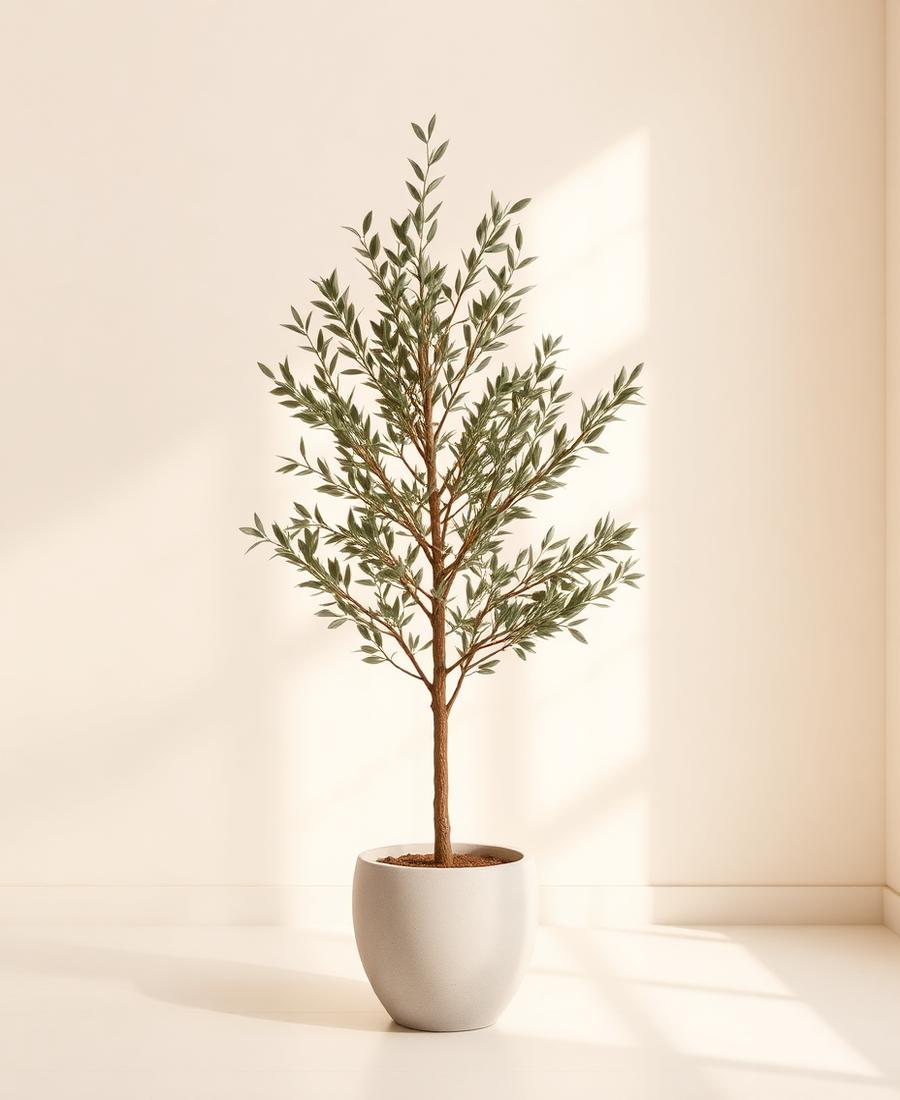
Large Faux Olive Tree for Home or Office Decor
8.2 ft (2.5 m) or 10 ft (3 m)
From US$2,415 USD — request a quote

Outdoor Decorative Coconut Palm Tree for Landscaping Use
8 ft (2.5 m) to 18 ft (5.5 m), seven options
From US$1,709 USD — request a quote


Artificial Green Rubber Tree 5ft Large
4.59 ft (1.4 m) or 5.25 ft (1.6 m)
From US$396 USD — request a quote

Four Option Pine Bonsai 53 and 65 cm Tabletop
From US$1,102 USD — request a quote


Artificial Bonsai Tree Cliff Welcome Decoration 1.7ft
From US$598 USD — request a quote


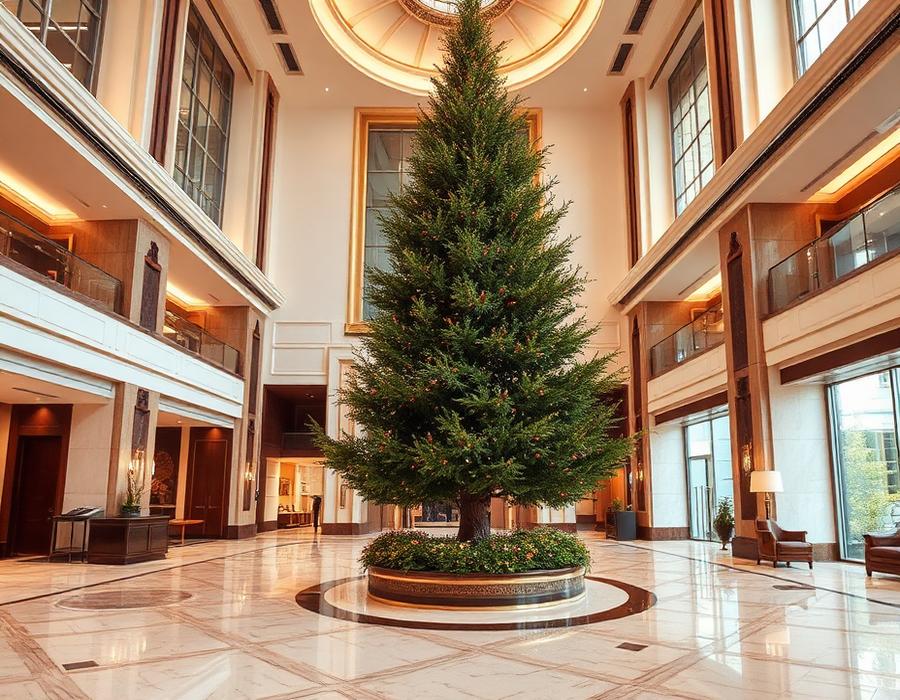
Red Bloom Cherry Blossom Tree 13 ft for Atriums
9 ft (3 m), 13 ft (4 m) or 16.5 ft (5 m)
From US$6,356 USD — request a quote

Artificial Large Potted Olive Tree for Parks and Gardens
2 m to 4 m (6.6 ft to 13.1 ft)
From US$1,809 USD — request a quote


Welcome Pine Bonsai Tree 1.2 m for Entrance Halls
Approx 1.2 m (4 ft)
From US$293 USD — request a quote


Green Accent Pine Bonsai 2.5 ft Tabletop Tree
Approx. 2.5 ft (0.76 m)
From US$293 USD — request a quote

Desktop Welcome Pine Bonsai 1.2 ft Natural Wood
Approx. 1.2 ft (37 cm)
From US$496 USD — request a quote


Natural Wood Trunk Coconut Palm Tree 18 ft Outdoor
8 ft (2.5 m) to 18 ft (5.5 m)
From US$1,709 USD — request a quote

Custom Height Date Palm Tree Up to 66 ft Outdoor
8–66 ft (2.5–20 m)
From US$1,709 USD — request a quote


Artificial Chocolate Cocoa Tree 2.5m Indoor Display
2.5 m (8.2 ft)
From US$3,022 USD — request a quote
Artificial plants for retail are display greenery that gets moved, restyled and reshipped — lightweight, consistent between stores, and untroubled by spotlights, air conditioning and a visual merchandising calendar that turns over every six weeks. Retailers, showrooms and brand teams buy faux planting because a window scheme has to be identical in nineteen locations on the same Monday morning.
Why do retailers use faux greenery instead of real plants?
Repeatability, mostly. A national rollout needs the same plant in every store, arriving in a box, installed by staff who are not gardeners, and looking correct with no watering rota for the length of a six-week campaign. Living planting cannot deliver that. Retail conditions are punishing as well: a window sits behind glass that acts as a solar oven in summer and a cold sink in winter, and spotlights aimed at product will cook a real plant within days. Faux greenery goes into storage after the campaign and comes back out for the next one.
Will artificial plants fade under store lighting?
Under interior LED and halogen, no — those sources emit very little UV, and UV is what actually degrades foliage pigment. Windows are the real risk, because direct sunlight through glass is intense and unfiltered, and a scheme left in a south-facing window through a full summer can visibly shift, particularly in reds and pinks. For long-running window work, choose greens and whites over saturated colours, rotate stock between windows, and prefer UV-stabilised material — see UV Resistant & Outdoor Safe.
How to choose the right size
Retail sizing is driven by the fixture rather than the room. Greenery on a plinth or a shelf should read at roughly a third to a half of the fixture's height, so it frames product instead of competing with it. Floor specimens beside a till point or a fitting-room entrance work at 1.5 to 2 m. In a window, scale up hard: anything under a metre vanishes from the pavement, and one 2 m specimen almost always beats a scattering of small pots. Weigh the boxes too — stock that ships between stores repeatedly should be liftable by one person. See Commercial Artificial Plants.
Frequently asked questions
Do retail and showroom displays need fire-rated artificial plants?
It depends on the mall, landlord and municipality, and requirements vary widely by jurisdiction and by whether the piece sits in a public concourse versus inside a leased unit. In Canada, fire officials generally reference CAN/ULC-S109; in the US, NFPA 701 is the common benchmark. Ask for documentation from anyone you buy from, including us, and confirm the exact requirement with your landlord or local authority having jurisdiction before a rollout across multiple sites.
How do you store display greenery between campaigns without damaging it?
Store pieces standing upright with the canopy supported rather than lying on its side or stacked, since a compressed branch can take a set that is hard to reshape later. A dry space out of direct sun is enough; no climate control is needed. For anything that ships between stores repeatedly, keep the original box or a similar one, since foliage compressed for transport is what the shaping process on unboxing is designed to correct each time.
Does dust or storage change how a piece looks when it comes back out for the next window?
A light layer of dust from storage is normal and comes off with a soft cloth or a duster pass before the piece goes back on display. What matters more than dust is reshaping: branches folded flat for storage need to be bent back out into an open silhouette, the same as when a piece first arrives. Budget a few minutes per piece for this at the start of each campaign rather than assuming it will look camera-ready straight from the box.
How quickly can a display specimen be set up and struck for a six-week campaign turnover?
Most pieces need no tools: separate and shape the branches, set the piece into its fixture or planter, and it is ready, typically a matter of minutes per unit for staff who are not gardeners. Striking it is the same process in reverse, folding branches back in before boxing. Multi-piece window schemes take longer mainly because of positioning, not assembly. Our unboxing and shaping guide covers the branch technique.
Is the height listed the finished height once potted, which matters for matching a fixture across stores?
Yes, height is given as the finished, potted height as the piece will stand, measured to the top of the foliage, unless a listing states trunk-only. That is the figure to check against the fixture ratio recommended for retail sizing, not the packed box dimensions. Natural variation between units of the same nominal height can be an inch or two, which is worth knowing if a scheme needs to look identical across several store windows.