
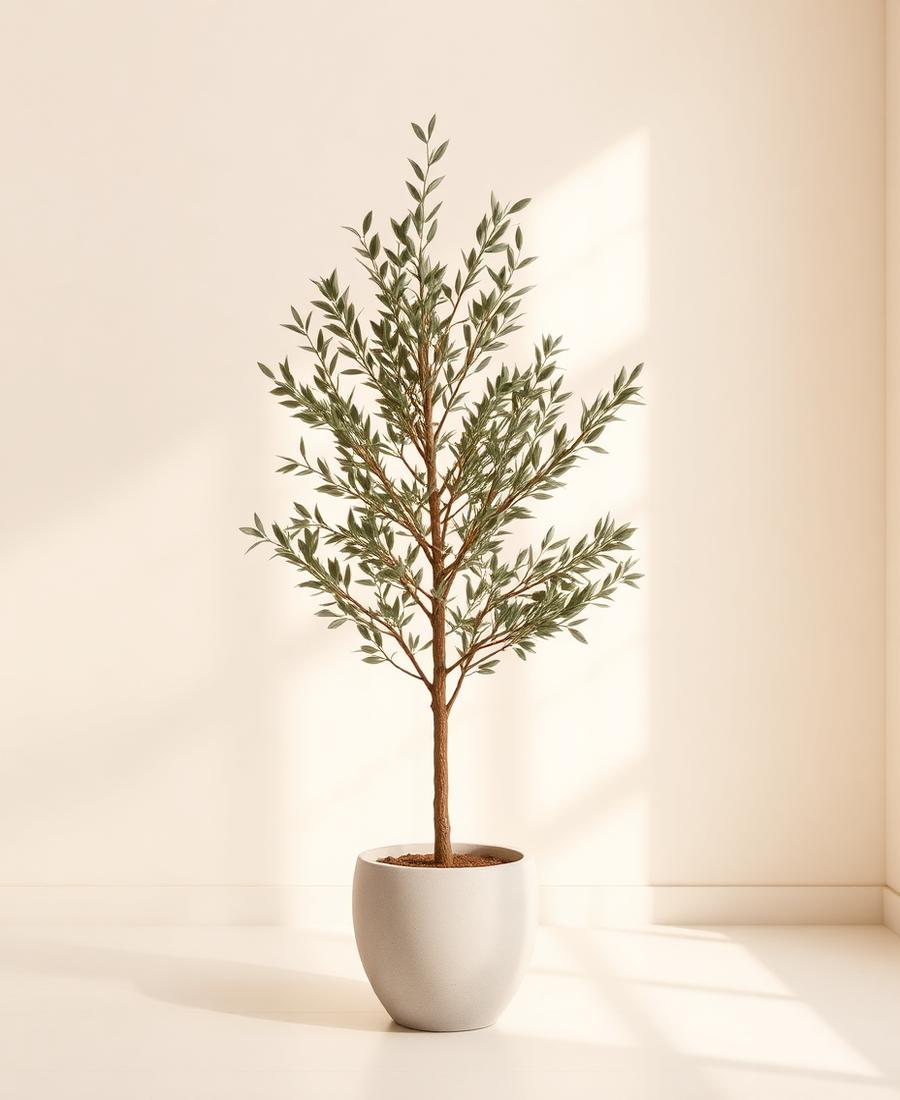
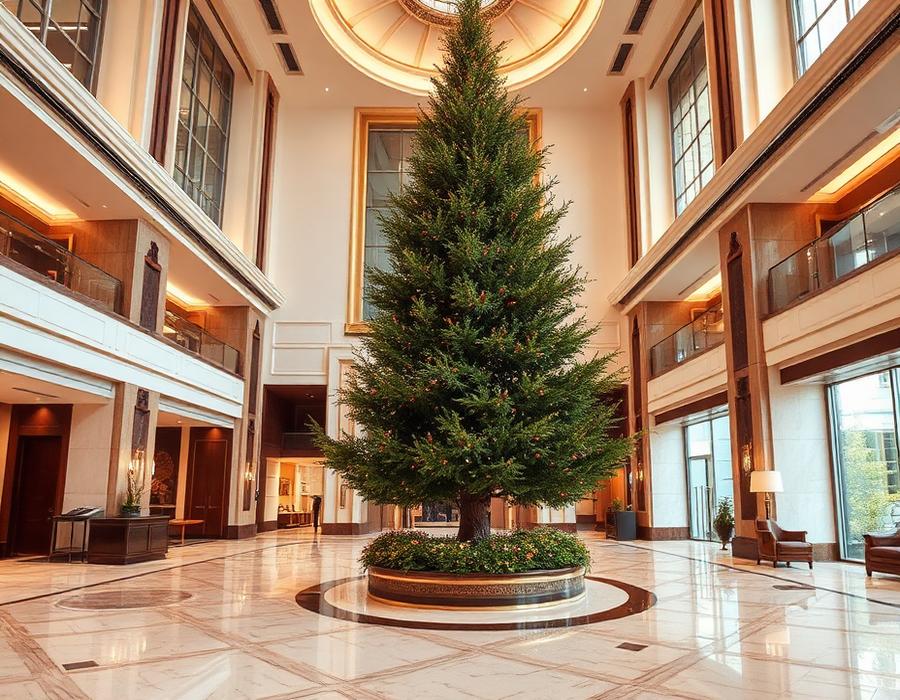

Custom Size Pine Bonsai in Plastic and Silk
From US$1,709 USD — request a quote
Questions before you order? Email support@eververda.com
Commercial artificial plants are faux trees and greenery specified for spaces the public uses — hotel lobbies, restaurant floors, office receptions, malls and showrooms — where planting has to survive foot traffic, poor light and a facilities budget that does not include a horticulturalist. What separates this range from a homeware purchase is scale, repeatability and the ability to reorder the identical item for a second site next year.
Showing 5 of 5 products
From US$1,709 USD — request a quote


6.5 ft (2 m)
From US$2,011 USD — request a quote

6.5 ft (2 m) or 8.25 ft (2.5 m)
From US$2,011 USD — request a quote
Commercial artificial plants are faux trees and greenery specified for spaces the public uses — hotel lobbies, restaurant floors, office receptions, malls and showrooms — where planting has to survive foot traffic, poor light and a facilities budget that does not include a horticulturalist. What separates this range from a homeware purchase is scale, repeatability and the ability to reorder the identical item for a second site next year.
Whatever survives being ignored, which in an office means broad, matte, dust-shedding foliage rather than fine or fuzzy leaves. Fiddle leaf fig, rubber plant, monstera and areca palm all work well because their leaves are large enough to wipe down in one pass and simple enough that a slightly imperfect surface still reads as a leaf. Fine-needled and heavily textured foliage collects dust visibly and needs far more attention. Size the tree to the ceiling, not the desk: reception areas usually want one specimen at 7 ft or above rather than several small pots. See For Offices & Workspaces.
For a commercial interior the deciding question is who waters it. Real planting in a public space is effectively a service contract — a rotation schedule, replacement stock and someone accountable for it — which is why so much corporate greenery quietly dies in month four. Faux planting converts that recurring cost into a single purchase, works in windowless cores and basements where nothing living will hold, and looks identical in year five. Real planting still wins where air quality, biophilic research outcomes or a sustainability claim are the actual brief. Many projects sensibly do both.
Scale to the volume, not the floor plan. In a double-height lobby, anything under 7 ft disappears; specify 10 to 12 ft and let one tree do the work of five. In a standard 9-foot office ceiling, 6 to 7 ft is the maximum before the room feels crowded. For multi-site rollouts, choose products with several height variants so you can match a consistent look across ceilings that differ. Related ranges: For Hotels & Lobbies and Large Artificial Trees.
Fire safety is a real requirement in most commercial fit-outs, but standards vary by jurisdiction and by occupancy type. In Canada, fire officials generally reference CAN/ULC-S109; in the US, NFPA 701 is the common benchmark. Requirements, testing methods and what counts as compliant differ by province, state and building use, so ask for documentation from anyone you are buying from, including us, and confirm the specific requirement with your local authority having jurisdiction before you specify or install.
Broad, matte-leaf species such as fiddle leaf fig, rubber plant and areca palm are the easiest to keep looking presentable, because a facilities team can wipe them down in one pass without touching every leaf individually. A weekly dusting with a cloth or duster, plus an occasional rinse in a shower or with a hose for larger specimens, keeps foliage from dulling. Fine-textured or densely packed foliage takes noticeably longer to clean and shows dust sooner between visits.
Some pieces in this range are built for outdoor exposure and some are not, so check the individual product details before placing anything outside a covered, climate-controlled interior. Indoor-grade foliage and trunk finishes will fade under sustained UV and can crack or discolour through freeze-thaw cycles. For patios, pool decks and other exterior commercial spaces, look at our For Pools & Patios and UV-Resistant Outdoor ranges instead.
Confirm the finished height includes the pot or base, not just the trunk, since that is what determines ceiling clearance. Check whether the item ships with a weighted base suitable for open-plan foot traffic, and whether the same model is available in more than one height so a rollout can match different ceilings with one consistent look. If reordering the identical item next year matters, keep a record of the exact product handle and specification you chose.
Yes, height is given as the finished, potted height as the piece will stand on site, measured to the top of the foliage, unless a product specifically states trunk-only. This matters most in commercial specifying, where a few inches decides whether a piece clears a doorway, a mezzanine edge or a sprinkler line. If a project has a hard clearance limit, treat the stated height as a maximum and allow a small margin for natural variation between units.