
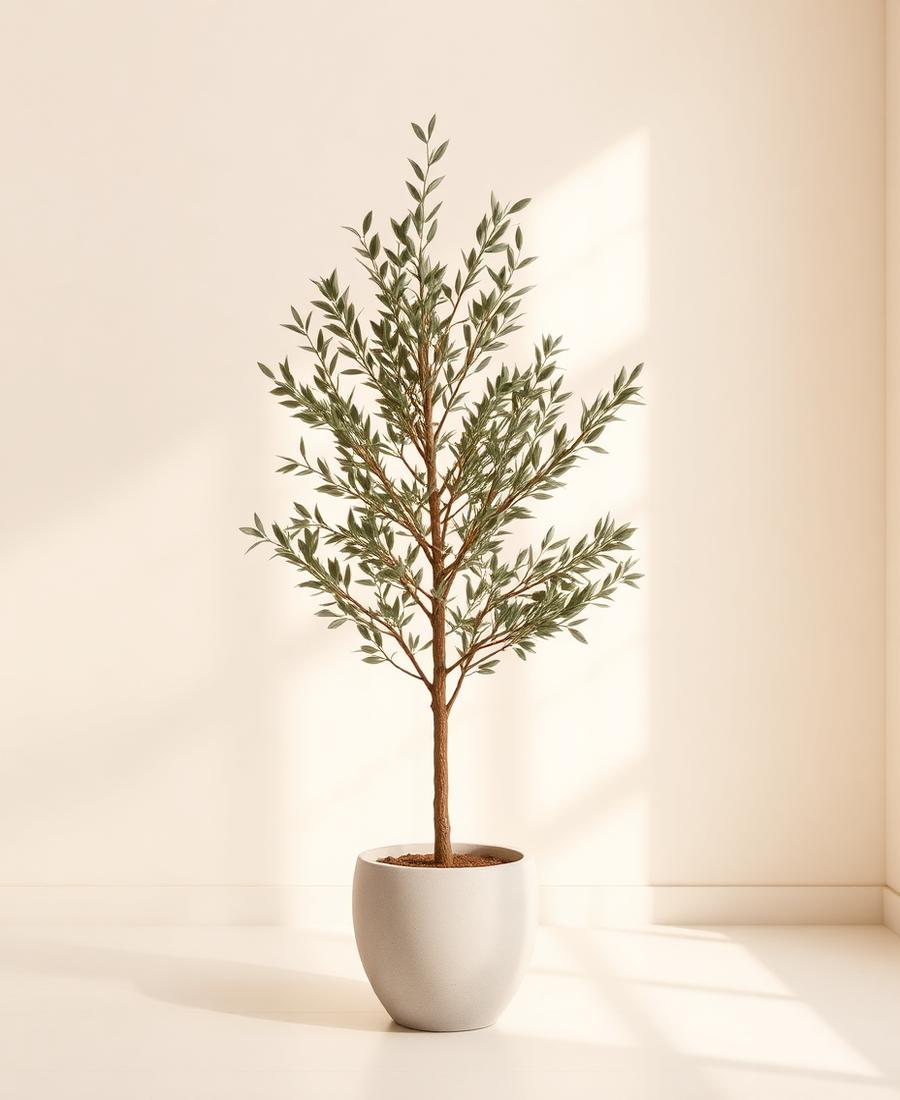


Modern Style
Modern style is clean-lined greenery for contemporary interiors — simple silhouettes, restrained pots, no ornament. This page collects the fiddle leaf figs, rubber trees, dracaena, topiary and green wall panels that carry that look, in black, white or grey planters rather than wicker, terracotta or anything rustic.
Showing 24 of 40 products


Artificial Fiddle Leaf Fig Tree — 6 ft, White Pot with Moss-Topped Soil
6 ft, single size
US$385.99 USD


Artificial Fiddle Leaf Fig Tree — 4 to 7 ft, Weighted Planter, 5-Minute Assembly
120 cm – 210 cm (4–7 ft)
US$247.99 USD


Artificial Fiddle Leaf Fig Tree — 5 to 7 ft, White Planter with Real Wood Trunk
5 ft – 7 ft (152–213 cm)
US$247.99 USD

Artificial Fiddle Leaf Fig Tree — 4 to 7 ft, 48 to 141 Leaves by Height
4 ft – 7 ft (122–213 cm)
US$269.99 USD


Artificial Garcinia Tree — 31 in, 120 Real-Touch Leaves in a White Cement Pot
31 in (about 79 cm)
US$342.99 USD


Artificial Willow Tree — 5 ft, Interlocking Root Clusters in a Black Pot
5 ft (152 cm), single size
US$342.99 USD


Modern style is clean-lined greenery for contemporary interiors — simple silhouettes, restrained pots, no ornament. This page collects the fiddle leaf figs, rubber trees, dracaena, topiary and green wall panels that carry that look, in black, white or grey planters rather than wicker, terracotta or anything rustic.
What actually makes a plant read as "modern" rather than just green?
Mostly the pot and the silhouette, not the species. A single upright trunk with a defined canopy — a fiddle leaf fig, a rubber tree, a dracaena — reads as considered and architectural, while a loose, bushy arrangement reads softer and more traditional regardless of what it's planted in. The pot does the rest of the work: a matte black or white cylinder or cube, like the ones on most pieces in this collection, keeps attention on the plant's shape instead of the container.
Which species carry modern style best?
Fiddle leaf fig is the defining modern houseplant, and it dominates this collection for a reason — its large, glossy, upright leaves and single trunk are the silhouette most people picture when they think "clean, contemporary greenery." Rubber tree and dracaena give a similar upright single-trunk read with a narrower leaf. For a more sculptural, less leafy option, boxwood spiral topiary or a cypress topiary trades foliage volume for geometric shape, which suits a room that wants structure more than lushness.
Pot and planter choices that keep the look restrained
Black, white and grey dominate here for a reason — a neutral pot disappears visually and lets the plant's form carry the room, where a patterned, woven or terracotta pot pulls the eye toward itself. Several fiddle leaf figs, including the 4 to 7 ft version with a weighted planter, come with a moss-topped or soil-finished surface rather than visible bare potting mix, which keeps the base looking finished instead of like a nursery container.
Modern, minimalist or Japandi — what's the actual difference?
They overlap more than they differ, but modern here leans toward bolder single-species statement pieces — one fiddle leaf fig or one dracaena doing the work in a room. Our minimalist collection trims that further toward the barest possible silhouette, and Japanese style brings in bonsai and pine forms with an intentionally asymmetric, sculpted shape rather than a full canopy. If none of those fit, our modern and minimalist plants guide walks through picking between them.
Frequently asked questions
Is one large fiddle leaf fig enough, or does a modern room need several plants?
One well-scaled statement piece is usually the more modern choice — restraint is part of the style. A single fiddle leaf fig or dracaena in a defined corner reads as designed; four different plants scattered around a room reads as accumulated rather than arranged. If a second piece is wanted, repeating the same species or pot finish elsewhere in the room keeps the look coherent instead of busy.
Real wood trunk or moulded trunk — does it matter for a modern look?
Less than you'd think. Modern style is about silhouette and colour restraint more than trunk texture, so a moulded trunk under the right canopy shape reads just as clean as a real wood one, especially from normal viewing distance. Where a real wood trunk matters is close-up detail — a hallway or entryway piece people pass within arm's reach of benefits from it more than a living room corner does.
Do these have to be black or white pots, or are other neutrals modern too?
Black and white are the most common because they contrast cleanly against most wall colours, but grey and unglazed cement finishes work the same way — the requirement is a solid, unpatterned surface rather than a specific colour. What breaks the look is texture and pattern: rattan, woven baskets and glazed terracotta all read as a different, warmer style regardless of colour.
Can I mix a fiddle leaf fig with a different species in the same room?
Yes, but keep the pot finish consistent between them if you do — matching black or white containers let two different silhouettes, like a fiddle leaf fig and a dracaena, sit in the same room without competing. Mixing both species and pot styles at once is what tends to break a clean, modern look into something busier.
How do we keep the leaves from looking shiny or plastic instead of realistic?
Dust is the main culprit even on a real-touch leaf — a light film of dust flattens the matte finish built into modern foliage and makes it catch light differently. A soft brush or microfibre cloth restores the intended finish quickly. Our cleaning guide covers the method by leaf type.