
Commercial Artificial Trees: What a 10 to 33 ft Specimen Costs and How to Specify One
21 October 2026
An architectural artificial tree, meaning a specimen from roughly 10 ft to 33 ft built on a fiberglass, steel or natural timber structure, costs $1,721 to $15,250 USD. A giant lit installation, the kind that anchors a plaza or a mall atrium, runs to $104,771 USD at the top. Those are the figures US buyers see on our own listings as of 21 October 2026.
Our position on fire documentation. Eververda publishes a fire figure only where documentation exists for that specific piece, and describes nothing as "fire rated". On a commercial quote we establish the occupancy, the adopted code edition and what your authority having jurisdiction (AHJ) will accept as documentation, in writing, before the order. Where no documented route exists for a piece, we say so and set out the alternatives. We do not claim a certificate for any product.
If you are specifying one of these for the first time, you are usually working from a single supplier's quote with nothing to compare it against. This page is the comparison: the price bands by height, what drives the number, and the five things that have to be settled before anyone can quote you properly.
What does a commercial artificial tree cost?
| Height | Price, USD | Typical build |
|---|---|---|
| 10 to 13 ft | $1,721 to $5,687 | Fiberglass or steel trunk, indoor and outdoor builds. Lobby and courtyard scale |
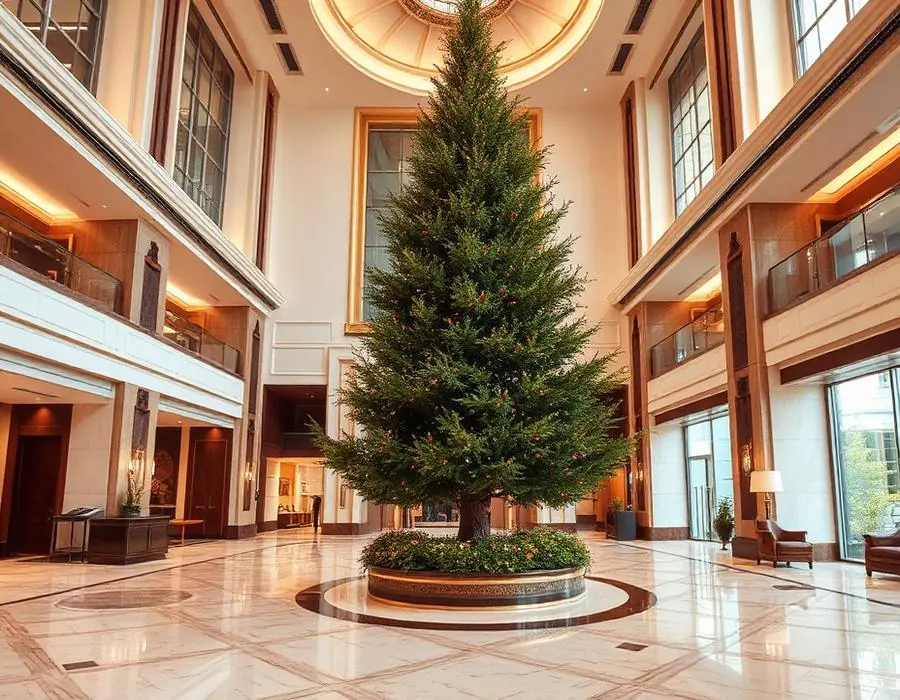
| 13 to 16.5 ft | $2,331 to $9,146 | Fiberglass over steel, or natural timber trunk. Atrium and double-height scale |
| 16.5 to 33 ft | $5,077 to $15,250 | Engineered specimens. Restaurant voids, mall atriums, permanent outdoor features |
| Giant lit installations, 9.8 to 49 ft | $3,653 to $104,771 | Steel-frame structures with integrated LED, fibre optic or DMX lighting |
Freight sits on top of all of those and is quoted with the tree, because a 16 ft crate to a site with a loading dock and a 16 ft crate to a site with kerbside-only access are not the same delivery. This is also why these pieces are quoted rather than sold at checkout. There is no honest way to put a fixed delivered price on a tree before knowing where it is going.
What actually drives the price?
Four things, roughly in order of impact.
- Structure. Fiberglass over a steel core is what allows a 20 ft tree to stand without guy wires, and it is the single biggest cost step. Below it sits steel trunk, then moulded plastic. Natural timber trunk is its own premium, bought for close-range realism rather than for height.
- Canopy volume. Foliage is sold by the piece and applied by hand. A dense 13 ft canopy can cost more than a sparse 16 ft one, which is why height alone is a poor predictor of price.
- Lighting, where fitted. Integrated LED, fibre optic and DMX-controlled systems are the reason the giant installation band reaches six figures. An unlit structure of the same height is a fraction of it.
- Height, last. It matters, but less than the three above. A 16.5 ft natural-timber ginkgo at $9,146 and a 20 ft moulded palm at $5,687 are priced by what they are made of, not by how tall they are.
Lead time: weeks, not days
Specimens at this scale are made to order. Foliage is applied by hand, trunks are moulded or built to the specified height, and the finished tree is crated for freight. Production and transit both sit between your order and your delivery date, and for anything custom there is a drawing-and-approval step before production starts.
The practical consequence: if the tree has to be standing for a fixed opening, an event, or a seasonal date, work backwards from that date and get the lead time in writing with the quote. A tree ordered against a deadline with no written lead time is the most common way these projects go wrong. Ask specifically whether the quoted lead time starts at order or at design approval, because those are often weeks apart.
Freight, crating and site access
These ship crated, usually palletised, by freight rather than parcel. Before you order, confirm five things about the receiving end:
- Dock or liftgate. A site without a loading dock needs a liftgate truck, and that has to be booked rather than assumed.
- Someone to receive it. Freight deliveries are not left at a door.
- The route in. Doorways, elevator car dimensions and stair turns. Trees ship in sections, so the question is whether the longest single section fits, not whether the assembled tree does.
- Somewhere to stage it. A 20 ft tree in sections needs floor area to lay out and assemble before it goes vertical.
- Crate disposal. Commercial crating is substantial and someone has to remove it.
Bases, bolt patterns and concrete
Above roughly 10 ft, a pot does not hold the tree. The base will be one of three things, and which one you need depends on height, canopy spread and exposure.
- Ballasted base. Cement- or sand-filled, sized to the tree. Adequate indoors and in sheltered outdoor positions.
- Bolt-down base plate. Fixed into a slab on a defined bolt pattern. The standard for permanent outdoor installations and for anywhere the public can contact the tree.
- Below-grade sleeve or footing. Used where the trunk should appear to grow from the ground rather than stand on a plate.
If a slab is being poured for this tree, get the base plate dimensions and bolt spacing in writing before the pour. This is the most common and most expensive sequencing error in the category, and it is entirely avoidable. Canopy spread matters here too: a wide canopy puts more leverage on the base than a narrow one of the same height, so spread changes the fixing specification, not just the look.
Fire documentation
In the United States, the International Fire Code accepts either NFPA 701 (Test Method 1 or 2) or NFPA 289 (20 kW ignition source, 100 kW maximum heat release rate) for artificial vegetation, at Section 807.4.1 from the 2018 edition onward; it was Section 806.2 in the 2015 edition, which some jurisdictions still run. Whether either applies to your installation depends on the occupancy classification and on your local adoption, and the final call belongs to the authority having jurisdiction, usually your fire marshal.
Three things worth knowing before you ask a supplier about it. No product is automatically compliant for your building, because compliance is about the material, the installation and the occupancy together. A claim is not a document: ask what test report exists, who issued it, what was tested and when. And a straight answer either way tells you something about the supplier. We will tell you what, if anything, the manufacturer can provide for a given piece, through the quote. More detail in fire documentation for commercial artificial greenery.
Custom heights and shapes
A large part of this catalogue is made to order, and several pieces are listed with heights well beyond their standard sizes, in some cases to 20 m. Canopy profile, trunk form and multi-trunk arrangements can often be varied too.
Custom adds a design-approval step before production and therefore adds lead time, so raise it at the first conversation rather than after a standard quote has been issued. Send the ceiling height, the footprint you can give the tree, the delivery route and any beam or soffit the canopy has to clear, and ask for confirmation of whether it can be made, what it costs and how long it takes before committing.
Which species work at architectural scale
- Palms, for outdoor and tropical schemes, and the best wind behaviour of any species. Outdoor artificial palm trees.
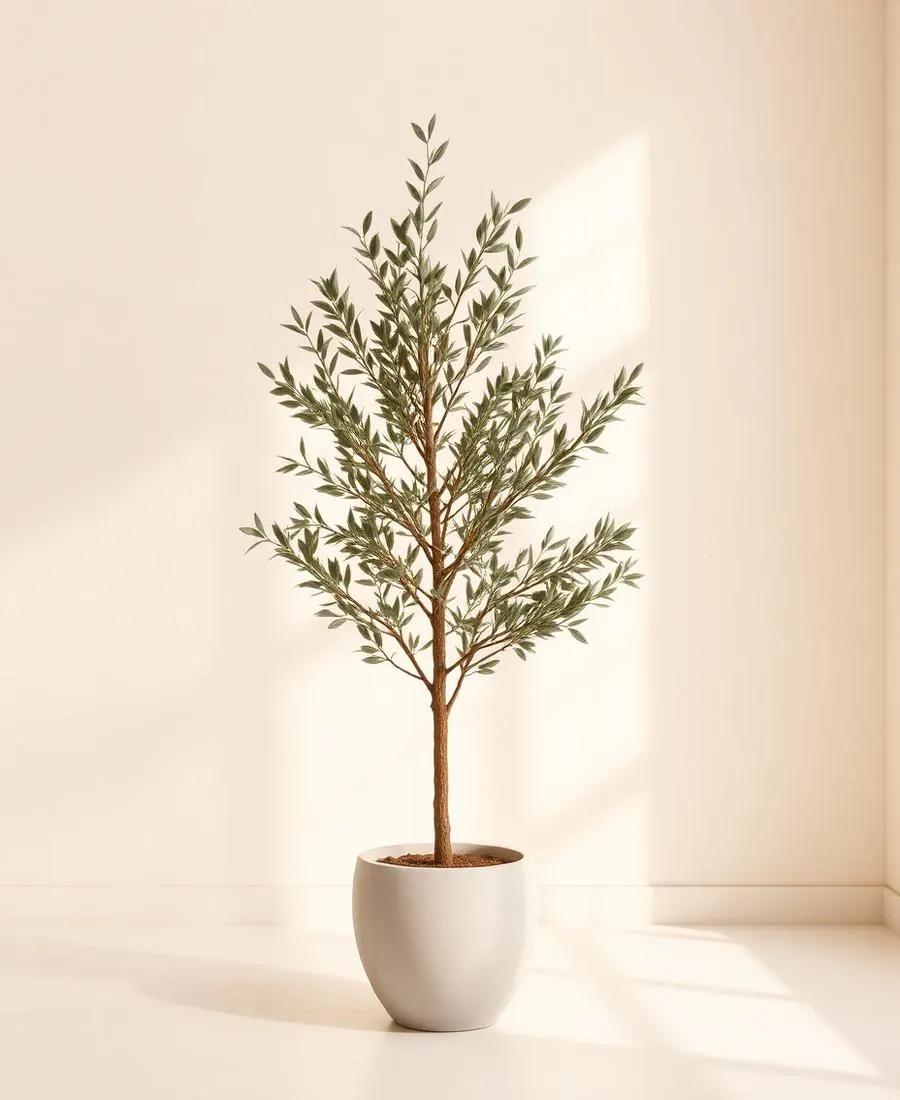
- Olive, the most forgiving species to fake at any height, and the most widely specified for hospitality interiors. Large artificial olive trees.
- Banyan and ficus, for spreading canopy volume, with the caveat that spread drives both the fit and the wind load. Large artificial ficus and banyan trees.
- Cherry blossom and flowering specimens, for events and seasonal impact, with blossom as the element that fades first. Large artificial cherry blossom trees.
- Ginkgo, willow, jacaranda and pine, the specimen species at the top of the range, usually on natural timber or fiberglass trunks for atrium positions.
Examples at that scale on this site: a 14 ft olive on a fiberglass trunk, a coconut palm at 8 to 18 ft, a banyan at 16.5 ft and a cherry blossom at 20 ft.
What a quote should contain
If a quote does not tell you these, ask before you compare it with anything else:
- Finished height, and whether that includes the base
- Canopy spread and finished footprint
- Trunk and frame construction, including whether fiberglass is over a steel core
- Listed placement: indoor, covered outdoor, or full outdoor
- Base type, with bolt pattern and plate dimensions where applicable
- Section count, the longest single section, and crated weight
- Lead time, and whether it runs from order or from design approval
- Delivered freight cost, and what access it assumes
- What fire test documentation exists, if any
Where Eververda fits, with the caveats
We ship to the United States and price in USD, which is where every figure on this page comes from. Each listing publishes the manufacturer's specification, and anything the manufacturer has not documented is marked "Not specified" rather than filled in with a guess. That applies to fire documentation as much as to dimensions: if a test report does not exist for a piece, we say so.
The caveats, plainly. Everything on this page is quoted rather than sold at checkout. A specifier checks the specification table first, and every product page carries one: what the manufacturer documented, with "Not specified" wherever nothing was. The return window is 30 days, shipping damage is reported within 48 hours, and repair, replacement or refund at our cost applies to anything damaged, defective or incorrect, with no restocking fee on those. And we do not install. You arrange your own installer; our job is to supply the correct tree and the information that installer needs, which is why the specification list above is as long as it is.
Browse trees over 15 ft, hotels and lobbies, or start with large outdoor artificial trees if the position is outside.
The commercial range is grouped in commercial artificial plants.
Frequently asked questions
How much does a 20 ft artificial tree cost?
Between roughly $5,077 and $15,250 USD depending on species and construction, on our own listings as of 21 October 2026. A 20 ft moulded-trunk palm sits near the bottom of that band and a natural-timber or engineered specimen near the top. A giant lit installation at similar heights is a different product and runs from $3,653 to $104,771 depending on the lighting system.
How long does a large commercial artificial tree take to make?
Weeks rather than days, because these are made to order: foliage is applied by hand and trunks are built to the specified height before the tree is crated for freight. Anything custom adds a design-approval step first. Ask whether the quoted lead time starts at order or at approval, since those can be weeks apart.
Do commercial artificial trees need fire documentation?
It depends on the occupancy and on local code adoption, and the decision belongs to your authority having jurisdiction, usually the fire marshal. In the United States the International Fire Code accepts NFPA 701 or NFPA 289 for artificial vegetation (Section 807.4.1 from the 2018 edition onward, Section 806.2 in the 2015 edition). No product is automatically compliant for your building, so ask what documentation exists, who issued it and when.
How are 15 ft and taller artificial trees delivered?
Crated and palletised by freight, in sections, with a dock or a liftgate needed at the receiving end and someone present to take delivery. The longest single section, not the assembled height, decides whether the tree can get through your doors, elevators and stair turns. You also need floor area to lay the sections out before the tree goes vertical.
Can I get an artificial tree made to a custom height?
Often yes. A large part of this catalogue is made to order and several pieces list heights well beyond their standard sizes, in some cases to 20 m, with canopy profile and trunk form also variable. Custom work adds a design-approval step and therefore lead time, so raise it at the first conversation rather than after a standard quote.
Why are large artificial trees quoted instead of priced?
Because the delivered cost genuinely depends on the site. Freight on a crated 16 ft specimen varies with destination, whether there is a dock or a liftgate is needed, and what the access looks like, and the base specification changes with canopy spread and exposure. A fixed checkout price would either overcharge most buyers or undercharge the difficult sites.
Prices are USD as shown to US visitors and were read from our own listings on 21 October 2026. Fire code text was verified against the publishers' own published text on 24 October 2026.