
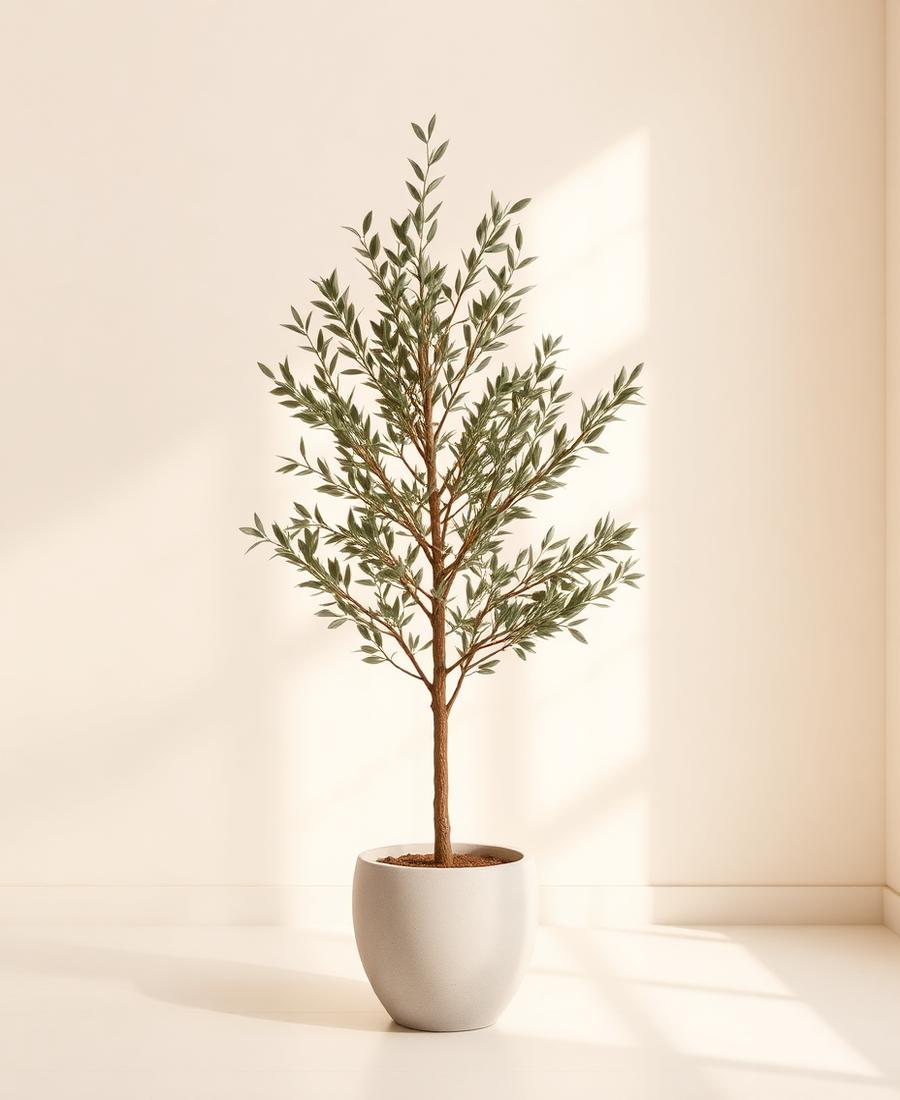

Artificial Cherry Blossom Trees — 6.5 ft, Set of 2 in Cement Pots
6.5 ft
From $999 CAD — request a quote
Questions before you order? Email support@eververda.com
Outdoor artificial trees are faux specimens built to sit in the weather - balconies, terraces, courtyards, roof decks, covered patios and poolsides. They use UV-stabilised foliage and bases that shed water rather than hold it.
Showing 24 of 56 products
6.5 ft
From $999 CAD — request a quote

6 ft
From $409 CAD — request a quote

6 ft, single size
From $529 CAD — request a quote


4 ft, each tree
From $304.99 CAD — request a quote

5 ft (152 cm)
From $389 CAD — request a quote

5 ft (152 cm), each tree
From $619 CAD — request a quote

5 ft – 6 ft (152–183 cm)
From $279 CAD — request a quote

120 cm – 180 cm (3.9 ft – 5.9 ft)
From $289 CAD — request a quote

48–72 in
From $249 CAD — request a quote

150 cm (59 in)
From $119 CAD — request a quote

From $439 CAD — request a quote

7 ft (213 cm)
From $689 CAD — request a quote

3 ft (27 leaves)
From $249 CAD — request a quote


180 cm (~5.9 ft)
From $379 CAD — request a quote

4 ft – 6 ft
From $359 CAD — request a quote

150 cm (5 ft) – 180 cm (6 ft)
From $469 CAD — request a quote

150 cm (5 ft) – 180 cm (6 ft)
From $329 CAD — request a quote

5 ft – 6 ft
From $329 CAD — request a quote

5 ft – 7 ft (152–213 cm)
From $259 CAD — request a quote

5.2 ft
From $389 CAD — request a quote
Outdoor artificial trees are faux specimens built to sit in the weather - balconies, terraces, courtyards, roof decks, covered patios and poolsides. They use UV-stabilised foliage and bases that shed water rather than hold it. Restaurants, hotels and homeowners specify them where a real tree cannot survive the exposure, the wind or the absence of soil.
Yes, provided the tree was made for it. The difference between an indoor tree and an outdoor one is not the shape, it is the foliage treatment and the base. Indoor foliage put into full sun fades and goes brittle, and an indoor planter with no drainage fills with rainwater and then freezes. Everything in this collection is specified for exterior placement. Two things still sit with you. Fix or weight the tree down, because a canopy is a sail and a winter wind will take an unballasted tree across a terrace. And site it out of the harshest all-day sun where the layout allows, which slows fading on any product regardless of how it has been treated.
It depends almost entirely on exposure, and anyone quoting you a single number is guessing. A tree on a north-facing covered balcony in Toronto sees a fraction of the ultraviolet light and none of the direct precipitation that the same tree gets on an open south-facing pool deck, and it will hold its colour far longer. Set expectations accordingly: colour fades gradually rather than suddenly, the newest growth at the tips goes first, and darker greens hold up better than pale or variegated foliage. Check each product listing for what that specimen is rated for, and bring pieces under cover over winter where that is practical.
Wind exposure sets the ceiling here, not the room. On an open balcony or roof deck, stay lower and wider - a 5 to 7 foot tree on a heavy base is far more stable than a 10 foot specimen that has to be bolted down. In a sheltered courtyard or tight against a building wall, height is limited only by the space. Always check the planter can be weighted or fixed. Browse UV Resistant and Outdoor Safe and Pools and Patios.
Rain does most of the work on its own, but pollen, dust and bird droppings build up between showers. A garden hose on a gentle setting, sprayed from above so water runs off rather than pools in the base, clears most of it. For stubborn spots, a soft brush and a little dish soap in water works on leaves and the base, rinsed off afterwards. Avoid pressure washers, which can strip foliage coating.
It depends on the piece and the location. A tree rated for exterior use is built to handle cold and precipitation, but snow load on a broad canopy and repeated freeze-thaw on a planter with standing water are still worth managing: brush heavy snow off the crown rather than leaving it to sit, and check that the base drains rather than holding water that can freeze and crack it. Bringing a tree into a garage or shed for winter is never wrong, just not always necessary.
Yes, the figure on each product page is the tree's full assembled height, including its base, unless stated otherwise. Outdoors that number matters for clearance under a pergola or awning as much as it does indoors, so measure against it rather than the foliage alone.
The trunk arrives in sections with the branches folded flat to save space, so setup is standing the tree, locking the sections together, then shaping each branch outward and separating the leaves by hand. If the base needs weighting or fixing down for wind, do that as part of the same setup rather than after the first storm.
Confirm the base can be weighted or anchored, since an unballasted canopy acts like a sail in wind. Check that the planter has drainage rather than a sealed base that will hold rainwater. And match the exposure rating on the product page to the actual spot - a sheltered courtyard and an open roof deck are different problems even a few metres apart.