
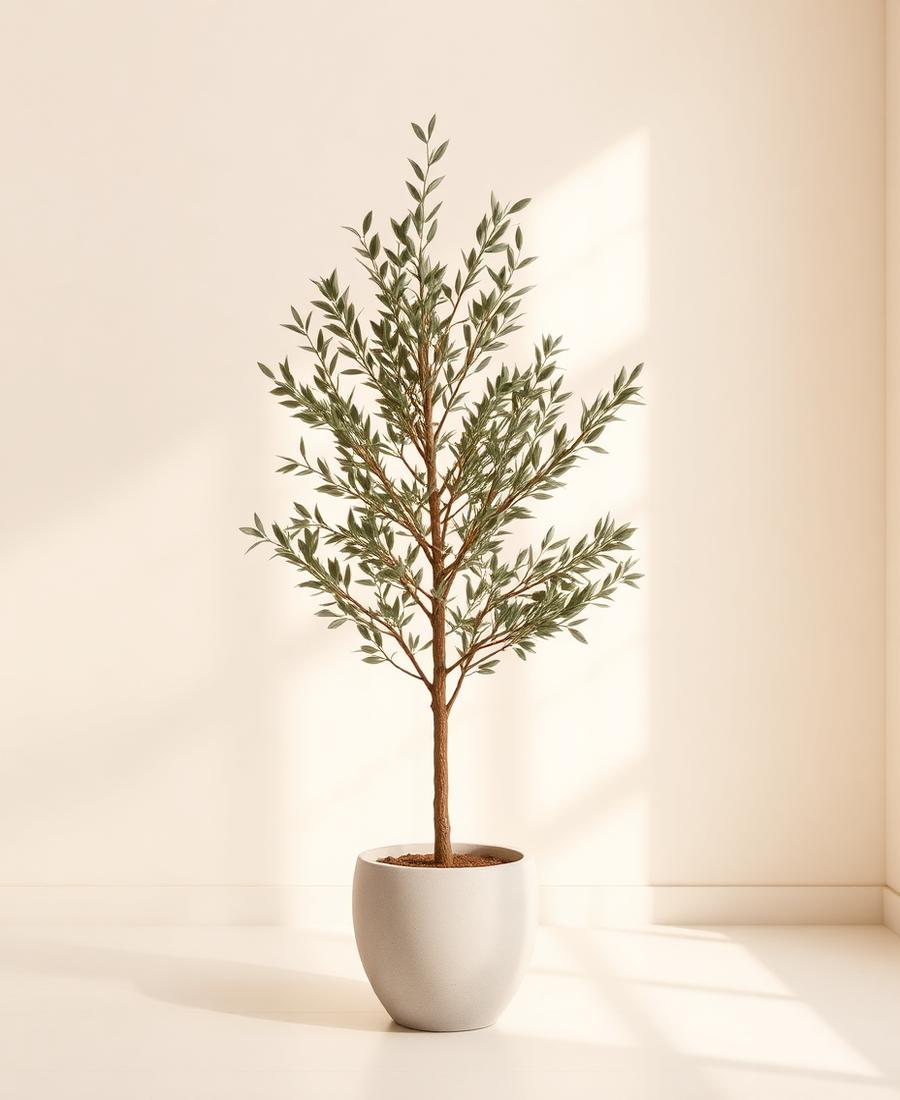
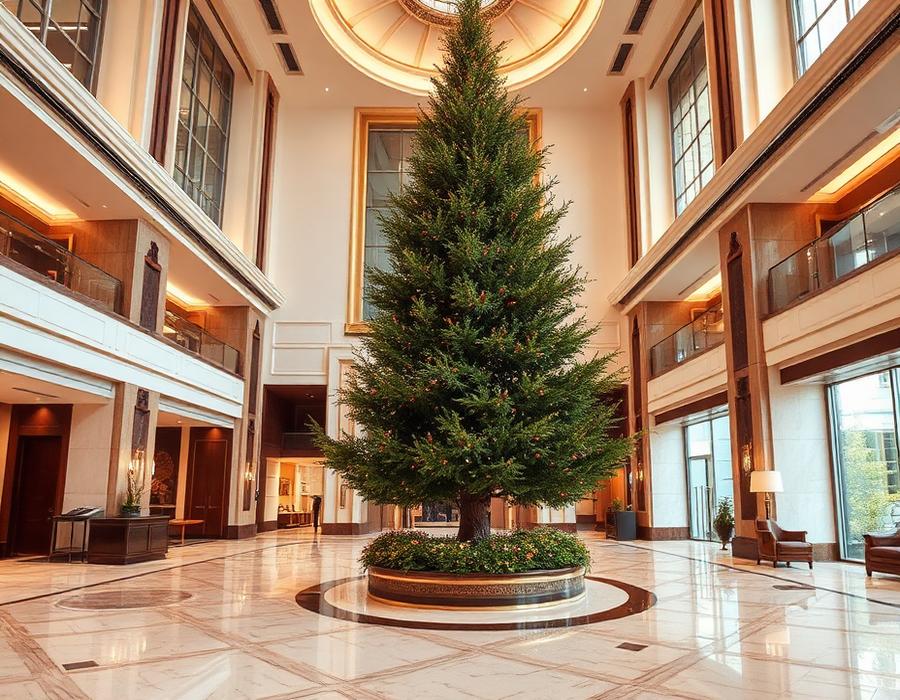
Can You Put Artificial Trees Outside?
22 August 2026
This is the question that stops most outdoor purchases, and it deserves a straighter answer than the category usually gives it. Short version: yes, with conditions, and anyone telling you an artificial tree will look identical outdoors in five years is selling you something.
Can you put fake trees outside?
Yes, if the tree was built for outdoor use. An indoor-rated artificial tree put outside will fade noticeably within a single strong summer, and its trunk and internal structure may not survive a freeze-thaw cycle. An outdoor-rated tree with UV-stabilised foliage and a fibreglass or metal-cored trunk will hold up for years.
The distinction is not marketing. Outdoor construction means three specific things: UV additives compounded into the foliage material, a trunk and core that will not rot, rust through or crack in cold, and drainage so water does not collect inside the base and freeze.
What does UV resistant actually mean?
UV stabilisation means additives are mixed into the plastic before moulding that absorb ultraviolet light or interrupt the chemical chain reaction it starts. Sunlight breaks polymer chains and destroys pigment; the additives slow that down. They do not stop it.
This is the honest core of the whole subject. Every artificial plant left in direct sun will fade eventually. UV stabilisation is the difference between visible fading in one season and acceptable colour after several years. A seller who says their outdoor trees never fade is either not being straight with you or does not know what the additive does.
Two things follow. First, sprayed-on UV coatings are much weaker than compounded additives, because coatings wear off and abrade in rain and wind. Ask which one you are getting. Second, exposure is what matters, not the calendar. A tree on a south-facing patio in Kelowna is taking several times the UV dose of the same tree on a shaded north-facing balcony in Halifax, and it will age accordingly.
What is the best artificial tree for outdoor use?
The best outdoor artificial trees are the ones with a cast fibreglass or metal-cored trunk, UV-stabilised polyethylene foliage rather than fabric, and a weighted or ground-anchorable base. Fabric and silk foliage is a poor outdoor choice regardless of what it is treated with, because it holds water, mildews, and shreds in wind.
By species, the ones that hold up best outdoors are those whose real counterparts have thick structural leaves: olive, palm, boxwood and ficus. Blossom trees are the hardest, because blossom is usually fabric and it is the first thing to go. If you want cherry blossom outdoors, expect to treat the blossom as a shorter-lived component than the tree.
In our range, the outdoor-built examples are the 5 to 6 ft palm with UV-resistant fronds at $219 to $289 CAD and, at commercial grade, the 7.2 ft UV-resistant podocarpus bonsai at $1,246.99 CAD. For boxwood, the route is screening rather than a standalone tree: the anti-UV boxwood fence panel is $127.99 CAD.
How long do fake palm trees last?
Outdoors in a Canadian climate, a well-built UV-stabilised palm typically holds acceptable colour for several years in partial sun and fewer in full unshaded exposure. We are not going to put a single number on it, because the honest answer depends on your site, and any brand quoting one figure for all installations is quoting a marketing number.
What we can tell you is the failure order, which is consistent. Colour goes first, usually as a fade toward yellow-grey at the tips of the outermost fronds. Then the foliage material stiffens and gets brittle where it is most exposed. Structure - trunk and core - normally outlasts foliage by a wide margin, which is why the sensible way to think about a large outdoor tree is as a durable frame with a foliage component that is a consumable on a multi-year cycle.
Two practical things extend it. Rotating the tree a quarter turn once or twice a year evens out the exposure so one side does not become obviously paler. And rinsing dust off with a hose a couple of times a season matters more than people expect, because a dust film both dulls the colour and holds moisture against the leaf.
What about wind?
Wind is the risk that actually causes damage, and it is underestimated because the tree is light. That is precisely the problem: a 10 ft artificial tree has the sail area of a real 10 ft tree and a small fraction of the weight, with no root system.
A tall tree in an unweighted nursery pot will go over in the first serious gust, and when it goes over it usually breaks branches and can take out whatever it lands on. Balconies are the worst case, because they funnel and accelerate wind and because the consequences of something going over a railing are not just your problem.
How do you secure a tall artificial tree outdoors?
Anchor from the base, not the trunk. Four approaches, roughly in order of permanence:
- Weighted planter. Set the tree in a heavy planter and fill around the base with gravel, sand or dry-set concrete. As a rough guide, the planter and ballast together should be substantially heavier than the tree and wide enough that the tree's canopy spread does not overhang the planter footprint by more than about half.
- Ground-anchored. Many outdoor trees have a plate or spike at the base of the trunk that can be bolted to a deck or driven into ground. This is the most secure option for anything over about 8 ft.
- Guy wires. For very tall trees in exposed positions, three thin cables from the upper trunk to discreet ground anchors, at 120 degrees to each other. Standard practice for real specimen trees and it works the same way here.
- Move it. The most reliable wind strategy for a balcony is to bring the tree inside for winter storms. This is a good reason to check the weight before you buy.
What about rain and drainage?
Rain itself is not the problem. Standing water is. Any outdoor planter needs drainage holes, and the base of the tree needs to sit above the water line rather than in it. Water that collects inside a hollow trunk or a sealed base will freeze, expand and split it, which is how most Canadian outdoor failures actually happen - not in August, but in the first hard freeze after a wet November.
Check the base of the tree for a drain hole. If there is not one and the base is enclosed, drill one before the first winter.
The site checklist, compressed:
| Factor | What goes wrong | What to do about it |
|---|---|---|
| Sun | UV breaks pigment and polymer; fading shows first at the exposed tips | Compounded UV additives rather than sprayed coatings; pale colours; rotate a quarter turn once or twice a year |
| Wind | Full sail area at a fraction of a real tree's weight; the tree goes over and breaks branches | Anchor from the base: weighted planter, a bolted plate or spike over about 8 ft, guy wires in exposed positions |
| Drainage | Standing water freezes, expands and splits bases in the first hard freeze | Drainage holes in the planter, the base above the water line, and drill any enclosed base before winter |
| Dust | A film dulls the colour and holds moisture against the leaf | Rinse with a hose a couple of times a season |
What are some non-fading outdoor artificial flowers?
There is no such thing as non-fading, and that phrase should be treated as a warning label on any listing that uses it. What exists is slower-fading: UV-stabilised polyethylene blooms in lighter colours, sited out of afternoon sun.
Colour matters more than people expect. Reds and purples fade fastest because those pigments are the least UV-stable; whites, creams and greens hold far better. If you want outdoor colour that stays looking deliberate, choosing a pale palette does more for you than any coating claim.
Frequently asked questions
Do artificial plants fade in the sun?
Yes, all of them, eventually. Sunlight breaks polymer chains and destroys pigment, and UV stabilisation slows that reaction rather than stopping it. The practical difference is still large: it is the difference between visible fading in one season and acceptable colour after several years. Treat any claim of non-fading as a warning sign about the seller rather than a feature.
Can artificial trees stay outside all winter in Canada?
Yes, if they were built for outdoor use and can drain. Cold itself is not the killer - standing water is. Water that collects in a hollow trunk or sealed base freezes, expands and splits it, which is how most Canadian outdoor failures actually happen: not in August, but in the first hard freeze after a wet November. Check for a drain hole, and drill one if the base is enclosed.
Is a covered balcony safe for an indoor artificial tree?
Safer, not safe. Exposure is what matters, and a shaded, covered position takes a fraction of the UV dose of an open south-facing one, so fading will be slower. But an indoor-rated tree still has no outdoor-grade structure or drainage, and it may not survive freeze-thaw, so treat the arrangement as seasonal and bring the tree in before winter.
How do you clean an artificial tree kept outdoors?
Rinse it with a hose a couple of times a season. That matters more than people expect, because a dust film both dulls the colour and holds moisture against the leaf. While you are at it, rotate the tree a quarter turn so the same side does not always face the sun - it evens the fading out so one side never becomes obviously paler.
What colours hold up best in outdoor artificial plants?
Whites, creams and greens. Reds and purples fade fastest because those pigments are the least UV-stable, so a bright red arrangement in full afternoon sun is the worst possible combination. If you want outdoor colour that keeps looking deliberate, choosing a pale palette does more for longevity than any coating claim on the listing.
Where to start
Our UV resistant and outdoor safe range is the products built for this, outdoor trees covers the full outdoor tree selection, and for pools and patios is the sub-set sized for decks and terraces. Where we hold a UV specification for a product we publish it; where we have not tested for it, we leave it blank rather than borrow a number.
Eververda prices are CAD and current as of 29 August 2026.