
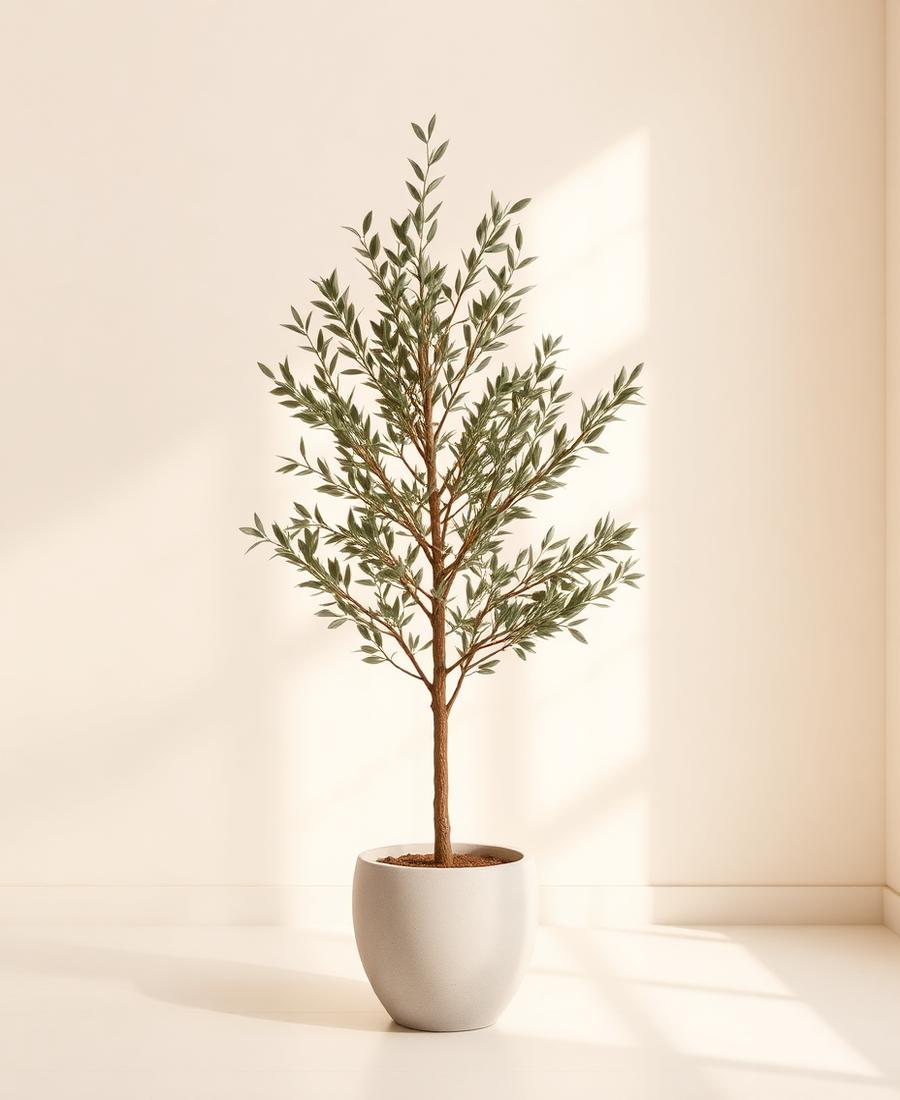
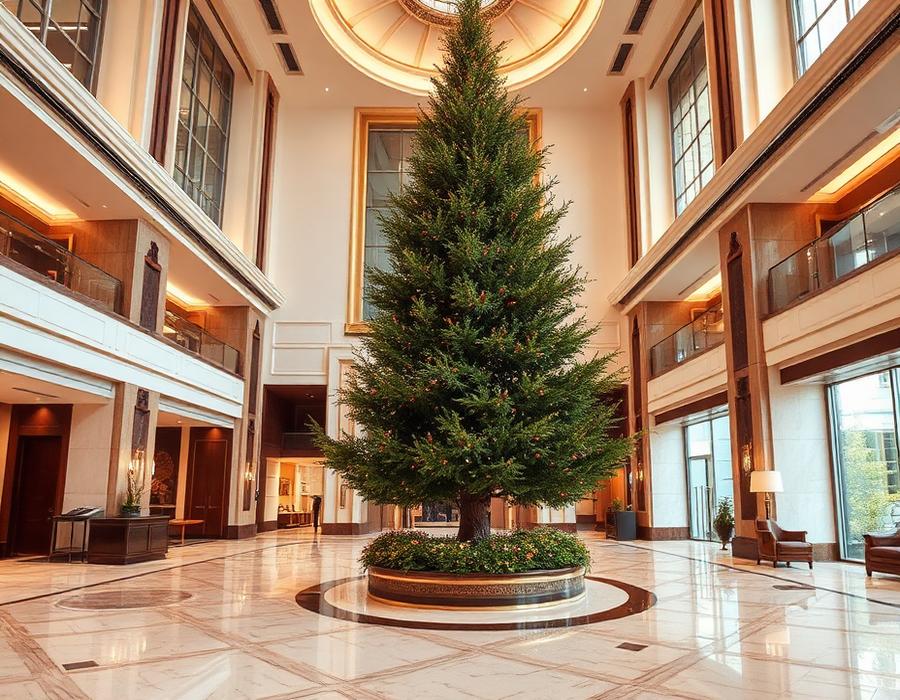

For Restaurants & Cafés
Artificial plants for restaurants are soil-free, maintenance-free greenery built to survive a service — dividing banquettes, softening hard acoustics, screening a window onto a car park, and looking the same at close on Saturday as at open on Monday. Restaurants, cafés and bars are among the heaviest buyers of faux greenery, for entirely practical reasons.
Showing 24 of 27 products


Artificial Cherry Blossom Tree — 5 to 6 ft, White or Pink Blossoms
150 cm (5 ft) – 180 cm (6 ft)
US$239.99 USD

Artificial Palm Tree — 5 to 6 ft, UV-Resistant Fronds, Black or White Pot
5 ft (152 cm) – 6 ft (183 cm)
US$214.99 USD

Artificial Fiddle Leaf Fig Tree — 160 to 180 cm, Nested Grower Pot, Textured Trunk
160 cm – 180 cm (5.2–5.9 ft)
US$312.99 USD

Artificial Fiddle Leaf Fig Tree — 4 ft, 72 Leaves, Black Planter, No Assembly
4 ft (122 cm)
US$239.99 USD


Artificial Olive Tree, 5.25 to 8 ft, Silk Leaves with Fruit, Black Pot
5.25 ft – 8 ft (160–244 cm)
US$181.99 USD


24 in Pine Bonsai Tree for Living Rooms
From US$698 USD — request a quote

Four Option Pine Bonsai 53 and 65 cm Tabletop
From US$1,102 USD — request a quote


Compact Pine Bonsai 70 cm for Office Reception
From US$1,304 USD — request a quote

Artificial Bonsai Tree Cliff Welcome Decoration 1.7ft
From US$598 USD — request a quote


Artificial Pine Bonsai Plant for Home Decor
From US$293 USD — request a quote


Green Accent Pine Bonsai 2.5 ft Tabletop Tree
Approx. 2.5 ft (0.76 m)
From US$293 USD — request a quote

Nineteen Style Pine Bonsai Tree in Natural Wood
From US$293 USD — request a quote

Fiberglass Pine Bonsai Tree 13 ft Indoor Outdoor
10 ft (3 m), 11.5 ft (3.5 m) or 13 ft (4 m)
From US$3,022 USD — request a quote

Artificial plants for restaurants are soil-free, maintenance-free greenery built to survive a service — dividing banquettes, softening hard acoustics, screening a window onto a car park, and looking the same at close on Saturday as at open on Monday. Restaurants, cafés and bars are among the heaviest buyers of faux greenery, for entirely practical reasons.
Why do restaurants use artificial plants?
Because the alternative is asking kitchen and floor staff to keep plants alive during service, and that never survives contact with a busy week. Restaurant conditions are specifically bad for living plants: heat and grease from the pass, deep interiors with no daylight, air conditioning aimed at seated guests, and constant knocks from chairs and trays. Faux planting also solves a design problem that has nothing to do with horticulture — a run of greenery between banquettes gives every table a sense of enclosure without building a partition that closes the room down.
Do artificial plants attract pests near food?
No, and this is the strongest practical argument for them in a food environment. Fungus gnats and fruit flies breed in damp organic potting medium, so removing the soil removes the habitat — there is also no standing water in a saucer and no decaying leaf litter under the pot. What faux planting does collect is airborne kitchen grease, which lays down an invisible tacky film that then holds dust, so plan on wiping foliage near a pass or a grill more often than elsewhere, with warm water and a little dish soap. Confirm anything specific with your local health authority.
How to choose the right size
Restaurant greenery is sized by sightline, not by ceiling. A screen between banquettes wants to sit at seated eye level, roughly 1.2 to 1.4 m, so guests see greenery instead of each other; taller and the room starts to feel like a maze, shorter and it does nothing at all. Entrance and waiting areas take a single 6 to 8 ft specimen well. Keep planting out of service lanes entirely — measure the tray path, not just the aisle. See Grasses, Ferns & Shrubs, Artificial Olive Trees and Commercial Artificial Plants.
Frequently asked questions
Do artificial plants for a restaurant need to be fire-rated?
It depends on your municipality and your occupancy classification, and this is worth checking before a fit-out rather than after. In Canada, fire officials generally reference CAN/ULC-S109; in the US, NFPA 701 is the common benchmark, though testing methods and what counts as compliant differ by jurisdiction. Ask for documentation from anyone you buy from, including us, and confirm the specific requirement for your dining room with your local authority having jurisdiction before you install.
Can restaurant greenery go on an outdoor patio or covered terrace seating area?
Some pieces in this range are indoor-grade only and will fade, crack or discolour with sustained outdoor sun and a Canadian winter. If you need greenery for a patio, terrace or covered outdoor dining area, check the individual product's outdoor suitability first, or look at our For Pools & Patios and UV-Resistant Outdoor ranges, which are built for exactly that setting rather than an interior dining room.
How much assembly is needed before a screening plant or specimen can go into service?
Most floor trees and screening pieces ship with the trunk or frame built and the foliage folded flat for the box, so the task before opening is separating and shaping branches into a natural, dense silhouette that actually blocks sightlines between banquettes. This takes a few minutes per piece for staff to do once, not an ongoing task. No tools are required. Our unboxing and shaping guide covers the technique.
Do these come with a planter or base suited to a dining room floor?
It varies by piece. Some ship with a stated planter or weighted base built to stay put near tables and chairs; others arrive in a plain nursery pot meant to sit inside a container you choose to match the room. If you replace the base, make sure the new one is heavy enough to resist getting knocked by a passing chair or tray, since that stability comes from the base weight rather than from the planter's finish.
Is the height listed the finished height once potted, so I can check it against banquette sightlines?
Yes, the height given is the finished, potted height as the piece will stand, measured to the top of the foliage, unless a listing states trunk-only. That is the figure to compare against the roughly 1.2 to 1.4 m seated eye-level target for a banquette screen, not the box dimensions. Natural variation between units of the same nominal height can be an inch or two, so allow a small margin when the sightline is tight.