
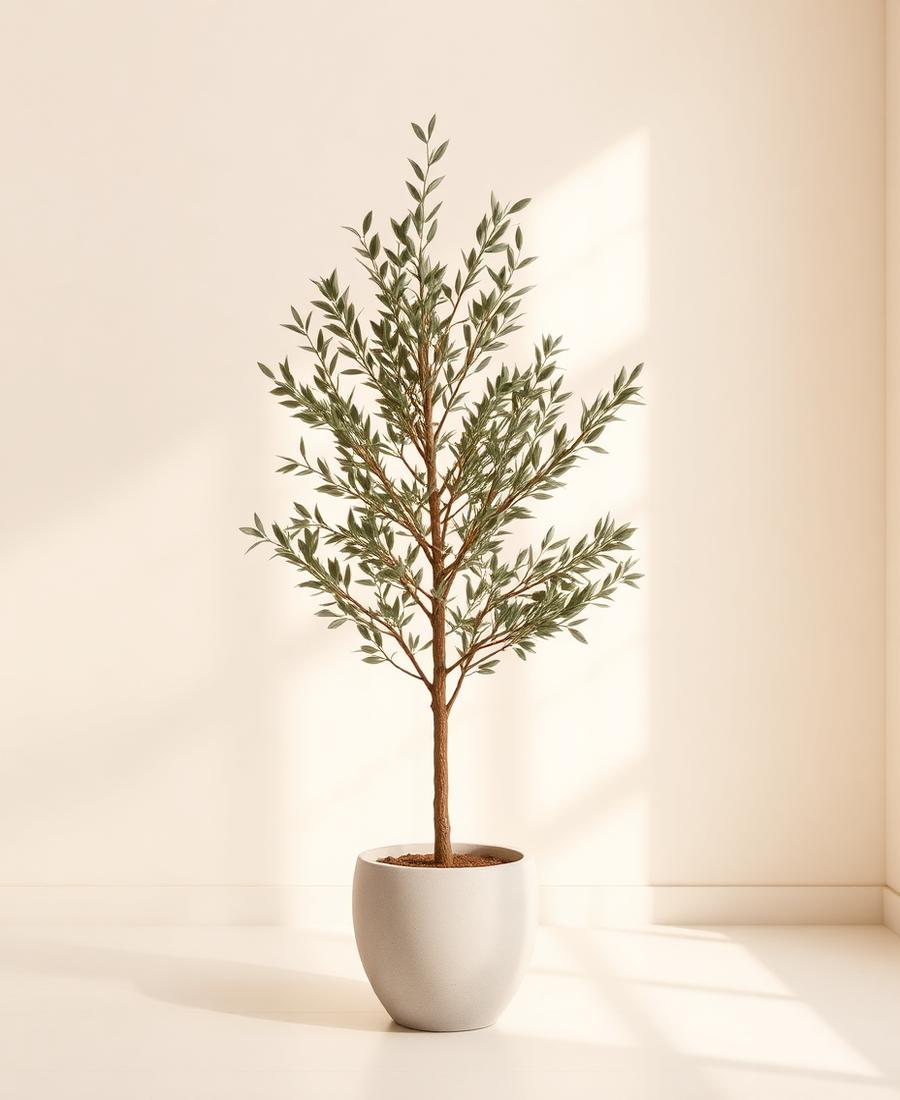


Luxury Artificial Plants
Luxury in a faux plant comes down to a short list: a trunk that survives a close look, leaves that are not all the same green, and a species that actually suits the room it is going into. This page collects the specimens that meet all three - olive, ficus and fiddle leaf, eucalyptus, ginkgo, magnolia, birch, banyan, monstera and dracaena - in heights from roughly four feet up to sixteen.
Showing 24 of 49 products

Artificial Magnolia Tree — 5 to 7 ft, S-Curve Trunk, White Planter
5 ft – 7 ft (60–84 in)
US$232.99 USD


Artificial Fiddle Leaf Fig Tree — 6 ft, White Pot with Moss-Topped Soil
6 ft, single size
US$385.99 USD


Artificial Fiddle Leaf Fig Tree — 4 to 7 ft, Weighted Planter, 5-Minute Assembly
120 cm – 210 cm (4–7 ft)
US$247.99 USD


Artificial Fiddle Leaf Fig Tree — 5 to 7 ft, White Planter with Real Wood Trunk
5 ft – 7 ft (152–213 cm)
US$247.99 USD

Artificial Fiddle Leaf Fig Tree — 4 to 7 ft, 48 to 141 Leaves by Height
4 ft – 7 ft (122–213 cm)
US$269.99 USD


Artificial Dracaena Marginata Tree — 4.3 to 4.9 ft, Weighted Base
130 cm – 150 cm (4.3 ft – 4.9 ft)
US$145.99 USD


Luxury in a faux plant comes down to a short list: a trunk that survives a close look, leaves that are not all the same green, and a species that actually suits the room it is going into. This page collects the specimens that meet all three - olive, ficus and fiddle leaf, eucalyptus, ginkgo, magnolia, birch, banyan, monstera and dracaena - in heights from roughly four feet up to sixteen.
What is the most realistic artificial olive tree?
The one with a real wood trunk. Olive is the hardest species to imitate because the trunk is the whole character of the tree - gnarled, off-centre, scarred - and a moulded plastic trunk repeats a pattern that the eye picks up immediately. Look for listings that state a real wood or fiberglass trunk, count the greens in the canopy photograph, and check that the crown is asymmetric rather than a tidy ball. The full range sits in artificial olive trees.
Are faux olive trees still in style?
Yes, and for a structural reason rather than a fashionable one. The olive silhouette - open canopy, visible trunk, muted grey-green - adds height to a room without adding colour, so it sits inside a neutral scheme instead of arguing with it. That is why it has outlasted three or four cycles of interior fashion while louder species came and went. Mediterranean Style collects the wider palette around it.
What are these actually made of?
Foliage is plastic - polyethylene, or polyester silk on the flowering pieces - and some listings carry a polyurethane real-touch coating. Trunks are real wood, moulded fiberglass, plastic or metal depending on the piece, and the taller specimens carry an internal frame. Every product page names which, in imperial and metric, because a material named honestly is more useful than the word premium. None of this is a living plant: it needs no light and no water, and it will never grow into a corner it does not already fill. Buy the size you want to look at, and see ficus and fiddle leaf trees for the broadleaf alternative.
Frequently asked questions
How do we clean these without damaging the leaves?
Dust weekly with a soft feather duster or a microfibre cloth, working from the top of the crown down. For a deeper clean, a handheld hair dryer on the cool setting clears dust from dense foliage without wetting it. Real-touch and silk leaves generally tolerate a light wipe with a barely damp cloth, but check the product page first, since coatings and finishes differ by species.
Can any of these be used outdoors?
Most pieces on this page are built for indoor rooms - a living room, an entryway, an office. A smaller number are rated for a covered outdoor spot such as a porch or a patio roof, and this is noted on the product page rather than assumed from the species. Direct rain and unshaded sun are not what an indoor-rated piece is built for, so check before placing one outside.
Does the height shown include the planter?
Yes, treat the stated height as tree plus pot together unless a product page says otherwise. On a piece this size, that figure is what tells you whether it clears a shelf, a doorway or a sightline, so measure against the number on the page rather than guessing from the photograph.
How does a faux specimen compare with growing the real species indoors?
Fiddle leaf figs and olive trees, two of the species most represented here, are both genuinely difficult houseplants: fiddle leaf figs drop leaves at the smallest change in light or draught, and olive trees want more direct sun than most Canadian rooms provide and will not overwinter outdoors. A faux specimen gives the same silhouette and colour without either problem, at the cost of never actually growing.
What should we check before buying at this level?
Look for a stated trunk material rather than the word premium on its own - real wood, moulded fiberglass or metal each ages differently. Check whether the planter is included or sold separately, whether the leaf colour is a single tone or several greens mixed through the canopy, and whether the overall height given includes that planter. Those four checks tell you more than a general quality claim.