
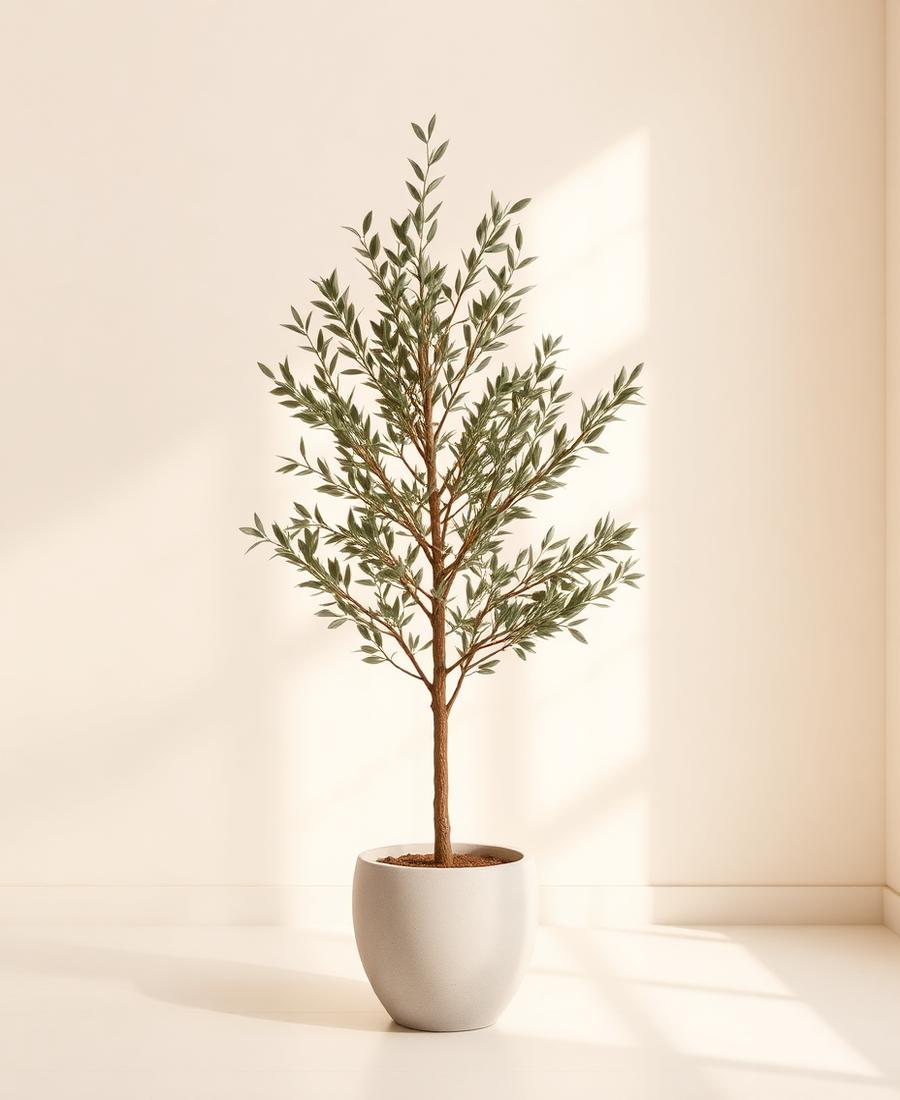
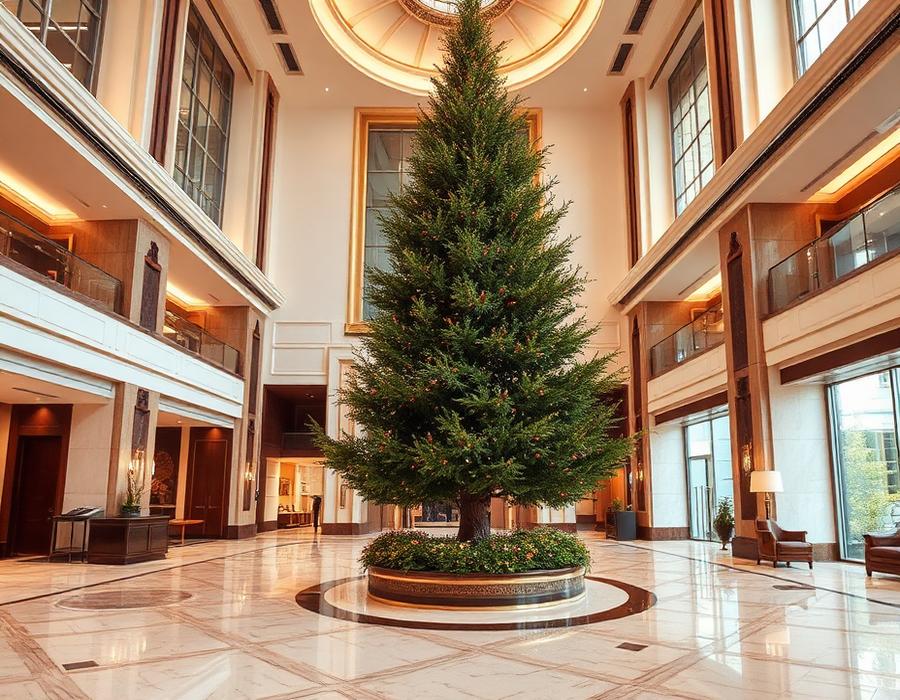

Artificial Olive Tree — 5 to 8 ft, Natural Wood Trunk, Indoor or Outdoor
5 ft – 8 ft
From $389 CAD — request a quote
Questions before you order? Email support@eververda.com
Indoor artificial trees are faux specimens finished and potted for interior placement, including rooms that get little or no useful daylight. They work in living rooms, offices, hallways, hotel corridors, waiting areas and the windowless corners where a real tree would decline within a season.
Showing 11 of 11 products
5 ft – 8 ft
From $389 CAD — request a quote


1 m to 1.7 m (3.3 ft to 5.6 ft)
From $1,668.99 CAD — request a quote

Approx 24 in (0.6 m)
From $127.99 CAD — request a quote


10 ft (3 m), 11.5 ft (3.5 m) or 13 ft (4 m)
From $4,189.99 CAD — request a quote


6 ft (2 m)
From $2,087.99 CAD — request a quote

6.5 ft (2 m)
From $2,787.99 CAD — request a quote

6.5 ft (2 m) or 8.25 ft (2.5 m)
From $2,787.99 CAD — request a quote

Indoor artificial trees are faux specimens finished and potted for interior placement, including rooms that get little or no useful daylight. They work in living rooms, offices, hallways, hotel corridors, waiting areas and the windowless corners where a real tree would decline within a season. Light is irrelevant to them, which is the entire point of the category.
The ones with real wood trunks and mixed leaf tones. Indoors you stand close to a tree and often see it under directional downlighting, which is unforgiving - flat, uniformly coloured foliage and a moulded plastic trunk both give themselves away at two metres. Look for variation in the green across the canopy, some browning or curl at the leaf edges, and bark you would touch without hesitating. Species matters too: olive, ficus, fiddle leaf and maple all read convincingly under interior light, while fine-needled conifers tend to look thin and sparse. Browse Ficus and Fiddle Leaf Trees.
Practically nothing living, which is why this category exists. A room with no window, or one whose only light is borrowed from a corridor, will not sustain a tree of any species - the low-light plants that get recommended still need some daylight, just less of it. Basements, internal meeting rooms, windowless bathrooms, lift lobbies and north-facing hallways through a Canadian winter are all cases where an artificial specimen is the only option that looks the same in March as it did in September. It also removes the watering problem in rooms nobody routinely visits.
Measure ceiling height first, then check what the tree has to stand beside. Standard residential ceilings of 8 to 9 feet take a tree of 6 to 7 feet comfortably. Office and retail interiors often run to 10 feet or more, where you should go taller rather than wider. Keep the crown clear of ceiling fixtures and air vents, since a constant draught will slowly push a canopy out of shape. See Medium Trees and Artificial Plants for Offices.
A tree in a dim corner or windowless room collects dust the same as any other, and without direct sun to make it obvious it can build up unnoticed for longer. A soft cloth or feather duster on broad leaves, or a low-heat hairdryer for finer or curled-edge foliage, clears it in a few minutes every few weeks. Working from the top of the canopy down stops dust settling on leaves you have already done. No water is needed.
Yes, if the spot gets sustained direct sun despite being described as an indoor placement. Fading is driven by UV exposure, not by whether a room is generally described as bright or dim, so a tree beside a large south-facing window will fade over months and years even indoors, while the same tree in a windowless hallway will not fade at all. Rotating a piece occasionally if it does sit near strong light keeps colour change even across the canopy.
Most floor trees ship with the trunk built and the branches folded flat for the box, so on arrival you separate and bend them outward into a natural, open silhouette. This takes a few minutes for a simpler species and longer for a dense, mixed-tone canopy with real wood branching. No tools are required. Our unboxing and shaping guide covers the branch-shaping technique step by step.
It varies by piece: some ship in a stated decorative pot named in the title or variant options, while others arrive in a plain nursery pot meant to sit inside a planter you choose, which is common for pieces destined for a windowless corner where the planter itself gets less attention than the tree's silhouette. Check the individual product details for what is included before assuming a decorative pot comes with it.
Yes, the height stated is the finished, potted height as the tree will stand, measured to the top of the foliage, unless a listing states trunk-only. That is the number to check against a standard residential ceiling or a lower commercial one, not the box dimensions. Natural variation between units of the same nominal height can be an inch or two, so treat a tight clearance figure as a maximum rather than exact.