
How Much Should a Decorative Indoor Tree Cost? (Not a Christmas Tree)
29 August 2026
Type "how much does an artificial tree cost" into a search engine and you get pages of Christmas trees. Useful in December, useless if what you want is a tree that stands in your living room all year. This guide is about year-round decorative trees — olive, fiddle leaf fig, palm, bonsai — and the question nobody answers plainly: how much should you spend, given your actual room?
We won't walk the price ladder tier by tier here — our guide to why faux trees cost $80 or $900 does that, materials and construction included. And we won't list every retailer — the Canadian retailer survey covers who sells what. This piece does one job: match your room to a sensible budget.
What's the realistic price range for a year-round decorative tree in Canada?
Four verified anchor points frame the market, all checked in late August 2026. At the floor, IKEA Canada's FEJKA artificial olive tree, 150 cm tall, is $69.99 CAD. The specialist core — where dedicated artificial-plant sellers operate — runs roughly $200 to $450: Waysaving in Toronto lists a 6 ft olive at $230.00 CAD and a 7 ft at $260.00 CAD, Véronneau in Quebec sells a 70-inch olive at $299.99 CAD, and our own olive trees run $199 to $449 CAD depending on height and build. Design brands reach higher: West Elm Canada's faux potted olive tree spans $449 to $973 CAD across its 5 ft and 7 ft sizes. At the top, Véronneau's handmade Quebec-artisan olive trees run from $299.99 up to $1,149.99 CAD across 5 to 9 ft sizes.
So a defensible budget sits anywhere from $70 to over $1,100. The way to narrow it isn't brand loyalty. It's your room.
How far away will people actually see it from?
Viewing distance is the biggest lever, and most buyers never think about it. From three metres or more — a hallway corner, the top of a stairwell, the background of a video call — you're buying silhouette and colour. Leaf texture, trunk detail and stem joins are invisible at that range. Mass-market trees are built for exactly this, and IKEA's $69.99 FEJKA proves the point: from across a room it reads as a small olive and nothing about it will embarrass you. Spending $400 on a tree nobody approaches buys detail nobody sees.
From two to three metres — the living-room focal point, seen from the sofa — foliage density becomes readable. A sparse tree looks sparse from the sofa every single evening. This is where the specialist band starts earning its money: fuller heads, wired branches you can shape, and colour variation across the leaves rather than one flat green.
Will anyone stand within arm's reach of it?
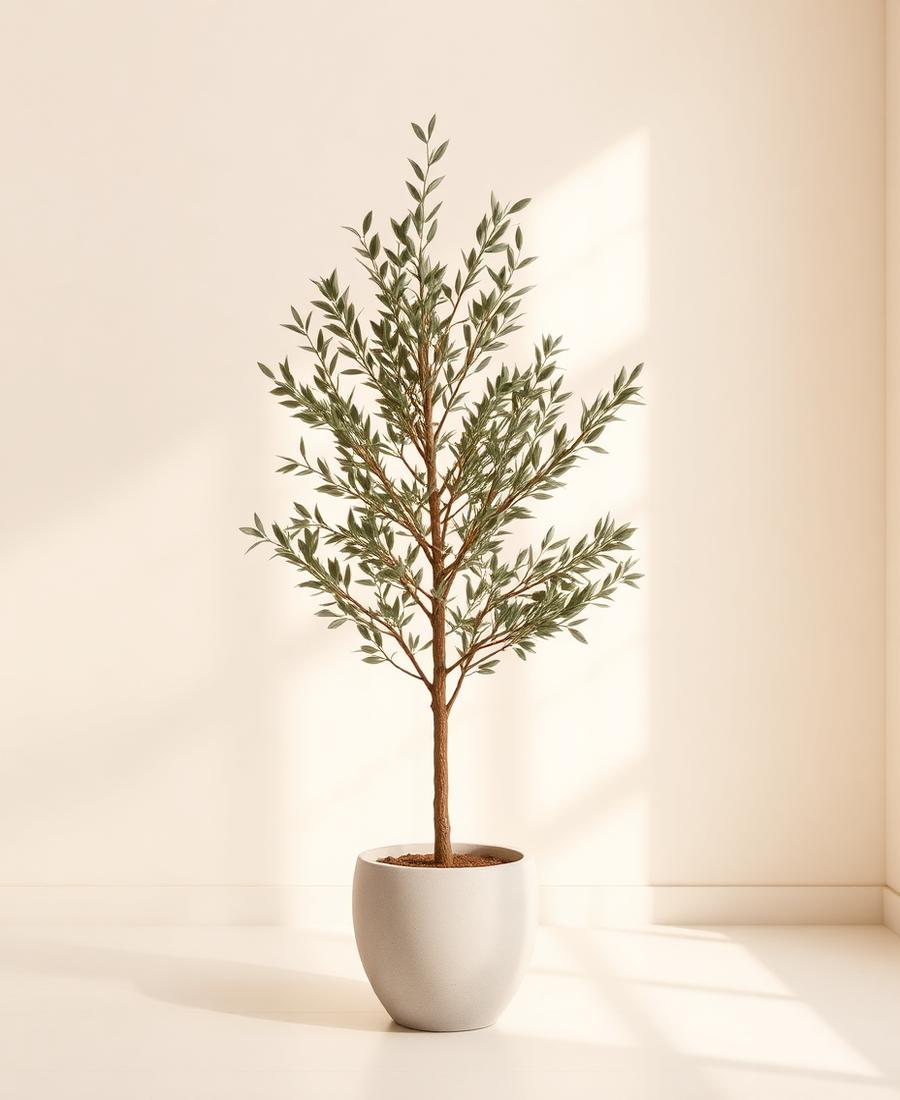
Entryways, dining rooms, and any hallway guests walk down put people within a foot of the tree, and at that distance trunk texture, leaf undersides and the joins where stems meet branches decide everything — what makes an artificial tree look real covers exactly which details give a tree away. Close viewing is where documented construction matters more than brand. A natural wood trunk, published materials, and a foliage count you can check beat a glossy product photo. Our 4 to 6 ft olive with PE foliage and stainless-steel branches runs $199 to $329 CAD, and every Eververda listing publishes its specifications — heights, materials, foliage counts — so you know before buying what you'll be looking at from a foot away.
Does ceiling height change the number?
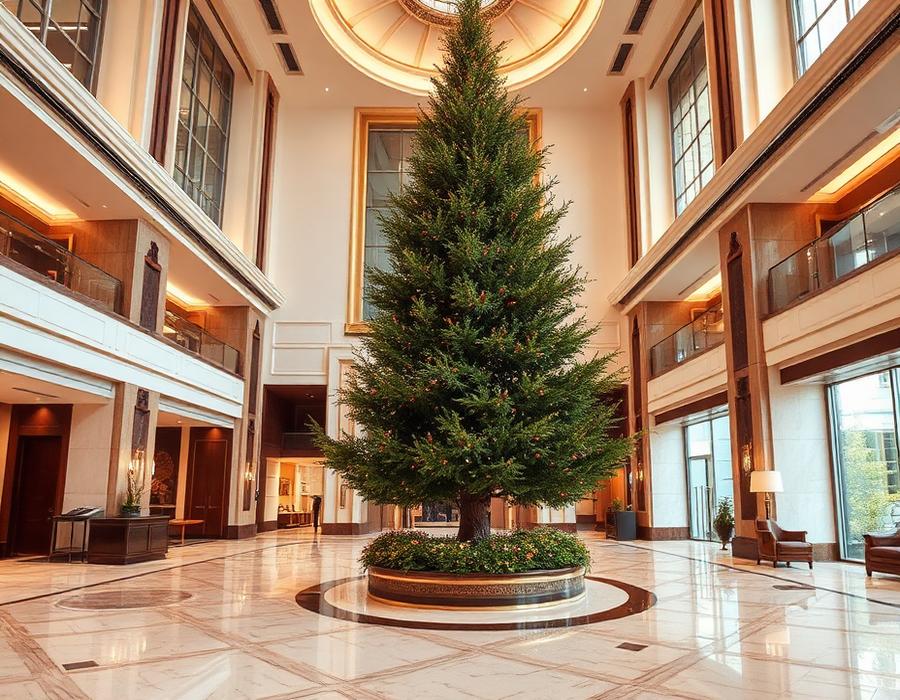
Yes, and more steeply than most people expect. Under a standard ceiling, a 5 to 6 ft tree is proportionate and the specialist band covers you. Cross 7 ft of tree and prices jump, because taller trees need engineered stability, much more foliage and oversized freight. Crate & Barrel's 9 ft potted olive is $899.00 CAD; Véronneau's artisan builds reach $1,149.99 CAD at the top of their range. For genuinely large spaces — double-height foyers, commercial lobbies — the market moves to commercial-grade construction: our 220 cm cedar pine bonsai is $1,246.99 CAD and is built for exactly that setting. For the method of matching tree height to a specific room, use our sizing guide rather than guessing at the checkout.
What should you budget for your situation?
| Situation | Sensible budget (CAD) | What that buys, at verified prices |
|---|---|---|
| Background greenery seen from 3 m or more — hallway corner, stairwell, behind you on video calls | Under $100 | Mass-market trees such as IKEA's 150 cm FEJKA olive at $69.99 |
| Living-room focal point, seen from the sofa at 2–3 m | $200–$330 | Specialist 4–6 ft trees: Waysaving's 6 ft olive at $230.00; our PE-foliage olive at $199–$329 |
| Entry, dining room, or anywhere guests stand within arm's reach | $250–$450 | Documented builds — natural wood trunks, published foliage counts: our olives run to $449; Véronneau's 70-inch olive is $299.99 |
| Tall or double-height space needing 8–9 ft of tree | $600–$1,150 | Crate & Barrel's 9 ft potted olive at $899.00; Véronneau artisan sizes to $1,149.99 |
| Commercial lobby or large display | $1,200 and up | Commercial-grade builds such as our 220 cm cedar pine bonsai at $1,246.99 |
Two notes on using the table. First, the bands overlap deliberately: a well-built 5 ft tree in a closely viewed entryway is a better purchase than a taller, cheaper tree in the same spot, so let viewing distance outrank height when the two argue. Second, species barely changes the bands. A fiddle leaf fig obeys the same viewing-distance logic as an olive — our 4 to 7 ft fiddle leaf fig in a white planter runs $219 to $399 CAD, squarely in the same specialist band. Offices follow the same rules with heavier traffic; our office comparison covers that setting.
Frequently asked questions
Is a $70 artificial tree good enough for a living room?
It can be, if it lives at a distance. IKEA's FEJKA olive at $69.99 CAD reads convincingly from three metres, which suits corners and backgrounds. As a focal point seen nightly from the sofa at two to three metres, foliage density becomes readable and sparse heads show, which is where specialist trees in the $200 to $450 band justify themselves.
How much should I spend on a tree for an entryway?
Plan on $250 to $450 CAD. Entryways put guests within arm's reach, where trunk texture and leaf construction are plainly visible, so this is the one spot where paying for documented build quality — a natural wood trunk, published foliage counts — makes an obvious difference. Verified anchors in that band include Véronneau's 70-inch olive at $299.99 CAD and our olives at $199 to $449 CAD.
Why do some artificial trees cost more than $900?
Height and construction. Above 7 ft, trees need engineered stability, far more foliage and oversized freight: Crate & Barrel's 9 ft olive is $899.00 CAD and West Elm's faux olive range tops out at $973 CAD. Artisan construction adds more still — Véronneau's handmade olive trees reach $1,149.99 CAD — and commercial-grade builds for lobbies start above $1,200.
Should I pick the tree size before setting a budget?
Yes. Height is the single biggest price driver, so a budget set before measuring the room is a guess. A 5 to 6 ft tree under a standard ceiling sits in the $200 to $450 specialist band, while 8 to 9 ft trees run $600 to $1,150 at verified Canadian prices. Measure first, then budget.
Is a more expensive artificial tree always more realistic?
No. Price tracks height and brand as much as build, and a design-brand tree can cost double a specialist tree of the same size. What predicts realism at close range is verifiable construction — trunk material, foliage count, colour variation — not the number on the tag, which is why listings that publish their specifications are safer buys at any budget.
For the tier-by-tier breakdown of what construction changes at each price, read why faux trees cost $80 or $900. For olive trees specifically, our size-by-size olive pricing guide works the numbers per foot, and our real-versus-artificial comparison runs a live olive against an artificial one over five years.
Competitor and component prices were checked on 28–29 August 2026 and are quoted as displayed at the source. Eververda prices are CAD and current as of 30 August 2026.