
Which Fake Plant Looks Most Real? Ranked by How Hard Each Species Is to Fake
12 October 2026
Prices mentioned in this article are Canadian dollar (CAD) list prices. Current US prices, in US dollars, are listed under Products in this article and on each product page.
Ask which fake plant looks most real and you will be handed brand names. Brand names are the wrong unit, because the same company sells a convincing 29 in ZZ plant and an unconvincing fern. Realism is decided by the species first and the build second, and some species are far harder to fake than others. A broad glossy leaf is easy to reproduce convincingly. A fern frond with two hundred separate pinnae is close to impossible at any sane price.
Which fake plant looks most real?
The most convincing artificial plants are the broad, thick, glossy-leaved species: ZZ plant, monstera, rubber plant, alocasia and bird of paradise. Their real leaves are large, few, simple in outline and naturally semi-gloss, so a moulded leaf has very little to get wrong. A 29 in ZZ plant with 72 real-touch leaves is $459 CAD and will pass close inspection in a way no artificial fern at any price does.
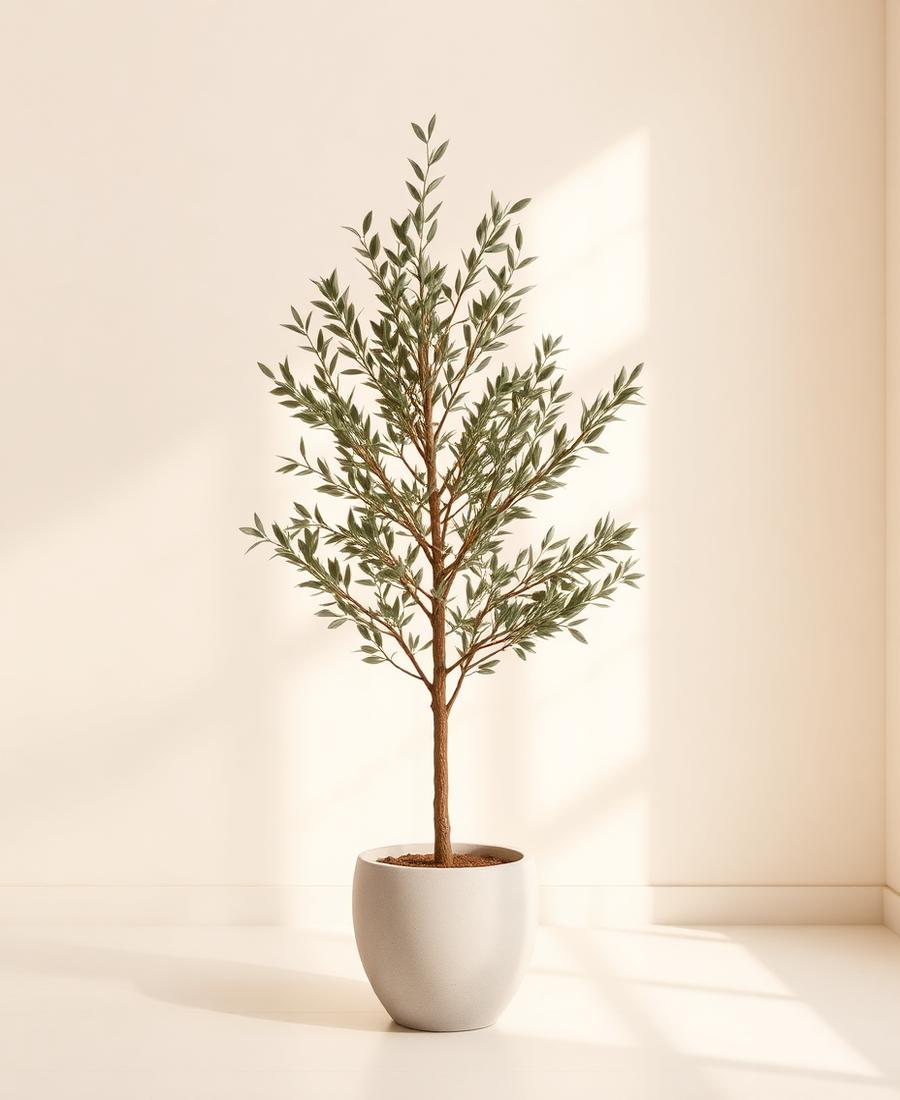
The least convincing, in roughly this order, are ferns, needled conifers, olive, palms and anything in flower. Not because they are made worse, but because what makes them look right is detail repeated hundreds of times, and that detail is exactly what manufacturing removes.
So the useful version of the question is not which plant looks most real, but which plant you can buy cheaply and still have it look real. On that test the broadleaf species win easily.
Why are some species almost impossible to fake convincingly?
Three things decide it, and you can assess all three from a product photograph.
Leaf count per plant. A real ZZ plant carries perhaps 60 to 90 leaflets. A single Boston fern frond carries well over a hundred pinnae, and a mature plant carries dozens of fronds, so the real count runs into the thousands. Reproducing thousands of separate parts is not economic, so artificial ferns are built from printed or cut sheets that imitate a frond as one piece. From two metres away it works. From one metre it does not.
Leaf size. Large leaves hide manufacturing. A monstera leaf is the size of a dinner plate, so the moulding carries real vein relief, a visible midrib and a believable edge. Shrink the same process down to an olive leaf at two centimetres and the vein detail disappears, because there is no room for it.
Natural gloss. This one is counterintuitive. Plastic looks fake largely because it is shiny, so species whose real leaves are genuinely shiny get that for free. ZZ, rubber plant and monstera are naturally semi-gloss. A real lavender or olive leaf is matte and slightly dusty, which plastic reproduces badly, and the cheapest way to fake matte is a sprayed finish that rubs off on your fingers.
The underlying material matters too, but less than species choice. Our guide to what artificial plants are made from covers polyethylene, polyester and real-touch coatings in detail.
Which artificial plants look most realistic, by species?
ZZ plant. The best value realism in the category. Few leaves, thick, naturally glossy, and they grow in an upright fan that is easy to arrange correctly. A 29 in ZZ plant with 72 real-touch leaves is $459 CAD.
Monstera. Large leaves, deep natural splits, and the splits themselves are irregular on real plants, so irregularity in manufacturing reads as authentic rather than as a defect. A 24 in real-touch monstera in a white tabletop pot is $349 CAD, and a floor-standing version at 90 to 120 cm runs $189 to $449 CAD depending on height and whether you take one or a pair.
Rubber plant. Thick, simple, strongly glossy leaves. Variegated versions are better still, because the colour break gives the eye something to read other than a flat green. A 4.3 ft rubber tree with 72 variegated real-touch leaves is $739 CAD.
Alocasia. Very large arrowhead leaves on long stems, held well apart, so the plant is mostly air and the few leaves carry the whole effect. A 30 in set of two in a white pot is $399 CAD.
Bird of paradise. Convincing in shape and scale, with one caveat: real bird of paradise leaves split along the ribs with age, and a plant with perfectly intact leaves reads as new rather than as fake. A 3.7 ft plant with 8 leaves is $599 CAD.
Snake plant and agave. Geometrically simple, which helps, but both depend on a colour gradient running up the leaf and a crisp edge margin. Get those wrong and the plant looks like moulded rubber. A 3 ft snake plant set of two with 24 leaves each is $279 to $299 CAD, and a 22 in agave set of two is $229 CAD.
Ferns. The hardest common species. Buy them for softness and fill in a hanging position, not for close inspection, and keep them above eye level where the frond construction is not visible. Look for a published branch count, since that is the one density figure ferns are sold on, but accept that no fern survives a close look.
Trees. Trees are a separate problem, because the trunk carries as much of the realism as the foliage does. That is covered in what makes an artificial tree look real.
What type of artificial tree looks most real?
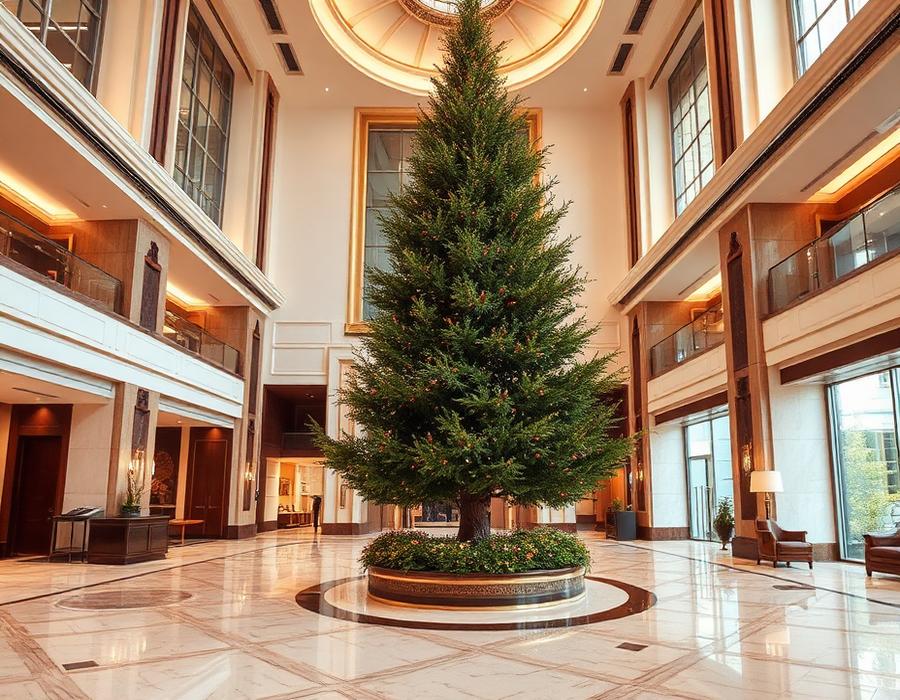
Among trees, the forgiving species are olive, ficus and fiddle leaf, because their real foliage is irregular to begin with. The unforgiving ones are palms, where a real frond is a single structure with hundreds of parallel leaflets and any shortcut in the moulding is immediately visible. Trunk construction decides the rest: a natural wood or cast fibreglass trunk is convincing because it carries real bark relief, while a moulded plastic trunk gives itself away with a bark texture that repeats every few inches and a seam running its length.
How do the species compare?
| Species | How convincing | Why | What to check before buying | Eververda example |
|---|---|---|---|---|
| ZZ plant | Best in category | Few leaves, thick, naturally glossy | Leaf count published; stems fanned, not bunched | 29 in, 72 real-touch leaves, $459 CAD |
| Monstera | Very good | Large leaves, irregular natural splits | Splits differ leaf to leaf, not identical | 24 in real-touch, $349 CAD |
| Rubber plant | Very good | Thick glossy leaves; variegation helps | Tonal variation within each leaf | 4.3 ft, 72 variegated leaves, $739 CAD |
| Alocasia | Good | Few very large leaves carry the effect | Stem stiffness; leaves should not droop flat | 30 in, set of 2, $399 CAD |
| Bird of paradise | Good | Right shape and scale | Some leaf splitting reads as mature, not damaged | 3.7 ft, 8 leaves, $599 CAD |
| Snake plant | Fair to good | Simple geometry, but needs a colour gradient | Edge margin crisp; gradient up the leaf | 3 ft, set of 2, 24 leaves each, $279 to $299 CAD |
| Agave | Fair to good | Simple form; depends on tip and taper | Taper from base to tip, not a constant width | 22 in, set of 2, $229 CAD |
| Fern | Poor up close | Real fronds carry hundreds of separate pinnae | Branch count; place above eye level | Check published branch count |
| Olive, palm, conifer | Depends on build | Small or highly repeated foliage detail | Trunk material and canopy density | See the artificial tree guide |
Where do cheap artificial plants give themselves away?
Four tells, in the order your eye notices them across a room.
One flat green. No real plant is a single colour. New growth is lighter, mature leaves are darker, shaded leaves read almost blue, and undersides differ from tops. Foliage moulded in one colour in one run is the thing you notice from the doorway without being able to say why.
Uniform leaf size. Real plants carry leaves at every stage of growth. A plant where every leaf is the same size looks manufactured, because it was.
Visible stem joins. Look where leaf meets stem. On better pieces the join is wrapped or moulded continuously. On cheap pieces you see a plastic collar, or a wire, or a blob of glue.
The pot. Often the worst part of an otherwise good plant, and the cheapest thing to fix. A thin plastic pot with exposed foam or visible green floral block under the stems undoes the foliage above it. Repotting into a weighted ceramic or cement planter and topping with real moss or gravel is the single highest-value improvement available, and it costs very little.
Does a more expensive artificial plant look more real?
Only up to a point, and the correlation is weaker than people assume. Price mostly buys size, leaf count and a better planter. It does not buy you out of a hard species. A well-built fern still reads as artificial at one metre, while a $229 CAD agave set can pass completely, because agave is an easy shape and fern is not. Choose the species that suits the viewing distance first, then spend within it. Our note on why faux trees cost $80 or $900 sets out what the money actually goes on.
What we do not claim
Realism is partly subjective and depends heavily on viewing distance and light. Nothing here is a lab measurement. Where we hold a specification such as leaf count, branch count, spread or pot diameter, we publish it on the product page. Where we do not hold it, the field is left empty rather than filled with a guess. Dimensions carry a tolerance of plus or minus 3 percent.
Frequently asked questions
Which fake plant looks most real?
Broad, thick, naturally glossy species: ZZ plant, monstera, rubber plant, alocasia and bird of paradise. Their real leaves are large, few and simple, so a moulded version has little to get wrong, and their natural gloss is the one case where plastic's shine is an advantage rather than a tell.
Which artificial plants look the worst?
Ferns first, then needled conifers, then anything in flower. All three depend on fine detail repeated hundreds or thousands of times, which is the first thing manufacturing removes. They can still work in a hanging or high position where the construction is not visible at close range.
Do real-touch artificial plants look more realistic?
They feel more realistic, and that changes how people judge them when they are within reach. A real-touch finish is a polyurethane coating applied over a leaf, giving a soft, slightly yielding surface instead of dry hard plastic. It is worth paying for on a desk or side table and largely wasted on a plant across the room.
What is the most realistic fake tree?
For trees rather than plants, the answer is a tree built on a natural wood or cast fibreglass trunk with multi-tone foliage, a published leaf count, and a canopy spread of roughly half the tree's height. Species matters less than build: olive, ficus and fiddle leaf are forgiving, palms are not.
How can you tell an artificial plant is fake from a photograph?
Look for a single flat green across the whole plant, leaves that are all the same size, plastic collars or glue where leaves meet stems, and a thin pot with foam or green floral block showing. Any one of those is visible in a product photograph before you buy.
Does repotting make an artificial plant look more real?
More than almost anything else you can do for the money. The supplied pot is usually the weakest part of the piece. Moving the plant into a weighted ceramic or cement planter and topping the surface with real moss or gravel removes the two strongest artificial cues at once, the thin pot and the visible base material.
Where to look
The broadleaf species discussed above sit in artificial plants, and real-touch pieces intended for close viewing are grouped there too. For trees, where trunk construction carries much of the realism, see large artificial trees and the artificial olive trees.
Eververda prices are CAD and current as of 12 October 2026.