
The Best Artificial Trees and Plants for a Living Room
29 August 2026
What's the best artificial tree for a living room?
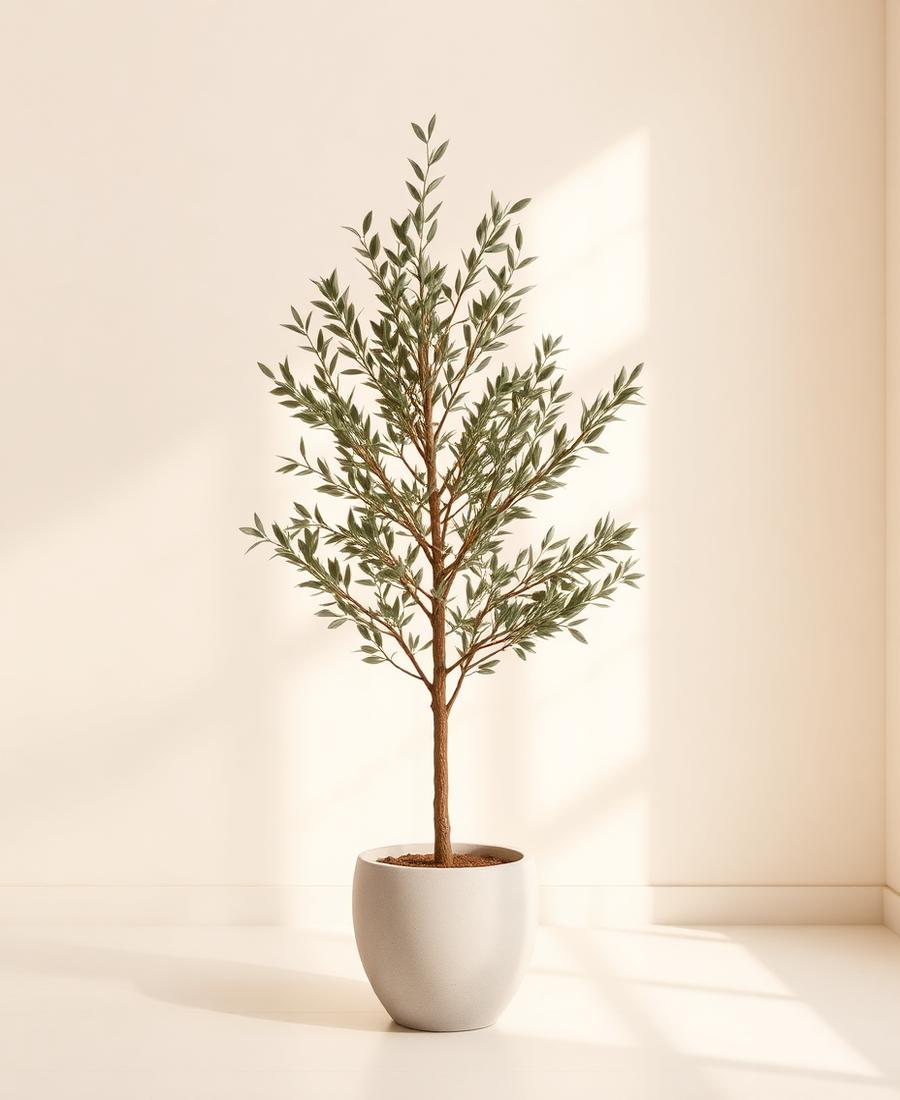
For most living rooms, the best choice is a single statement tree sized to roughly two-thirds of the ceiling height, placed in the room's emptiest corner or the gap beside a sofa arm, in foliage that matches the room's existing palette. A 6 to 7 ft olive tree with silk foliage and a black pot at $249 to $449 CAD suits a warm, Mediterranean-leaning room; a fiddle leaf fig in a white planter at $219 to $399 CAD reads more modern and graphic. Living rooms carry more furniture, more foot traffic, and more close-up seated viewing than any other room, so placement and scale matter more here than species choice. This guide covers where the tree goes, how big it should be, one tree versus a grouping, which foliage fits which look, and how to keep it upright around kids and pets.
How tall should a living room tree be?
Height is a proportion problem, not a fixed number — it depends on ceiling height and nearby furniture, covered in full in how to choose the right artificial tree size. The living-room-specific rule worth adding: measure against the tallest thing already in the room, not the ceiling alone. Next to a 34 in sofa back or a low media console, a tree topping out around 5 ft still looks substantial. Next to a fireplace mantel or a floor-to-ceiling window, the same tree can look stranded — that spot needs 6.5 to 7.5 ft to hold the wall. With crown moulding, stop the canopy at least 6 in short of it; a tree that grazes the ceiling reads as too big even when the math says it fits.
Where does it actually go — corner, fireplace, window, or shelf?
Five spots come up over and over in living rooms, and each wants a different scale.
The empty corner beside the sofa. The single most common living-room placement, and the most forgiving. A floor tree at 6 to 7 ft fills the dead space without crowding the seating. Because it sits at the edge of the sightline rather than in the middle of it, this is also the spot worth spending the most on realism — it gets looked at from an angle for hours at a time.
The gap behind an armchair. Narrower and shallower than a sofa corner, so look for a slim canopy rather than a wide bushy one — a 5.25 to 7 ft olive tree with a natural wood trunk at $249 to $419 CAD has an open, columnar shape that clears an armchair's back without touching it.
Either side of a fireplace or TV wall. This is the one spot in the room built for a pair rather than a single tree — matching trees at even height on both sides read as intentional in a way a single off-centre tree doesn't. A golden cane palm, available single or as a pair, from 4.5 to 9 ft, at $289 to $869 CAD, is sized for exactly this: order the pair listing rather than buying two singles, since the pair is set to match.
A bare window wall. Daylight from behind will silhouette a tree, which is flattering to a loose, layered canopy and less flattering to a dense, boxy one. A cherry blossom tree at 5 to 6 ft in white or pink, $329 to $419 CAD, has enough negative space between branches to still look like a plant in silhouette rather than a dark shape.
Console and shelf scale. Not every living room has floor space to spare. A tabletop piece belongs on a console, credenza, or wide bookshelf rather than the floor — a 24 in real-touch monstera in a white tabletop pot at $349 CAD, sized to sit on a low console rather than the ground, works well at this scale.
One statement tree, or a grouping of three?
A single statement tree is the right call in most living rooms: one well-placed 6 to 7 ft tree does more for a room than three smaller ones scattered around it, and it's easier to keep the sightlines clean (more on that below). Reach for a grouping of three instead when the room has a wide, flat run of wall or floor with nothing else breaking it up — a long window wall, or the stretch of floor beside a sectional sofa. Group at uneven heights rather than matching ones: a 6 to 7 ft tree, a 4 ft plant, and a small tabletop piece reads as a considered vignette, where three trees the same height reads as inventory. Odd numbers sit better than even ones for the same reason a single centred piece can feel static — the eye has somewhere to land, then somewhere to move to next.
How do you keep the eye line clear across the seating area?
Living rooms are for sitting and talking, and a tree that blocks that sightline gets in the way in a manner other rooms don't have to account for. Sit in every seat in the room — sofa, armchair, the far end of a sectional — and check what's between you and the person opposite. A tree placed behind or beside seating, rather than between two seats, stays out of the conversation. Canopy height above eye level (roughly 4.5 to 5 ft seated) also matters: a tree short enough to see over from a seated position won't interrupt a sightline even at middle distance, where the same footprint at head height would.
Which foliage matches your room's palette?
Species reads as style shorthand faster than almost any other decor choice in the room, so it's worth matching foliage to the palette that's already there rather than picking on shape alone.
- Olive, Mediterranean-leaning rooms. Silvery-green leaves and a gnarled or braided trunk suit warm neutrals, terracotta, rattan, and linen. The 4.9 to 6.9 ft olive tree with a natural wood trunk, $259 to $439 CAD, or the 4 to 6 ft olive with PE foliage and stainless-steel branches, $199 to $329 CAD, both fit this palette.
- Fiddle leaf fig, modern rooms. Large, glossy, graphic leaves suit black, white, and grey schemes with clean furniture lines — mid-century or contemporary rooms rather than layered, textured ones.
- Palm, tropical or coastal rooms. Fine, feathery fronds suit rattan, wicker, and light woods, and a lighter, airier overall look than either olive or fiddle. The 4 to 6 ft areca palm with 15 to 21 leaves depending on height, $289 to $419 CAD, is a softer-textured option than the more architectural golden cane above.
None of these are hard rules — a fiddle leaf fig sits fine in a room that's otherwise mid-century, and an olive tree softens a stark all-white space by contrast. Treat the palette match as the default that needs the least justification, not a limit.
What about foot traffic and pets?
Living rooms see more foot traffic, more running kids, and more curious pets than almost any other room in the house, so stability and material safety both matter more here. If cats or dogs share the room, check which species and materials are worth being careful around in artificial plants and pet safety before you buy. And because a living-room tree usually sits near a walking path rather than tucked against a wall, tipping risk is real — how to stop an artificial tree tipping over covers weighted bases and anchoring in detail; the short version for a living room is to choose a model with a weighted or cement-filled pot over a light plastic one, and to keep the tree out of the direct path between the doorway and the seating.
Will it look real from the sofa?
Living rooms put a tree under closer, longer scrutiny than a hallway or entryway does — people sit near it for an hour at a time, at conversational distance, in good light. That's a different test than a quick glance walking past. What actually reads as real at that range is covered in what makes an artificial tree look real, and how to style one to pass that test — pot choice, leaf fluffing, placement relative to light — is covered in how to make artificial plants look real. Both are worth reading before you buy for a living room specifically, since this is the room where realism gets tested hardest.
Which pieces fit which price and placement?
| Product | Price (CAD) | Best living-room spot |
|---|---|---|
| Olive tree, 4–6 ft, PE foliage | $199–$329 | Gap behind an armchair |
| Fiddle leaf fig, 4–7 ft, white planter | $219–$399 | Modern-room corner statement |
| Areca palm, 4–6 ft | $289–$419 | Window wall, tropical palette |
| Golden cane palm, 4.5–9 ft, single or pair | $289–$869 | Either side of a fireplace or TV wall |
| Cherry blossom, 5–6 ft, white or pink | $329–$419 | Bare window wall |
| Olive tree, 5.25–8 ft, silk foliage | $249–$449 | Sofa-corner statement piece |
| Monstera, 24 in, tabletop | $349 | Console or credenza, no floor space |
Frequently asked questions
How many artificial trees or plants should a living room have?
One statement floor tree is enough for most living rooms. Add a second, smaller piece — a tabletop plant or a low shelf piece — only if the room has a second area that needs filling, such as a console table or a wide window wall. More than two floor pieces in one room usually starts to look cluttered rather than styled.
Should the tree match my sofa colour or contrast with it?
Contrast reads better than matching in most cases. A tree in front of or beside a sofa should stand out from the upholstery rather than blend into it — a dark-leaved olive or fiddle against a light sofa, or a lighter palm against a dark one, keeps the tree visible as its own element rather than disappearing into the seating.
Is a taller tree always better for a living room corner?
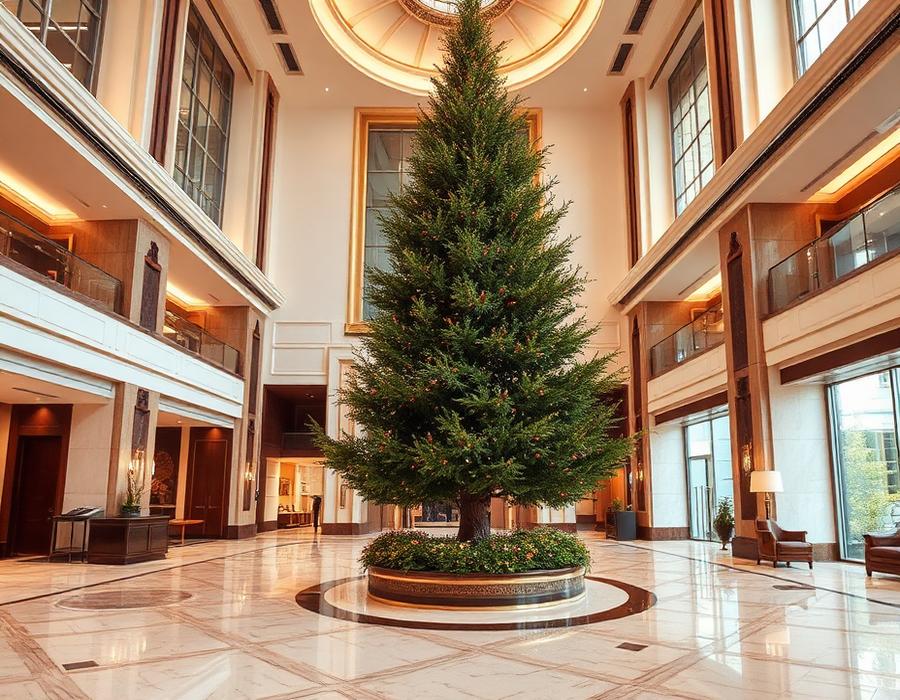
No. A tree taller than the proportion the room can carry looks stranded rather than grand, especially under an 8 ft ceiling. Match the tree to the tallest nearby furniture and to ceiling height using the method in how to choose the right artificial tree size rather than defaulting to the biggest option available.
Can I put a tree directly in front of a window?
Off to the side of the window is usually better than dead centre, since a centred tree can block light and sightlines to the outside. Beside the window, a tree still catches the natural light that flatters faux foliage most, without cutting the view or the light coming in.
What's the cheapest way to fill an empty living room corner?
A single mid-size tree in the $199 to $329 CAD range, such as the PE-foliage olive above, fills a corner for less than most side tables or lamps cost, and needs no ongoing care. Sizing it correctly for the corner matters more than spending more for a larger one.
Eververda prices are CAD and current as of 30 August 2026.