
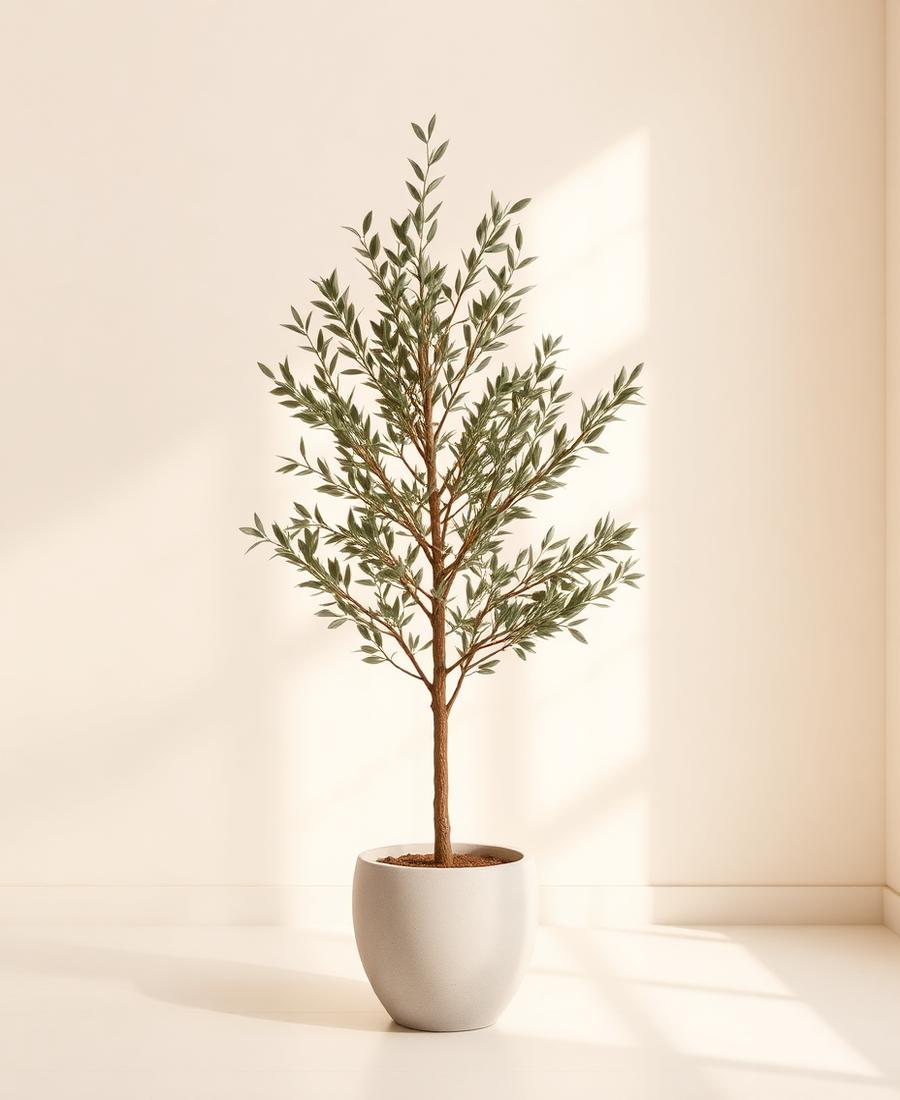

Are Artificial Plants Safe Around Cats and Dogs? An Honest Answer
29 August 2026
Short answer: artificial plants remove the single biggest plant risk in a home with cats or dogs, which is poisoning from live foliage. Several of the most popular houseplants in Canada are on the ASPCA's toxic list, including snake plants, dracaena and monstera. A faux version of any of them contains none of the plant compounds that cause the trouble. But artificial plants are not risk-free either: a pet that chews plastic or silk foliage can swallow fragments, and a swallowed piece of plastic is a vet call, not a wait-and-see. You are trading a toxicity risk for a smaller, more manageable chewing risk, and the rest of this article explains both sides. One disclosure up front: we sell artificial trees and plants, so read the recommendations knowing that.
Which popular houseplants are actually toxic to cats and dogs?
More of them than most owners expect, and the list overlaps heavily with the species people most want in their living rooms. All of the following comes from the ASPCA's toxic and non-toxic plants database and its pet-care guidance, checked 29 August 2026. If your pet has eaten any plant, contact your veterinarian or an animal poison control service rather than relying on an article, this one included.
- Snake plant (Sansevieria trifasciata). Listed by the ASPCA as toxic to dogs and cats. The toxic principle is saponins, and the listed signs are nausea, vomiting and diarrhoea (checked 29 August 2026).
- Dracaena (Dracaena spp.). Listed as toxic to dogs and cats, again due to saponins. The ASPCA's listed signs include vomiting, sometimes with blood, along with depression, loss of appetite, drooling and, in cats, dilated pupils (checked 29 August 2026).
- Monstera (Monstera deliciosa). The ASPCA lists it under the name Swiss cheese plant as toxic to dogs and cats. The toxic principle is insoluble calcium oxalates, and the listed signs include oral irritation and burning of the mouth, drooling, vomiting and difficulty swallowing (checked 29 August 2026).
- Fiddle leaf fig (Ficus lyrata). ASPCA pet-care guidance describes the fiddle leaf fig as mildly toxic to dogs and cats and notes its sap can irritate skin; the ASPCA database also lists fig (Ficus benjamina, the same genus) as toxic to dogs and cats via the enzyme ficin and the compound psoralen (both checked 29 August 2026).
- ZZ plant (Zamioculcas zamiifolia). This one does not appear in the ASPCA's searchable plant database as of 29 August 2026, so we will not attribute it there. University extension sources do describe it as toxic to cats and dogs, consistent with its family (the aroids, whose members typically contain calcium oxalates); a Colorado Master Gardener response on Ask Extension, citing Texas Extension and the ASPCA, states it plainly (checked 29 August 2026).
| Species | Live plant, for cats and dogs | Listed toxic principle |
|---|---|---|
| Snake plant (Sansevieria trifasciata) | Toxic to dogs and cats (ASPCA, checked 29 Aug 2026) | Saponins |
| Dracaena (Dracaena spp.) | Toxic to dogs and cats (ASPCA, checked 29 Aug 2026) | Saponins |
| Monstera (Monstera deliciosa) | Toxic to dogs and cats (ASPCA, checked 29 Aug 2026) | Insoluble calcium oxalates |
| Fiddle leaf fig (Ficus lyrata) | Mildly toxic per ASPCA guidance; genus Ficus listed toxic (checked 29 Aug 2026) | Ficin, psoralen (listed for Ficus benjamina) |
| ZZ plant (Zamioculcas zamiifolia) | Not in ASPCA database; extension sources call it toxic (checked 29 Aug 2026) | Calcium oxalates (per extension sources) |
Five of the most-styled plants of the last decade all carry some level of documented risk in live form. That is the real comparison point for artificial plants, and a stronger argument than anything about watering schedules.
What risks do artificial plants still carry for pets?
An artificial plant has no plant toxin, no pollen and no sap. That is the whole of the good news, and it is substantial. The honest remainder is mechanical rather than chemical.
Chewing and swallowing. Some cats chew anything leaf-shaped, and some dogs, especially puppies, chew anything at all. Faux foliage is typically polyethylene (PE), PVC or silk fabric on wired stems. None of that is food, and a swallowed fragment can cause choking or a blockage the way any small household object can. If your pet is a determined chewer, an artificial plant at floor level within reach is a bad idea, full stop. If your pet does swallow any part of one, contact your veterinarian.
Dropped leaves. Cheap faux plants shed glued-on leaves; better ones, with moulded or stitched attachment, shed rarely, but any plant can lose a leaf in a move or a tail swipe, and a loose leaf on the floor is exactly what a curious pet investigates with its mouth. The fix is a habit: glance at the base when you vacuum, and after moving or cleaning the plant. Our article on dust, fading and insects covers upkeep in more detail.
Tipping. A cat that treats a five-foot tree as a climbing frame will find out quickly whether the pot is ballasted. A tall faux tree in a light plastic pot can come down; one set into a weighted or cement-filled base generally stays put through rubbing, bumping and the average feline shoulder-check. Weight in the base is the single most useful spec on a product page for a cat household.
Wire ends. Bendable branches contain wire. On a well-made plant the tips are sealed inside the foliage; it is worth a quick check when the plant arrives, the same check you would do on any toy.
How do you set up artificial plants safely in a pet household?
Four practical rules cover almost every situation.
Use height. A tree whose foliage starts at three or four feet is out of reach of most dogs by default. For tabletop plants, shelves and plant stands do the same job for anything dog-related, though cats will reach whatever they decide to reach.
Weight the base. Buy trees with a weighted or cement base, or ballast the decorative pot yourself with river rock or paving stones around the inner pot. This also improves realism, since real trees do not wobble; our guide to making artificial plants look real covers pot upgrades and top dressing, and a layer of large flat stones over the soil surface doubles as a deterrent to digging.
Skip small loose parts. Decorative moss balls, scattered pebbles and loose faux succulents are pet-mouth-sized. In a chewing household, choose plants where everything is attached.
Watch the first two weeks. Most pets inspect a new object, then ignore it permanently. A pet that keeps returning to chew is telling you the plant needs to move up, behind furniture, or out. No placement advice beats knowing your own animal.
Which artificial plants make sense for a home with pets?
The strongest case is replacing exactly the toxic species you wanted anyway. An artificial snake plant pair, 3 ft with 24 leaves each, runs $279 to $299 CAD and gives you the architectural upright look of a Sansevieria with none of its saponins. A 29 in ZZ plant with 72 real-touch leaves is $459 CAD; the glossy oval leaflets are the whole appeal of a live ZZ, and this version has nothing in them but polyethylene. For the split-leaf look, an artificial monstera deliciosa at 90 to 120 cm runs $189 to $449 CAD as a single or pair.
For taller statement trees where tipping is the concern, look for the weighted-base models specifically. The 4 to 6 ft fiddle leaf fig with a black planter and weighted base runs $319 to $449 CAD, and there is a 4 ft fiddle leaf fig in a white planter, also with a weighted base, at $219 CAD for smaller rooms. On the dracaena side, the 6 ft dracaena in a tapered planter is $489 CAD and ships with river-rock ballast, which is precisely the spec a cat household wants. Sizing against your ceiling and furniture is covered in our tree sizing guide.
One thing we will not claim: there is no third-party "pet-safe" certification standard for decorative foliage, from us or anyone else, so treat any competitor listing that says "certified pet-safe" with the question "certified by whom, against what". The honest position for the whole industry is the one this article takes: no toxin, but keep it away from chewers.
So are artificial plants the safer choice overall?
For the species above, yes, and it is not close. A live monstera or dracaena carries a documented, ASPCA-listed toxicity that no placement fully removes, because leaves drop and cats climb. An artificial version carries a chewing hazard that placement, a weighted base and a floor-check habit reduce to roughly the level of any other household object. That is the honest trade. A determined chewer still needs the plant out of reach whether it grew or was made, and anything swallowed, from either kind of plant, is a call to your vet.
Frequently asked questions
Can a cat get sick from licking or rubbing against a faux plant?
There is no plant toxin to transfer, so rubbing and the odd lick are not a poisoning risk the way they can be with live toxic species. The realistic issue is dust on the leaves, which is a reason to wipe them down periodically anyway. Actual chewing is different: swallowed plastic or silk is a physical hazard, and if it happens you should contact your veterinarian.
What should I do if my dog eats part of an artificial plant?
Contact your veterinarian, and tell them what the piece was made of and roughly how big it was; keep the remaining fragment if you have it. We are a plant retailer, not a veterinary source, so we will not speculate on outcomes. The same advice applies to live plants, where you should also name the species, since several common ones are on the ASPCA toxic list.
Is a fake snake plant or ZZ plant really safer than the live one?
On toxicity, yes. The live snake plant is on the ASPCA toxic list for dogs and cats (saponins, checked 29 August 2026), and extension sources describe the live ZZ as toxic as well. The artificial versions, such as the $279 to $299 CAD snake plant pair or the $459 CAD ZZ, contain no plant compounds at all. The remaining risk is chewing, which placement and supervision manage.
Do artificial plants shed pieces a pet could swallow?
Poorly made ones can shed glued-on leaves; better construction with moulded or stitched leaf attachment sheds rarely. Any faux plant can lose a leaf during a move or a knock, so check the floor around the base when you vacuum and after cleaning or repositioning the plant. Avoid decor with small loose parts, such as scattered moss or loose pebbles, in a chewing household.
What is the best artificial tree setup for a cat that climbs?
A tree with a weighted or cement base, foliage starting well above floor level, and large flat stones dressed over the pot surface. The 4 to 6 ft fiddle leaf fig with a weighted base at $319 to $449 CAD and the 6 ft dracaena with river-rock ballast at $489 CAD are built along those lines. If your cat persistently chews rather than climbs, relocation beats any product feature.
ASPCA plant listings and other external facts were checked on 29 August 2026; Eververda prices are CAD and current as of 29 August 2026.