
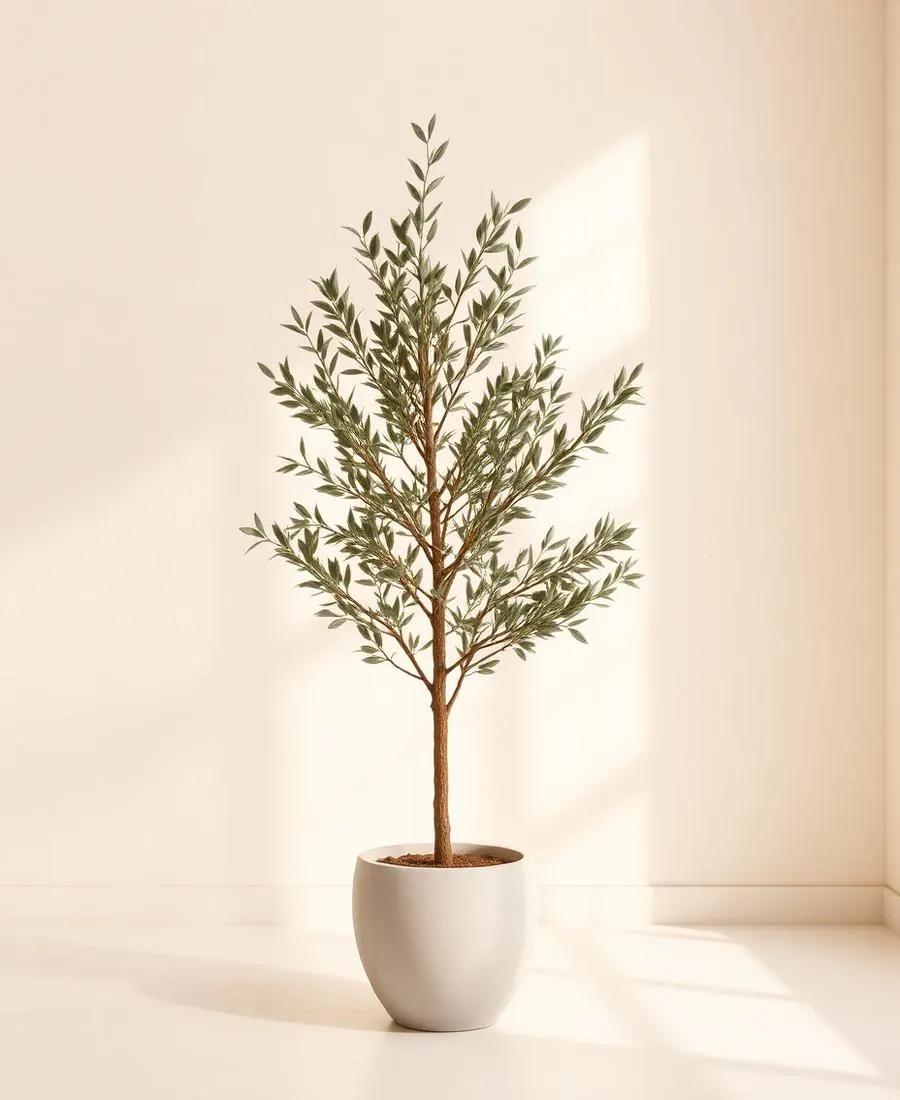
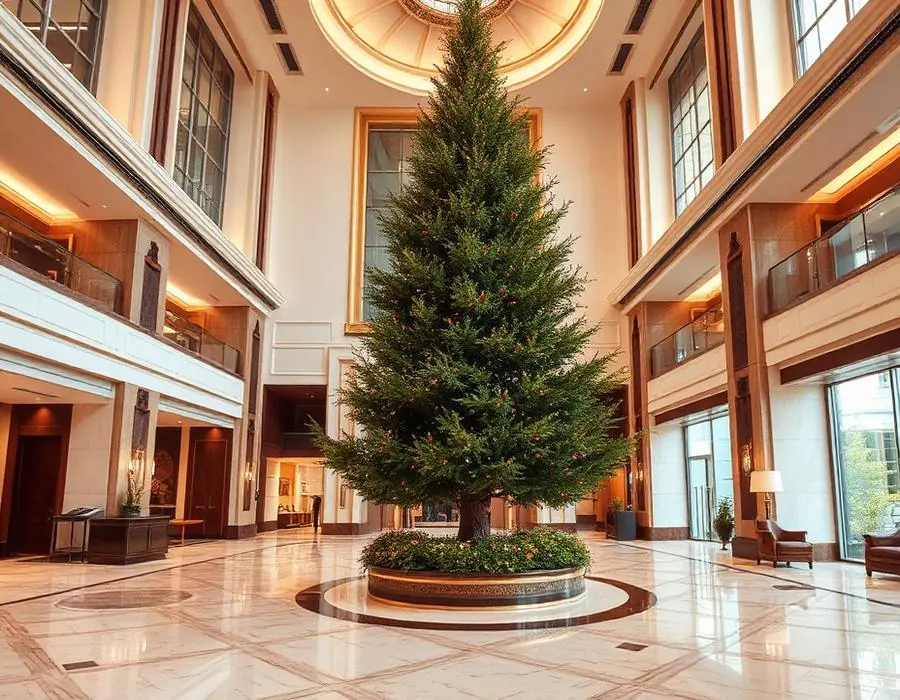

Artificial Date Palm Tree, 11.5 to 19.7 ft (3.5 to 6 m), Plastic
11.5 ft (3.5 m) to 19.7 ft (6 m), six sizes
From $3,489.99 CAD
Realistic artificial trees and plants for homes and projects
Artificial plants for gyms and fitness studios are moulded, wipeable greenery specified for reception desks, studio walls, stretching zones and corridors, rooms where the air moves fast, chalk and rubber dust settle on everything and nobody on a class schedule has time to water. Third-party figures on Eververda pages, 556 of them, carry the date they were read at source, with the last re-check on 12 October 2026, so the numbers behind a specification are dated rather than assumed.
Eververda lists 41 pieces in For Gyms & Fitness Studios, from $99.99 CAD to $9,794.99 CAD. Of those, 37 are quoted rather than priced at checkout, because delivery for these is priced with the item rather than at checkout.
41 productsShowing 24 of 41 products
11.5 ft (3.5 m) to 19.7 ft (6 m), six sizes
From $3,489.99 CAD

13 ft (4 m), 16.5 ft (5 m) or 20 ft (6 m)
From $4,738.99 CAD

6.56 ft (2 m)
From $1,246.99 CAD, request a quote

From $225.99 CAD, request a quote

70.75 in (5.9 ft)
From $669 CAD, request a quote

5 ft to 7 ft
From $229 CAD, request a quote


4 ft
From $419 CAD, request a quote

From $266.99 CAD, request a quote

From $99.99 CAD, request a quote

6 ft
From $489 CAD, request a quote


5 ft to 6 ft (152 to 183 cm)
From $279 CAD, request a quote

From $279 CAD, request a quote


3 ft
From $279 CAD, request a quote

4 ft to 7 ft (122 to 213 cm)
From $369 CAD, request a quote

5 ft
From $319 CAD, request a quote

From $127.99 CAD, request a quote

From $266.99 CAD, request a quote

From $459 CAD, request a quote

5 ft to 6 ft (152 to 183 cm)
From $299 CAD, request a quote

From $279 CAD, request a quote

90 cm to 120 cm
From $189 CAD, request a quote
Artificial plants for gyms and fitness studios are moulded, wipeable greenery specified for reception desks, studio walls, stretching zones and corridors, rooms where the air moves fast, chalk and rubber dust settle on everything and nobody on a class schedule has time to water. Third-party figures on Eververda pages, 556 of them, carry the date they were read at source, with the last re-check on 12 October 2026, so the numbers behind a specification are dated rather than assumed.
Our position on fire documentation. Eververda publishes a fire figure only where documentation exists for that specific piece, and describes nothing as "fire rated". On a commercial quote we establish the occupancy, the adopted code edition and what your authority having jurisdiction (AHJ) will accept as documentation, in writing, before the order. Where no documented route exists for a piece, we say so and set out the alternatives. We do not claim a certificate for any product.
Ventilation is sized for exercising bodies. ASHRAE 62.1-2022, as reflected in the 2024 International Mechanical Code table, sets outdoor air at 20 cfm per person for a gymnasium or health club against roughly 5 cfm for an office, about four times the airflow per occupant, which dries the room and puts more leaf surface in a constant draught. Gym chalk is mostly magnesium carbonate and settles as fine residue; rubber flooring sheds its own particulate. Sweat and post-class steam spike humidity, and many fitness spaces are windowless. Nobody on shift has a watering rota that survives a class timetable.
Moulded plastics such as PE and PEVA do not absorb moisture or hold chalk the way woven fabric does; residue sits on the surface and wipes off. Silk is fabric, and chalk builds a visible film on it that a wipe will not fully restore. Where a listing does not publish its foliage material, read the specification table and treat it as reception stock, away from the training floor. As a baseline, wipe anything within reach of the lifting area or mirrors weekly, and reception and corridor pieces every one to two weeks.
Reception or a juice bar takes a statement piece or a feature wall panel. A studio wall behind mirrors takes a flush, low-profile panel. A stretching zone takes a compact piece on a weighted base, set away from mat edges. Corridors and changing rooms take compact PE pieces with nothing trailing into the walkway. A spin or yoga studio sells a mood, so keep it restrained, with a single bonsai or a narrow bamboo cluster and space around it. Panels are sold by verified coverage in square metres, and expandable screens fix to a solid backing such as a railing or partition to divide equipment zones. See Green Walls & Vertical Gardens.
Keep foliage out of walkways and any drop zone beside free weights and racks, since a dropped plate can hit whatever is placed there. Specify a weighted base near a training area, avoid pieces with small detachable parts that could end up underfoot, and keep mirror sightlines clear. This is a specification guide, not a health one.
A studio with fabric backdrops or curtains near a feature wall should ask for documentation on all the decorative materials together, not just the plants. Ask your supplier in writing what exists for the specific product, and confirm the rest with your code consultant and AHJ. What applies depends on the occupancy, the code edition your jurisdiction has adopted and your AHJ, who decides what is acceptable. In the United States, the International Fire Code accepts either NFPA 701 (Test Method 1 or 2) or NFPA 289 (20 kW ignition source, 100 kW maximum heat release rate) for artificial vegetation, at Section 807.4.1 from the 2018 edition onward and Section 806.2 in the 2015 edition, which some jurisdictions still run. In Ontario, Article 2.3.2.1 of the Ontario Fire Code (O. Reg. 213/07) requires decorative materials to meet CAN/ULC-S109 in listed locations, a lobby or exit among them, but the Code does not name artificial vegetation, so applying it to a tree rests on a broad reading. Outside Ontario, confirm the code in force with your AHJ. We publish a fire figure only where documentation exists for that specific piece, and we do not claim a certificate for any product. See fire documentation for commercial artificial greenery.
Moulded PE or PEVA foliage wipes clean of chalk residue. Silk foliage shows a film that does not fully clean up, which is why silk is the wrong choice near a chalk station.
A reception piece, a wall panel set or a corridor plant can be an ordinary order. Fitting out a full club or repeating one specification across a chain moves into the commercial catalogue, where large pieces are quoted with freight, crating, lead time and site access planned per order. See our guide for gyms and fitness studios.
Sizes, prices, materials and what to specify, written for the questions buyers actually ask before they commit.