
Artificial Plants for Gyms, Yoga Studios and Fitness Clubs
29 August 2026
Gyms, yoga studios and fitness clubs are a hard environment for live plants, mostly for structural reasons rather than lack of care: ventilation is sized for exercising bodies, chalk and rubber-floor dust settle on every surface, sweat and post-class steam spike humidity, and nobody on a class schedule has time to water. Artificial foliage sidesteps all four, provided the material and placement match the space. Moulded PE, not silk, is the right call anywhere near chalk or sweat — a pair of bamboo trees with three PE trunks each is $459 CAD for the set and wipes clean the way fabric leaves will not. A six-panel green wall set covering 1.44 m² is $249 CAD and suits a reception desk or juice bar. This guide covers why the space is hard on plants, what belongs in each zone, which material survives the routine, layout safety near equipment and mirrors, and what to ask a supplier for on the fire side. Nothing here is a wellness, performance or health claim — this is a specification guide, not a health one.
Why do live plants struggle in gyms and studios specifically?
Ventilation is built for exercising bodies, which means more moving air. ASHRAE 62.1-2022, as reflected in the 2024 International Mechanical Code's ventilation table, sets outdoor-air rates of 20 cfm per person for a gymnasium or health-club/aerobics room, against roughly 5 cfm per person for an ordinary office — about four times the airflow per occupant, per a review of the code table by DataDrivenAEC (checked 29 August 2026). That runs the room drier and puts more leaf surface into a constant draught than a room built for people sitting still.
Chalk and rubber-floor dust are a constant soiling load. Gym chalk is mostly magnesium carbonate, shaken loose with every set and settling as fine residue on nearby surfaces; rubber flooring sheds its own particulate as it wears. That is plain, observable logic rather than a cited figure, and it is why a wipeable surface beats a fabric one here.
Sweat and post-class steam spike humidity. A studio mid-class or a locker room after the evening rush runs noticeably more humid for a while than the same room empty. This is reasoning about how a room full of exercising bodies behaves, not a sourced statistic, and it argues for the same moisture-tolerant material logic as a spa or bathroom.
Nobody on shift has a watering rota that survives a class schedule — the same operational logic behind our guides to specifying artificial trees for a restaurant fit-out and artificial plants for spas and salons. And many fitness spaces are windowless by design — basement studios and mall-unit gyms don't need street frontage — which our guide to artificial plants for windowless offices covers in more depth.
What belongs in each zone — reception, studio walls, stretching areas and corridors?
A fitness space is really several rooms glued together, each with its own traffic and soiling risk. The table below is a starting specification, not a fixed rule.
| Zone | Main condition | Material to specify | Example piece |
|---|---|---|---|
| Reception / juice bar | First impression, some counter splash | Statement moulded PE piece or a feature wall panel | 220 cm cedar pine bonsai, $1,246.99 CAD |
| Studio wall, behind mirrors | Constant airflow, occasional impact | Wall-mounted PE panel, flush and low-profile | 12-piece PE hedge panels, 2.88 m², $279 CAD |
| Stretching and recovery zone | Floor mats, close-range viewing | Compact, weighted base, away from mat edges | 4–6 ft fiddle leaf fig, weighted base, $319–$449 CAD |
| Corridors and changing rooms | Narrow, high traffic, splash near lockers | Compact PEVA or PE, nothing trailing into the walkway | 3 ft PEVA snake plant, cement pot, $469 CAD |
| Spin or yoga studio | Dim, calm mood is the point | Restrained, single-species, Japanese-garden styling | 220 cm cedar pine bonsai, $1,246.99 CAD |
The stretching-zone row matters most for safety: anything placed there needs a base heavy enough not to shift when a mat or a body brushes past, with nothing small enough to come loose underfoot.
Which material actually survives chalk, sweat and the cleaning routine?
Moulded plastics — PE and PEVA — don't absorb moisture or hold chalk dust the way woven fabric does; residue sits on the surface and wipes off. Silk is fabric, and fabric absorbs whatever settles on it: chalk builds a visible film and sweat-humid air can leave leaves looking limp rather than crisp, and a wipe-down won't fully restore either. Washability is the deciding spec here more than in almost any other commercial interior we cover, because the soiling load — chalk, rubber dust, sweat aerosol — is constant rather than occasional. Where a listing states PE or PEVA foliage, as the PEVA snake plant and the PE-trunk bamboo pair do, that's the piece to specify near mats, mirrors and changing rooms. Where a listing doesn't state its foliage material, treat it as reception stock only, away from the training floor, rather than guessing.
On cadence: a trade cleaning-frequency guide from ArtificialPlantsSupplier.com recommends every one to two weeks for hotels and retail stores, weekly for restaurants and kitchens, and weekly inspection for high-traffic commercial projects, with pieces near entrances needing the most attention (checked 29 August 2026). Gyms aren't a named row in that table, but their soiling load sits at or above the restaurant/kitchen tier, so weekly wipe-downs for anything within reach of the training floor or mirrors is a reasonable baseline, stretching to every one to two weeks further back at reception and in corridors. State the cadence honestly to whoever owns it — an unwiped piece shows the neglect faster here than almost anywhere else in a building.
What matters for safety and layout near equipment and mirrors?
Layout rules here follow from ordinary gym-floor discipline, not certification: keep foliage out of walkways and any drop zone next to free weights and racks, since a dropped plate can hit whatever's placed there; specify a weighted base near a training area, per our guide to stopping an artificial tree from tipping over; avoid pieces with small detachable parts — loose berries, seed pods, clip-on accents — that could end up underfoot; and keep mirror sightlines clear, since a mirror wall exists so people can watch their form.
What calm palette works for a yoga or spin studio?
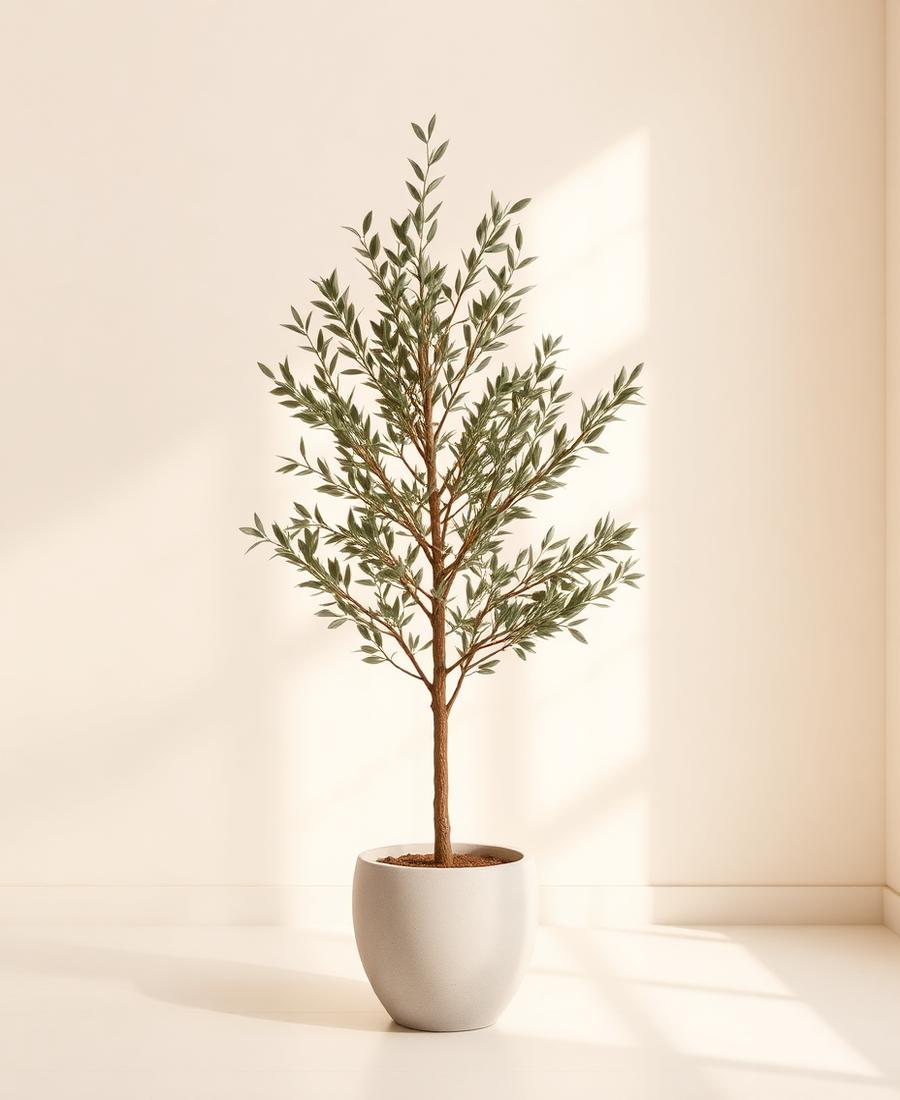
A spin or yoga room sells a mood rather than throughput, so the plant choice should read as restrained: a single bonsai or a narrow bamboo cluster with space around it does more for the room than a dense cluster of foliage. That's the same species logic and styling discipline — asymmetry, negative space, restraint in the container — that our Japanese-style zen garden guide sets out for indoor gardens generally, built here from wipeable material instead of silk.
Is a feature green wall worth it behind reception?
A green wall reads well as a reception feature and photo backdrop, and it's one of the few fitness-space applications where coverage, not a single statement tree, is the point. Panels are sold by verified coverage: a six-panel set covers 1.44 m² for $249 CAD, a twelve-panel PE set covers 2.88 m² for $279 CAD, and a commercial-grade anti-UV boxwood fence panel is $127.99 CAD per unit. The coverage math and cost-per-square-metre breakdown for a wall this size is in our green wall panels guide.
What fire documentation should a gym or studio request?
A studio with fabric backdrops or curtains near a feature wall should ask for fire-performance documentation on all the decorative materials together, not just the plants. Canada's reference standard for flame-resistant fabrics and films is CAN/ULC-S109, which Ontario's Fire Code cites directly for drapes, curtains and similar decorative materials in occupancies including lobbies and assembly spaces; other provinces set their own triggers. NFPA 701 is the equivalent US standard and isn't automatic evidence of CAN/ULC-S109 compliance, or vice versa. Ask every supplier — ours included — for documentation on the specific product quoted, in writing, and confirm what your build needs with your code consultant and the local authority having jurisdiction, since acceptance is theirs to decide. The full breakdown is in our guide to fire ratings and commercial artificial greenery.
Retail pieces or a quoted commercial fit-out — which do you need?
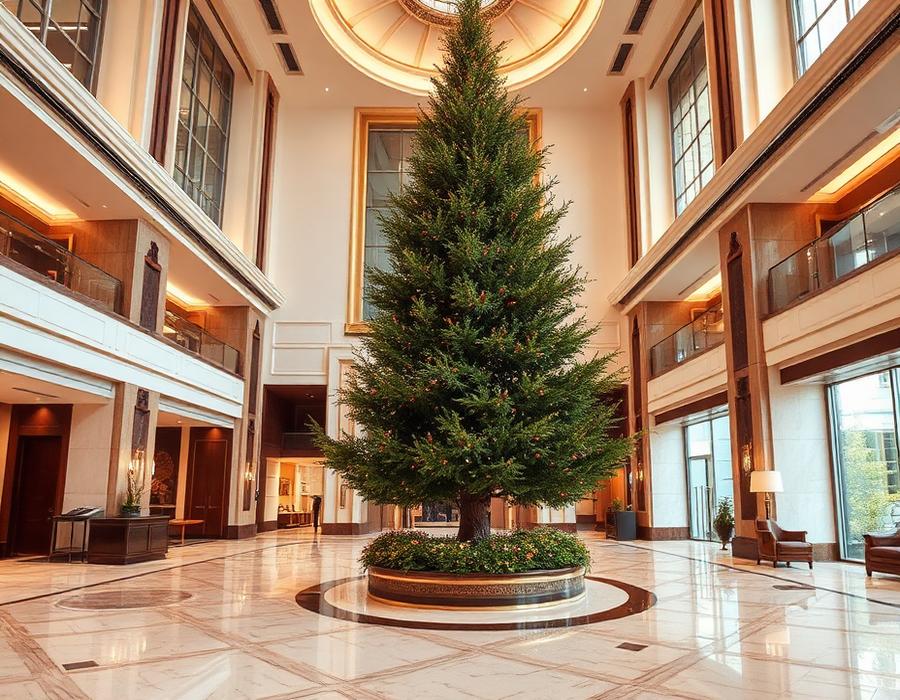
A single reception piece, a wall panel set or a corridor plant is an ordinary retail order: the bonsai, panels and PEVA snake plant above carry plain CAD prices and ship without a quote step. Fitting out a full club, or repeating the same spec across a chain's locations, is commercial-catalogue territory. A large-format natural-touch pine bonsai is quote-priced from $9,794.99 CAD, a tall date palm built for commercial interiors is quote-priced from $3,489.99 CAD, and a natural-wood-trunk cedar tree sized for a hospitality-scale lobby is quote-priced from $4,609.99 CAD. Orders above $3,000 CAD go through Eververda's quote process rather than checkout, so freight and delivery scheduling for a multi-room or multi-location order are planned per project.
Frequently asked questions
Can artificial plants go right next to a free-weight rack?
No. Keep foliage out of any walkway or drop zone next to free weights and racks, since a dropped plate can hit anything placed there. Position pieces against a wall or in a corner outside the working area instead, with a weighted base so a bump doesn't tip them.
Will chalk dust ruin artificial plants near the lifting area?
Moulded PE or PEVA foliage wipes clean of chalk residue because it doesn't absorb the powder the way fabric does. Silk foliage shows a visible chalk film over time that won't fully clean up with a wipe-down, which is why silk is the wrong choice near a chalk station or lifting platform.
How often does foliage need cleaning in a gym or studio?
A reasonable baseline is weekly wipe-downs for anything within reach of the training floor or mirrors, and every one to two weeks for reception and corridor pieces set further back. This follows trade cleaning-frequency guidance for high-traffic commercial spaces; gyms weren't a named category, but their soiling load sits at or above the tier it does cover.
Do I need fire documentation for artificial plants in a fitness studio?
Ask your supplier for written fire-performance documentation on the specific product quoted. Canada's reference standard for decorative fabrics and films is CAN/ULC-S109; what applies to your build is decided by your code consultant and the local authority having jurisdiction, not a supplier's product page.
What's the difference between ordering retail pieces and a commercial quote for a gym fit-out?
A single reception or corridor piece is a standard retail order with a plain CAD price, like the $1,246.99 CAD cedar pine bonsai. Furnishing a full club or chain moves through Eververda's commercial catalogue, where large-format pieces are quote-priced and orders above $3,000 CAD go through the quote process rather than checkout.
Can I use the same calm, minimal look in a spin room as a yoga studio?
Yes. Both rooms sell a mood rather than throughput, so the same restrained, single-species styling works in either — a bonsai or a narrow bamboo cluster with space around it, built from wipeable PE rather than silk given the airflow and sweat both room types see.
External facts in this article were checked 29 August 2026. Eververda prices are CAD and current as of 29 August 2026.