
Artificial Plants for Spas, Salons and Wellness Studios
29 August 2026
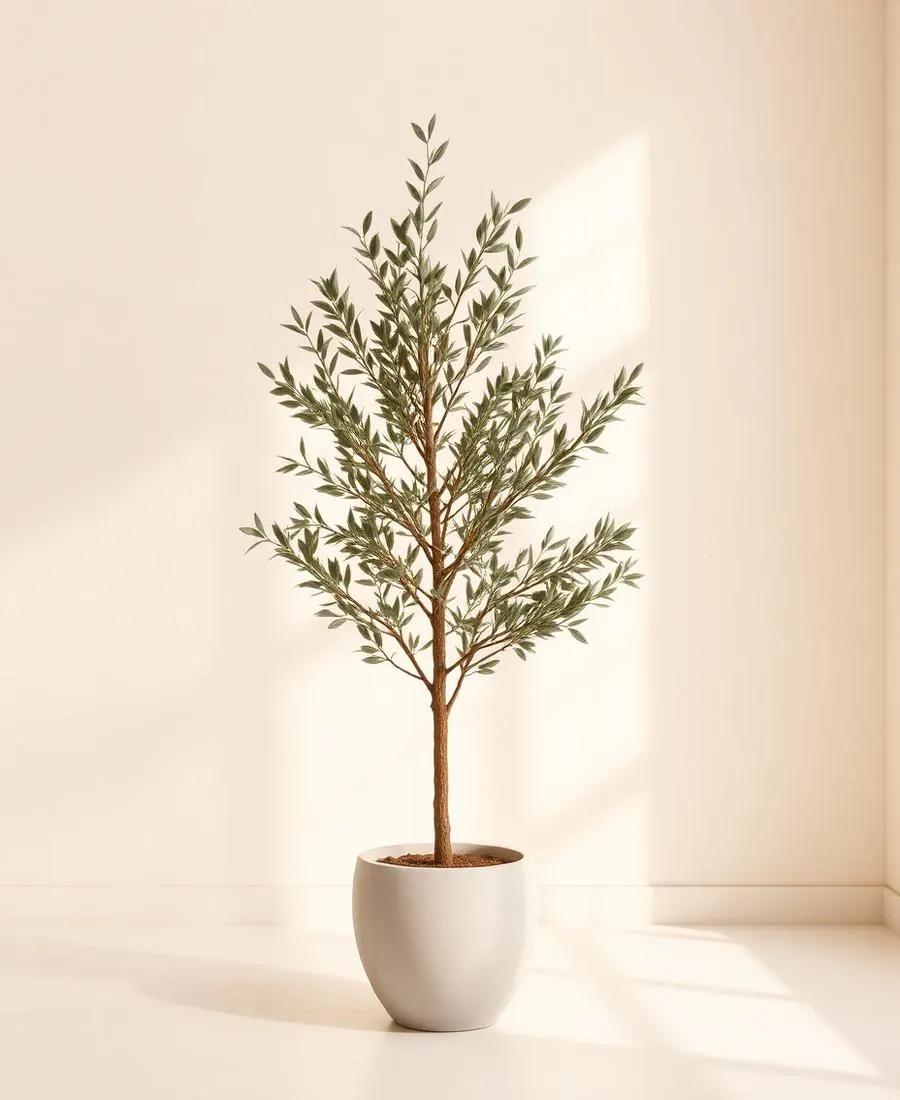
Spas, salons and wellness studios are among the toughest indoor spaces for live plants, and the reasons are structural, not incidental: treatment rooms and relaxation lounges are kept deliberately dim, wash and colour stations run wet and chemical-heavy all day, steam rooms hold close to saturation humidity, and nobody on a service-based payroll has a watering rota built into their shift. Artificial plants solve all four at once, provided the material is matched to the zone. Moulded PE or PEVA foliage, not silk, is the right call near steam or splash: a pair of 3 ft snake plants with PE leaves is $279 to $299 CAD and shrugs off a colour station's daily splash the way a fabric-leaf piece will not. A 6 ft three-trunk bamboo with 830 leaves at $279 CAD or a 2 m cedar pine bonsai at $1,246.99 CAD anchor a calm reception. For a full fit-out, Eververda's commercial catalogue starts from $97.99 CAD and runs to quote-priced statement trees. This guide covers why the space is hard on plants, what goes where, which material survives the humidity, and what to ask a supplier for.
Our position on fire documentation. Eververda publishes a fire figure only where documentation exists for that specific piece, and describes nothing as "fire rated". On a commercial quote we establish the occupancy, the adopted code edition and what your authority having jurisdiction (AHJ) will accept as documentation, in writing, before the order. Where no documented route exists for a piece, we say so and set out the alternatives. We do not claim a certificate for any product.
Why are spas and salons harder on plants than a typical office?
Four conditions stack up in a way most commercial interiors do not see together.
Light is deliberately low. Treatment rooms and relaxation lounges are dimmed on purpose, because bright overhead light works against the calm the space is selling. A live plant needs light to photosynthesise; a room lit for ambience rather than function is a poor host for one. This is practical logic rather than a cited figure, but it follows directly from how these rooms are designed.
Humidity swings hard, in both directions. Steam rooms are built to run close to saturation: a manufacturer guide from ThermaSol says steam rooms should hold humidity at about 100 percent, at a temperature of 110 to 115°F (checked 29 August 2026). A wash station a few metres away, by contrast, is only briefly wet between clients and otherwise dry under an HVAC system. Foliage placed anywhere in that range needs to tolerate both extremes, not one steady condition.
Salons add chemical exposure that most retail interiors never see. Hair colour, developer and nail-service acetone are airborne in normal use. OSHA's guidance on chemical hazards in nail salons names acetone specifically as an irritant to eyes, skin and throat, and says that exhaust ventilation can cut worker chemical exposure by at least half (checked 29 August 2026). Foliage sitting in that airflow is exposed to the same fumes as the staff, which is one more reason silk leaves, fabric that absorbs whatever is in the air, are the wrong material choice here.
Nobody on shift has time to water. A stylist, esthetician or spa therapist is booked back-to-back; a watering rota does not survive a busy Saturday. That is operational logic rather than a sourced statistic, but it is the same reasoning behind our guides to specifying artificial trees for a restaurant fit-out and artificial vs real plants for the office.
What should go in each zone?
Different zones want different plants, mostly because they combine light, moisture and traffic differently. The table below is a starting specification, not a fixed rule.
| Zone | Main condition | Material to specify | Example piece |
|---|---|---|---|
| Reception | Normal light, first impression, some floor traffic | Moulded PE or counted-leaf silk, statement scale | 2 m cedar pine bonsai, $1,246.99 CAD |
| Treatment corridors | Dim, narrow, walked past constantly | Compact moulded foliage, narrow footprint | 3 ft snake plant pair, 24 leaves each, $279 to $299 CAD |
| Relaxation lounge | Dim, low traffic, seated close by | Soft-textured calm species, hanging or floor | hanging Boston fern, 80 branches, $649 CAD |
| Wash / colour stations | Splash, chemical vapour, wiped down often | Moulded PE/PEVA only, no silk | 3 ft PE snake plant pair, $279 to $299 CAD |
| Changing rooms | Low light, tabletop or shelf space only | Small tabletop moulded pieces | 24 in tabletop monstera, $349 CAD |
| Steam / wet areas (approach, not inside the chamber) | Near-saturation humidity at the door, condensation nearby | Moulded PE/PEVA exclusively | 3 ft snake plant pair, $279 to $299 CAD |
Note the last row: no foliage belongs inside an active steam chamber. The recommendation covers the approach and wet corridor, where condensation and splash reach but the enclosure itself does not.
Which material actually survives the humidity here?
The material logic is the same one we set out in our guide to the best artificial plants for bathrooms, and it is worth stating plainly rather than re-explaining in full: moulded plastics such as PE and PEVA do not absorb water, so condensation beads and wipes off, while silk is woven fabric that absorbs moisture and can soften, droop and water-spot over repeated steam exposure. A spa is the bathroom problem at commercial scale (more steam sources, more splash points, more chemical vapour), so the same rule applies with less room for exceptions. Where a listing publishes PE or PEVA foliage, as the PE snake plant pair does, that is the piece to specify near wash stations and steam-adjacent corridors. Where a listing does not publish its foliage material, treat it as reception or lounge stock only, away from moisture and vapour, rather than guessing.
Which species fit a calm, spa-appropriate palette?
Four species do most of the work: bamboo for vertical rhythm without bulk, pine bonsai for a grounded, deliberate focal point, snake plants for narrow corridors and wet zones, and ferns for texture in a relaxation lounge. All four read as restrained rather than decorative, which matters in a space selling calm rather than abundance. This is the same species logic, and much of the same styling discipline (asymmetry, negative space, restraint in the container) that our Japanese-style zen garden guide sets out for indoor gardens generally; a spa reception or a treatment-room corner takes well to a single bonsai and empty space around it rather than a cluttered plant wall.
How often does foliage need cleaning where clients sit close?
A trade cleaning-frequency guide from ArtificialPlantsSupplier.com recommends every one to two weeks for hotels and retail stores, weekly for restaurants and kitchens, and weekly inspection for high-traffic commercial projects, noting pieces near entrances need the most attention (checked 29 August 2026). Spas and salons are not a named row in that table, but the logic transfers directly: clients sit or lie within arm's reach of lounge and treatment-room foliage in a way office plants rarely are, so dust and residue show sooner. A sensible cadence is weekly wipe-downs within a metre of a treatment chair, wash station or lounge seat, and every one to two weeks for reception and corridor pieces further away. Close-range viewing also raises the realism bar; our guide to making artificial plants look real covers the styling details (bury the stem base, use a real pot, keep foliage dusted) that matter more here than in a plant seen only in passing.
What fire documentation should a spa or salon request?
Spas and salons often combine artificial greenery with fabric elements (treatment-room curtains, drapes, screening panels) in the same sightline, so it is worth asking for fire documentation on all of it together. Ontario's Fire Code (O. Reg. 213/07, Division B, Article 2.3.2.1) requires drapes, curtains, netting and other similar or decorative materials, including textiles and films, to meet CAN/ULC-S109 in listed locations, a lobby or exit among them. The Code does not mention artificial trees or vegetation by name, so applying it to a tree rests on a broad reading of “other similar or decorative materials”. Outside Ontario, confirm the code in force with your AHJ. Ask every supplier, in writing, what documentation exists for the specific product quoted (for our listings, we will tell you what, if anything, the manufacturer can provide), and confirm what applies to your build with your code consultant and the local authority having jurisdiction, since acceptance is theirs to decide, not a supplier's product page. In the United States, the International Fire Code accepts either NFPA 701 (Test Method 1 or 2) or NFPA 289 (20 kW ignition source, 100 kW maximum heat release rate) for artificial vegetation, at Section 807.4.1 from the 2018 edition onward; it was Section 806.2 in the 2015 edition, which some jurisdictions still run. The full breakdown of what the standards test, and how a treated product differs from one that passes untreated, is in our guide to fire documentation for commercial artificial greenery.
Retail pieces or a quoted commercial fit-out: which do you need?
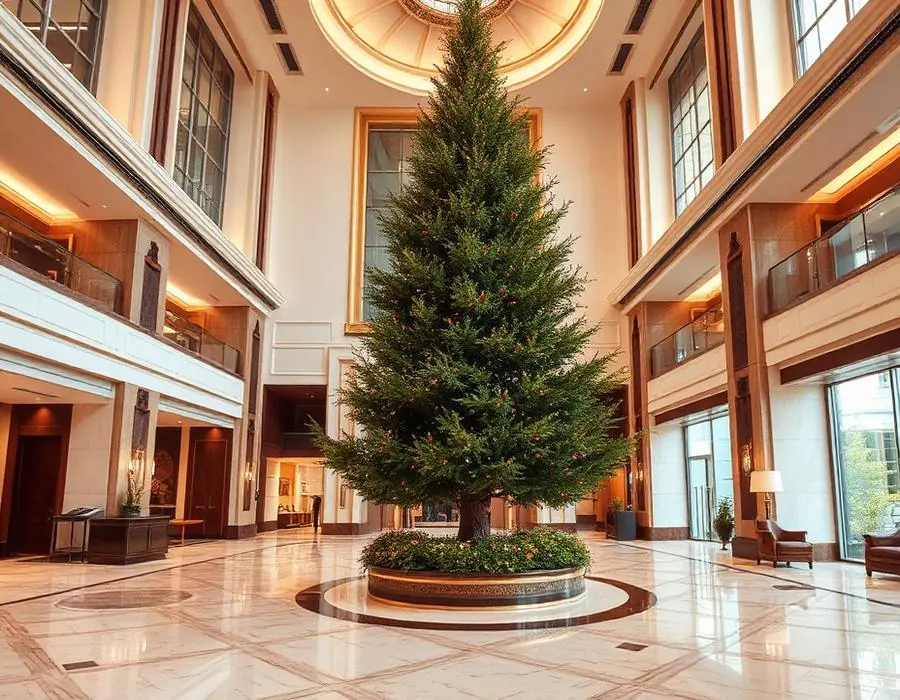
Single pieces for a reception desk, a corridor corner or a changing-room shelf are ordinary retail purchases: the snake plants, ferns and bamboo above carry listed CAD prices, with delivery in Canada quoted individually. Furnishing every treatment room, corridor and lounge in a multi-room spa or a salon chain location is a different order of scale, and Eververda's commercial catalogue is built for that: a commercial bamboo tree starts from $547.99 CAD, a pine bonsai styled for a zen landscape starts from $1,527.99 CAD, and a large-format natural-touch pine bonsai is quote-priced. Anything priced $3,000 CAD and above, and any architectural or commercial-scale piece, goes through Eververda's quote process, as does delivery on every Canadian order, so freight, crating and delivery scheduling across multiple rooms are planned per project: the same commercial-scale logic covered in our hotel lobby specification guide.
Frequently asked questions
Can artificial plants go inside a steam room?
No. A steam room runs close to 100 percent humidity with the door shut (figure checked 29 August 2026), and even moulded plastic foliage is not designed for a sealed, condensation-soaked enclosure. Place foliage in the approach corridor or just outside the door instead, where moulded PE or PEVA pieces handle the ambient humidity and splash without issue.
Will artificial plants near a colour station absorb chemical smells?
Moulded plastic foliage such as PE or PEVA does not absorb odours the way fabric does, since it is a sealed, non-porous surface rather than woven material. Silk foliage, being fabric, can hold onto airborne residue over time, which is one more reason to keep silk pieces away from wash and colour stations specifically.
What is the difference between PE, PEVA and silk foliage for a spa?
PE and PEVA are moulded plastics that do not absorb water or vapour, so they handle steam, splash and condensation without changing shape. Silk is woven fabric that can soften, droop or spot when repeatedly exposed to moisture, so it belongs in dry, low-humidity zones like reception rather than near steam or wash stations.
How much does a single reception or lounge piece cost versus a full fit-out?
A single reception or lounge piece, such as the 2 m cedar pine bonsai at $1,246.99 CAD, is quoted rather than bought at checkout, with the delivered cost in CAD given before you pay. A full multi-room fit-out moves through Eververda's commercial catalogue, where pieces start from $97.99 CAD and scale to quote-priced large-format trees, many at $3,000 CAD and above, planned through the quote process.
Do artificial plants need any fire documentation for a salon or spa?
Ask your supplier for fire documentation on the specific product, in writing. Ontario's Fire Code cites CAN/ULC-S109 for decorative fabrics and films in listed locations; what applies to your specific build is decided by your code consultant and the local authority having jurisdiction, not by a supplier's product page.
How often should spa or salon foliage be cleaned?
Weekly wipe-downs for anything within close reach of a treatment chair, wash station or lounge seat, and every one to two weeks for reception and corridor pieces, based on trade cleaning-frequency guidance for high-traffic commercial spaces, as published on 29 August 2026. Clients sit closer to spa foliage than to most commercial plants, so dust shows sooner.
External facts in this article were checked 29 August 2026. Eververda prices are CAD and current as of 29 August 2026. Fire code text was verified against the publishers' own published text on 24 October 2026.
Products in this article
- Artificial Snake Plant, 3 ft, Set of 2, 24 Leaves Each, UV Resistant$279 CAD to $299 CAD, quoted
- Artificial Bamboo Tree, 6 ft, Three Trunks, 830 Leaves$279 CAD, quoted
- Tall Artificial Cedar Pine Bonsai Tree Green 2 m (6.56 ft)$1,246.99 CAD, quoted
- Artificial Boston Fern, 37 to 41 in Spread, 80 Branches$649 CAD, quoted
- Artificial Monstera Plant, 24 in, Real-Touch, White Tabletop Pot$349 CAD, quoted
- Artificial Bamboo Tree, 4.6 to 7.2 ft, Foliage, Potted, Indoor$547.99 CAD to $1,107.99 CAD
- Zen Landscape Bonsai in Ten Sculpted Forms$1,527.99 CAD to $2,227.99 CAD, quoted
- Natural Touch Pine Bonsai Tree 16.5 ft Indoor$9,794.99 CAD, quoted