
Buying Artificial Trees on Wayfair.ca: How to Read a Marketplace Listing
29 August 2026
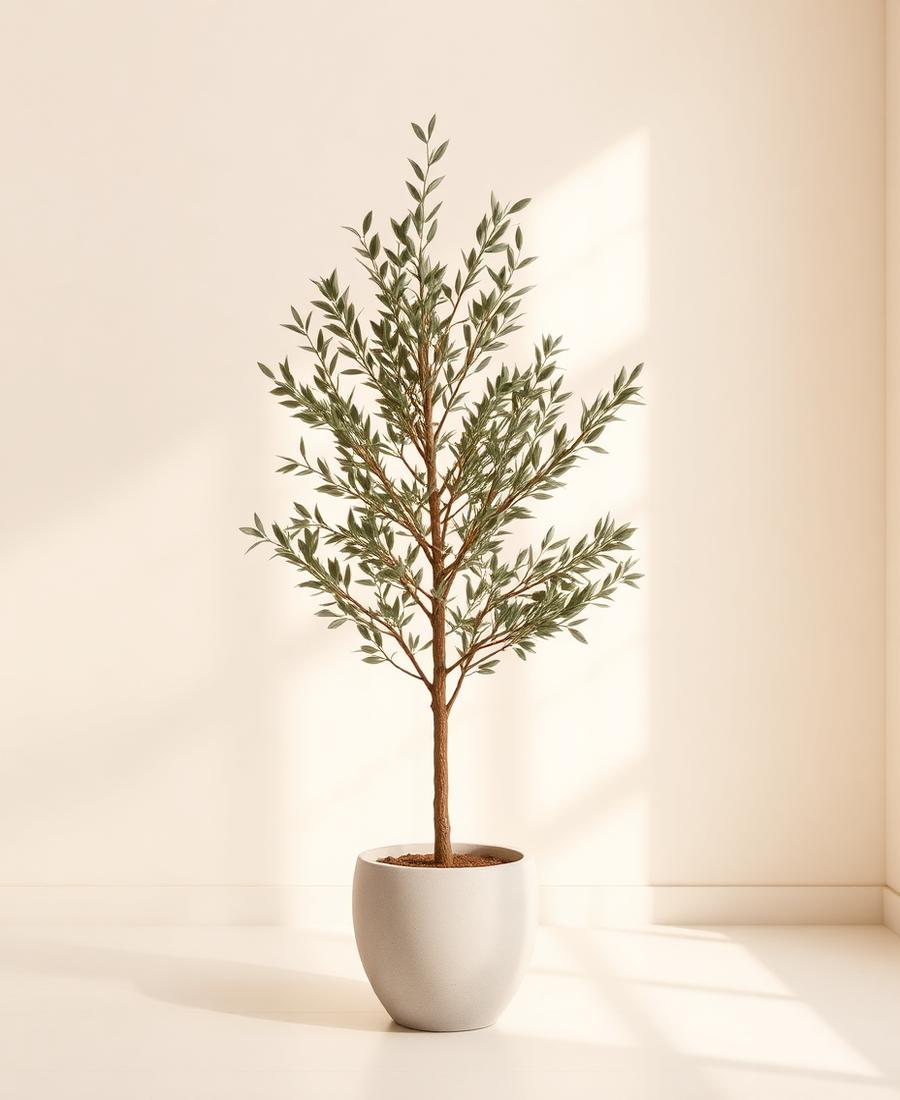
Wayfair.ca is a marketplace, not a single manufacturer, and that fact should change how you read a listing before you buy an artificial olive tree there. Checked 29 August 2026, faux olive trees in the 5 to 6 ft range on Wayfair.ca ran from $93.99 to $289.99, with a 6 ft tree in a white pot (the "Adcock 6Ft Artificial Olive Tree") priced at $152.99, marked down from $225.99. None of the listings we checked labelled the currency as CAD, even though the .ca domain implies it. That gap between "cheap-looking sticker price" and "what the page actually tells you" is the whole skill of shopping a marketplace well, and it is worth fifteen minutes before you add anything bulky to a cart.
What kind of retailer is Wayfair.ca, really?
Wayfair does not manufacture most of what it sells. It operates a marketplace where hundreds of supplier brands — Latitude Run, Birch Lane, Joss & Main, AllModern, CAPHAUS, and other house labels and third-party vendors — list products under one storefront and one checkout. That's why you can find a faux olive tree at $93.99 next to one at $509.99 on the same results page, and why quality, photography, and spec disclosure vary listing to listing even within one category, since each supplier writes and photographs its own page. The same stock photo occasionally turns up under more than one brand name and price, which is normal for a marketplace and not itself a red flag — it means the listing's written specs matter more than the photo. For a wider look at where Canadians buy artificial trees, see our guide to buying artificial trees in Canada.
What should you check before buying a faux olive tree on Wayfair.ca?
Six things on the listing page separate a good buy from a disappointing one, and a well-written listing will answer all six without you having to dig through the Q&A section:
- Stated foliage material. Silk, PE (polyethylene), or a blend. This is usually the biggest driver of how the leaves catch light and how they'll look after a year near a window — see what actually makes an artificial tree look real for the criteria that matter here.
- Stated trunk material. Natural wood, moulded plastic, or a wood-look composite. Real wood trunks read as more convincing up close and are usually called out explicitly when present.
- Exact height, and whether it includes the pot. Listings sometimes give "overall height" and sometimes give "tree height" separately from pot height; a 6 ft listing can mean 6 ft of foliage in a pot that adds another 8 to 12 inches.
- Pot dimensions. Width and depth matter for doorways, corners, and whether the pot you're getting is decorative or a plain plastic grower's pot meant to be swapped out.
- Shipping weight. A heavier base usually means a heavier, more stable tree — useful information before it arrives and you're carrying it upstairs.
- Whether a planter is included. Some listings show a styled pot in the photo but ship the tree in a plain black plastic nursery pot; the fine print, not the photo, settles this.
If a listing is missing more than one or two of these, that's a reasonable signal to keep scrolling rather than a reason to write the seller off entirely — some suppliers simply write thinner copy than others.
How do you read review counts on a marketplace listing?
A review count on a marketplace page is a starting point, not a verdict. Two things are worth knowing before you weight it heavily. First, on many marketplace platforms a single listing can bundle reviews across colour, size, or pot variants of one product page, so a "400 reviews" badge may reflect experiences with a different height or pot than the one you're buying — check whether reviews shown are filtered to your selected variant. Second, a high count on a $93.99 tree and a low count on a $289.99 tree from a different brand aren't directly comparable, since they've been live for different lengths of time and sold in different volumes. Read a handful of the actual review text, not just the star average, and look for mentions of foliage feel, trunk material, and whether the tree arrived matching its listed height.
Why doesn't Wayfair.ca show a currency label?
Checked 29 August 2026: neither the olive tree category page nor the general search results page on Wayfair.ca displayed an explicit CAD or USD label next to prices, despite the .ca domain. In practice this is standard for the Canadian version of the site and the prices shown to a Canadian shopper are charged in CAD, but the absence of a label is worth noting because it's an easy thing to assume rather than confirm — especially if you've also had a Wayfair.com tab open while comparing. If a price looks unusually low for the size of tree shown, it's worth a moment's check that you're on the .ca listing and not a .com one that happens to rank in the same search.
What should you know about returns on a bulky item?
Wayfair's published return policy (checked 29 August 2026 via a return-policy summary, since Wayfair's own help article did not render enough detail to quote directly) states a standard 30-day return window from delivery, with return shipping on large or heavy furniture-category items typically deducted from the refund rather than provided free. Because Wayfair is a marketplace, terms can vary by individual listing, so the return window and who pays return shipping are worth confirming on the specific product page — not assumed from a general policy — before you buy a 6 ft tree that will cost real money to box and ship back if it doesn't work out.
| What to check | Why it matters | Where to look |
|---|---|---|
| Foliage material (silk vs. PE) | Drives realism and how leaves age near light | Product description or specs table |
| Trunk material | Real wood generally reads more convincing up close | Product description |
| Exact height, pot included or not | Avoids a tree that's shorter or taller than expected for a corner or ceiling height | Dimensions section, not the headline title |
| Pot width and depth | Fit through doorways and into the intended corner | Dimensions section |
| Shipping weight | Rough proxy for base stability and delivery handling | Shipping info tab |
| Planter included | Styled pot in the photo may not be what ships | Description or Q&A section |
| Return window and who pays return shipping | Bulky items are expensive to return; terms can vary by listing | Returns section on that specific listing |
When does buying from Wayfair.ca make sense?
Wayfair.ca is a reasonable place to buy an artificial olive tree, and it would be dishonest to pretend otherwise. The genuine range across price points — $93.99 to $289.99 for 5 to 6 ft trees, checked 29 August 2026 — means there's almost always something in budget, and the frequent markdowns (several of the listings we checked showed 25 to 35 percent off) can make a low-cost accent tree a sensible buy, particularly for a first apartment, a staging job, or a spot where you want greenery without a large outlay. If you've read the listing carefully, matched the stated materials and dimensions to what you actually need, and confirmed the return terms, a marketplace purchase can be exactly the right call for a low-budget accent piece.
What does Eververda publish on every listing?
Our own practice, as a specialist rather than a marketplace, is to publish foliage material, trunk material, height range, and CAD pricing on every product page, with no variant-dependent guessing required. A 5.25 to 8 ft olive tree with silk foliage and counted leaves and fruit runs $249 to $449 CAD; a 5.25 to 7 ft olive tree with a natural wood trunk runs $249 to $419 CAD; a 4 to 6 ft olive tree with PE foliage and stainless-steel branches runs $199 to $329 CAD; and a 4.9 to 6.9 ft olive tree with a natural wood trunk and black pot runs $259 to $439 CAD. The same checklist applies whether you're comparing an olive tree or a different species — our 4 to 7 ft fiddle leaf fig with a white planter and weighted base, $219 to $399 CAD, states its planter inclusion and weighted base on the product page itself, the same way each olive tree listing states its trunk and foliage material. Where a spec isn't settled for a given size, we say so rather than leaving it to the product photo to imply.
Frequently asked questions
Are Wayfair.ca prices actually in Canadian dollars?
In practice, yes — a Canadian shopper on the .ca domain is charged in CAD. But as checked 29 August 2026, the currency isn't labelled on the listing pages themselves, so it's worth confirming you're on wayfair.ca rather than wayfair.com before comparing prices, especially if both have been open in different tabs.
Does Wayfair make its own furniture and decor?
No. Wayfair operates a marketplace of third-party and house-label supplier brands — Latitude Run, Birch Lane, Joss & Main, AllModern, CAPHAUS and others — under one storefront. That's why price, photography, and spec detail vary from listing to listing even within one product category like faux olive trees.
How long do I have to return an artificial tree bought on Wayfair.ca?
Wayfair's general policy, checked 29 August 2026, is a 30-day return window from delivery, with return shipping on large items often deducted from the refund rather than free. Confirm the exact terms on the specific listing before buying, since Wayfair is a marketplace and terms can vary by item.
Can I trust the review count shown on a Wayfair listing?
Treat it as a starting point rather than a verdict. Review counts on marketplace listings can bundle across colour or size variants of one product page, so check whether the reviews shown are filtered to the exact height and pot you're buying, and read the actual review text for mentions of foliage feel and trunk material rather than relying on the star average alone.
What's the practical difference between silk and PE foliage on an olive tree?
Silk foliage is typically fabric-based and softer to the touch; PE (polyethylene) foliage is a moulded plastic often used for individual leaves that need to hold a stiffer, glossier shape. Both appear across Wayfair.ca listings and in our own range — check the listing's stated material rather than assuming from the photo, since the two can look similar in product images.
Is a $93.99 faux olive tree worth buying?
It can be, for a low-budget accent where you've confirmed the stated height, foliage material, and pot dimensions match what you need. At that price point, expect a lighter base and simpler foliage than a $250-plus tree; that's a reasonable trade for some rooms and not for others, which is exactly why reading the listing's specs matters more than the headline price.
Wayfair.ca prices and listing details were checked 29 August 2026; the return-policy summary was checked the same date via a third-party source, since Wayfair's own help page did not render enough detail to quote directly. Eververda prices are CAD and current as of 29 August 2026.