
Where to Buy Artificial Trees in the USA: A Verified Price Survey
29 August 2026
Where can you actually buy an artificial tree in the USA?
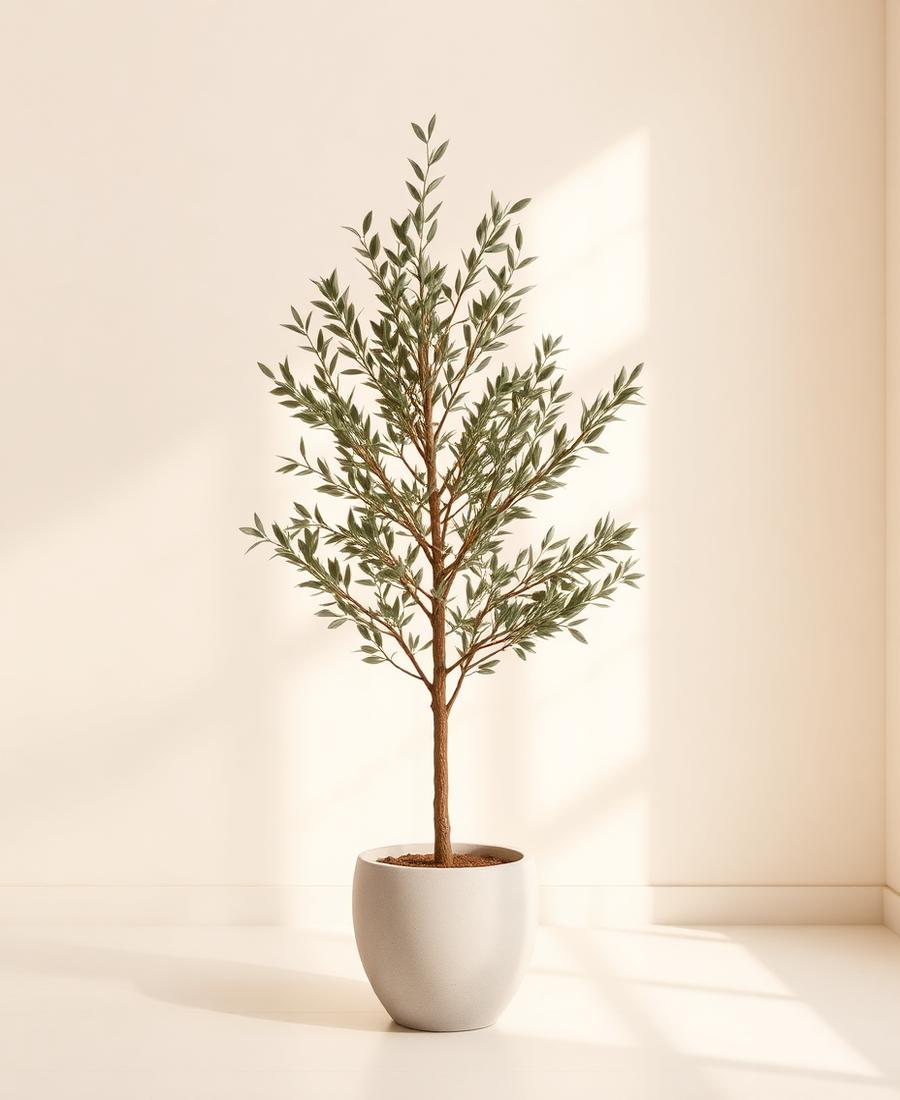
Short answer: a handful of national retailers carry artificial trees at very different price points for very different builds, and the gap between them is wide enough to trip up a first-time buyer. In a same-day price check on 29 August 2026, a 5 to 6 ft faux olive tree ranged from $87.38 at Home Depot to $568.87 at Wayfair, with Target, Crate & Barrel, West Elm and Afloral landing in between. Nearly Natural, a major US specialist, ships only to the 48 contiguous states. Amazon and World Market list plenty of trees, but this session could not pull a verified price directly from either site (details below). Eververda, a Canadian retailer, began showing USD pricing to US visitors on 29 August 2026, so US buyers now have a cross-border option alongside the domestic ones. Every figure below is dated and sourced; where a number could not be confirmed, that is stated rather than guessed.
What did a same-day price check find at each US retailer?
The table below records one verified example per retailer, checked 29 August 2026 unless noted. Prices are USD, exactly as displayed at each source, for the specific item named — sizes and materials vary between retailers, so this is a snapshot of the field, not a like-for-like lab test.
| Retailer | Example product | Price (USD) | Notes |
|---|---|---|---|
| Nearly Natural | 8' Artificial Olive Tree | $251.99 | Ships to the 48 contiguous US states only; no P.O. boxes, per its shipping page. |
| Amazon.com | — | Could not verify | Product pages returned a robots.txt block on every attempt; dozens of third-party olive-tree listings exist (6 ft models from sellers such as Bellacat, TDIAOL and Kazeila) but no price could be confirmed at source. |
| Wayfair | Rustic Reach Large Artificial Olive Tree, 94.5" | $568.87 (was $604.13) | 94.5"H x 31.5"W x 31.5"D. |
| Pottery Barn | Faux Terracotta Potted Olive Tree | $88.97 clearance (was $179, 50% off) | Polyester and plastic foliage over wire, terracotta pot filled with styrofoam, sand and cement. A separate olive-tree SKU on the same site showed "No Longer Available" with no price at all — a reminder that listings churn. |
| West Elm | Faux Potted Olive Tree, 5' | $229 | Material composition not stated on the product page. |
| Crate & Barrel | Faux Olive Tree in Pot, 5' (also sold in 7' and 9') | $249.00 | Polyester, plastic, foam and wire foliage; cement-filled planter. |
| World Market | Faux Olive Tree, 72" | Could not verify | The listing exists but its price loads through client-side script that a page fetch does not capture. |
| Target | 90" Artificial Olive Tree, Threshold designed with Studio McGee | $250.00 | Polyester; 93"H x 32"W x 30"D. |
| Home Depot | DR.Planzen 6 ft Artificial Olive Tree with White Planter | $87.38 (was $103.98) | Silk leaves on flexible metal wire; cement-filled plastic planter base. |
| Afloral | Artificial Potted Olive Tree Plant, 47.25" | $148.00 | Stated composition: 60% polyester, 25% plastic, 10% wire, 5% plaster of paris — one of the few listings in this survey to publish an exact material breakdown. |
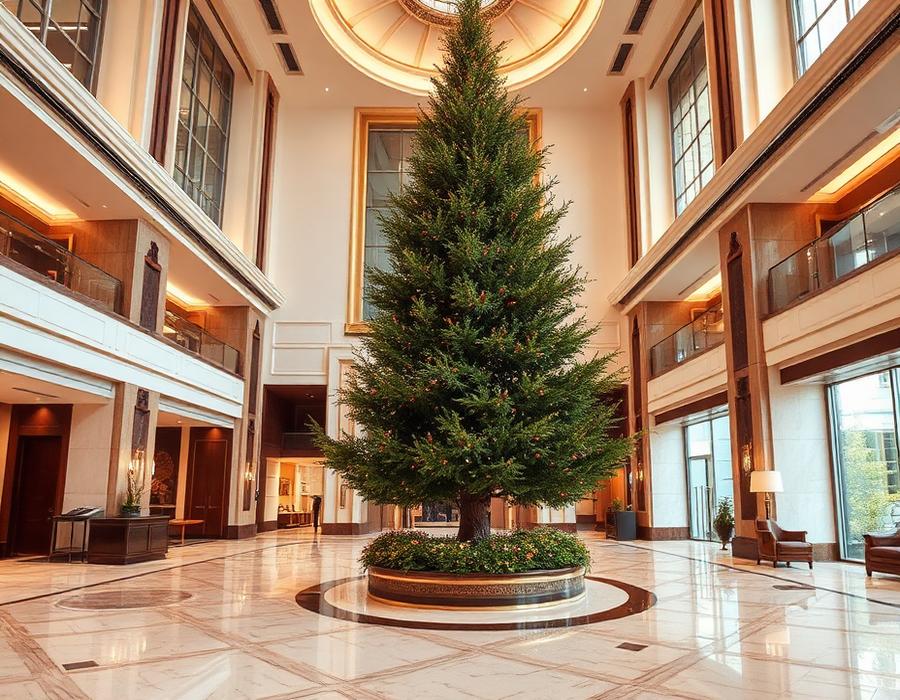
| Balsam Hill (seasonal) | BH Fraser Fir Artificial Christmas Tree | $1,449–$3,199 across height and lighting options | Price range pulled from the Williams-Sonoma listing of this Balsam Hill tree; balsamhill.com's own product page runs on a configurator that does not expose a static price to a page fetch. |
Two patterns stand out. Price does not map cleanly to a quality signal: the two cheapest listings (Home Depot, Pottery Barn's clearance item) lean hardest on generic "high-quality materials" language rather than a stated leaf count or fabric type, while Afloral, mid-priced, is the one retailer that spelled out its material percentages. And "artificial tree" spans a wide category — an $88 accent olive tree and a $3,199 designer Fraser fir are not competing for the same buyer, so a price only means something once you know what it is buying.
What should a US buyer check before ordering an artificial tree?
The retailer survey above shows a wide range of what gets disclosed at the point of sale. A few checks are worth running on any listing before paying:
- Materials stated or not. Afloral's 60/25/10/5 polyester-plastic-wire-plaster breakdown is the exception in this survey, not the rule. Most listings above use phrases like "high-quality materials" without naming a fabric.
- Leaf and fruit counts. A tree described only by height tells you nothing about fullness. An exact leaf count, or a fruit count for a fruiting variety like olive, is a stronger signal than photography, since photos can be styled denser than what ships.
- Trunk construction. "Natural trunk," "real wood trunk" and a moulded plastic or resin trunk are different products at different price points. If the listing does not say which, assume moulded.
- Weighted base. A tree over about 5 ft needs real mass in the base, not just a planter shape, to stay upright. Several listings above note a cement- or sand-filled pot.
- Return window. Nearly Natural's own policy caps returns at 30 days, for orders shipped within the continental USA and bought directly from its site — worth checking on any retailer before buying something this size.
- Freight for large trees. Anything 7 ft-plus typically ships freight rather than parcel, which changes both the delivery timeline and what happens if the box arrives damaged.
For what separates a convincing tree from an obviously fake one at the foliage level rather than the retailer level, see what makes an artificial tree look real.
Can a Canadian retailer sell artificial trees to US buyers?
Yes, and Eververda is doing exactly that as of 29 August 2026: US visitors now see pricing in USD at checkout rather than CAD. Practically, that means three things worth being clear-eyed about. First, the pricing a US visitor sees is already converted and displayed in USD — there is no separate USD price list to quote here beyond what shows at checkout, so this section deliberately does not restate any CAD figure as if it were a US price. Second, shipment is cross-border: an order ships from Canada into the United States rather than from a US warehouse. Third, and this is worth stating plainly rather than glossing over: whether a specific order attracts customs duty or import processing depends on the shipment's value, its product category, and the customs rules in effect at the time it crosses — those rules change, and this article is not going to assert a specific duty-free threshold or duty rate without a dated source to back it up. The honest answer is to check the total shown at checkout, where cross-border costs are calculated for that specific order, rather than relying on a rule of thumb from an article.
What a Canadian brand can offer instead of domestic-only sourcing is a wider size range with published specifications on every listing. Eververda's residential olive tree line, for instance, runs from a 4 to 6 ft olive tree with PE foliage and stainless-steel branches at $199–$329 CAD up to larger silk-foliage versions with counted leaves and fruit, and the catalogue extends well past what most of the retailers surveyed above stock: a Golden Cane Palm, 4.5 to 9 ft, sold single or as a pair, runs $289–$869 CAD, and at the statement end a 7.2 ft podocarpus bonsai with UV-resistant foliage lists at $1,246.99 CAD. Rather than quote a false US-dollar figure by hand-converting those, the accurate statement is qualitative: Eververda's range spans entry-tier trees, mid-tier statement pieces, and large-format installation trees, with the live USD number always the one shown at checkout for a US visitor. For a size-by-size look at the largest end of that range, see giant artificial trees.
Nearly Natural's own shipping page is a useful contrast here: "We ship to the 48 contiguous United States," with no Canada or international option and no P.O. box delivery, checked 29 August 2026. That is one of the two directions of the same underlying issue — cross-border shipping logistics — that this article's companion piece on Nearly Natural versus Artiplanto covers from the other side of the border.
The bottom line for US buyers
Nine of the eleven retailers surveyed here yielded a verifiable, dated USD price; two did not, and that gap is reported rather than filled in. Within the nine, price ranged more than sixfold on a roughly comparable product (5 to 8 ft olive trees), which makes the retailer name a weak signal on its own — the material description, leaf count, trunk construction and return window on the individual listing matter more than the storefront. A Canadian retailer selling into the US at USD checkout pricing, as Eververda now does, is one more option in that field, not a replacement for checking the listing specifics that determine whether a tree holds up.
Frequently asked questions
Does Eververda ship artificial trees to the United States?
Yes. As of 29 August 2026, US visitors to Eververda see pricing in USD at checkout rather than CAD, and orders ship cross-border from Canada. Whether a given order attracts customs duty depends on its value, category and the rules in effect at the time, so the checkout total is the reliable figure, not a hand-converted CAD price.
Why does Nearly Natural only ship to some US states?
Its own shipping page states it ships to the 48 contiguous United States and does not deliver to P.O. boxes, checked 29 August 2026. That excludes Alaska, Hawaii and any international address, including Canada, from direct nearlynatural.com orders.
What is the cheapest way to buy an artificial olive tree in the US?
In this survey, Home Depot's DR.Planzen 6 ft olive tree at $87.38 and Pottery Barn's clearance terracotta olive tree at $88.97 were the lowest verified prices, both roughly a sixth of Wayfair's $568.87 example. Both budget listings used generic "high-quality materials" language rather than a stated leaf count or fabric breakdown, which is worth weighing against the lower price.
Should I buy an artificial tree from Amazon?
This survey could not verify a price on Amazon.com directly; product pages returned a robots.txt block on every fetch attempt. Amazon lists many third-party sellers for artificial trees, so materials, sizing and return policy can vary by seller even within one search result page — check the specific seller's listing rather than assuming Amazon-wide consistency.
How much should a realistic 5 to 8 ft artificial tree cost?
This survey's verified examples ranged from $87.38 to $568.87 for that size band, plus $1,449 and up for a premium seasonal tree like Balsam Hill's BH Fraser Fir. Within that range, a stated material composition and leaf or fruit count are better predictors of realism than price alone.
Do I need to check trunk construction before buying?
Yes. Listings that specify a natural or real wood trunk are describing a different, generally sturdier product than one with a moulded plastic or resin trunk, even at a similar price. If a listing does not state which it is, assume moulded and check photos of the trunk base specifically rather than the full-tree shot.
Prices and policies in this article were checked 29 August 2026 directly at each retailer's US site (nearlynatural.com, wayfair.com, potterybarn.com, westelm.com, crateandbarrel.com, worldmarket.com, target.com, homedepot.com, afloral.com, balsamhill.com and, for Amazon.com, blocked automated access as noted above). Eververda prices referenced are CAD and current as of 28 August 2026; USD pricing for US visitors is the figure shown at checkout, not restated here.