
Large Artificial Ficus and Banyan Trees: Sizes, Spread, Anchoring and What They Cost
21 October 2026
A large artificial ficus or banyan tree costs $398 to $15,250 USD, across heights from a 5 ft potted piece to a 33 ft banyan specified into a restaurant atrium. Those are the figures US buyers see on our own listings as of 21 October 2026.
Our position on fire documentation. Eververda publishes a fire figure only where documentation exists for that specific piece, and describes nothing as "fire rated". On a commercial quote we establish the occupancy, the adopted code edition and what your authority having jurisdiction (AHJ) will accept as documentation, in writing, before the order. Where no documented route exists for a piece, we say so and set out the alternatives. We do not claim a certificate for any product.
One thing separates this species from every other large artificial tree, and it is the thing most buyers get wrong: with a banyan, spread matters more than height. A 13 ft banyan can carry a canopy twelve feet wide. Order one for a corner sized to a 13 ft palm and it will not fit the space, will not fit through the route in, and will overhang a walkway it was never meant to touch. Get the spread figure before the height figure.
What does a large artificial ficus or banyan cost?
| Height | Price, USD | What you get at this tier |
|---|---|---|
| 5 to 7 ft, potted | $398 to $805 | Ficus benjamina, bonsai ficus and potted banyan. Office, reception, seating areas |
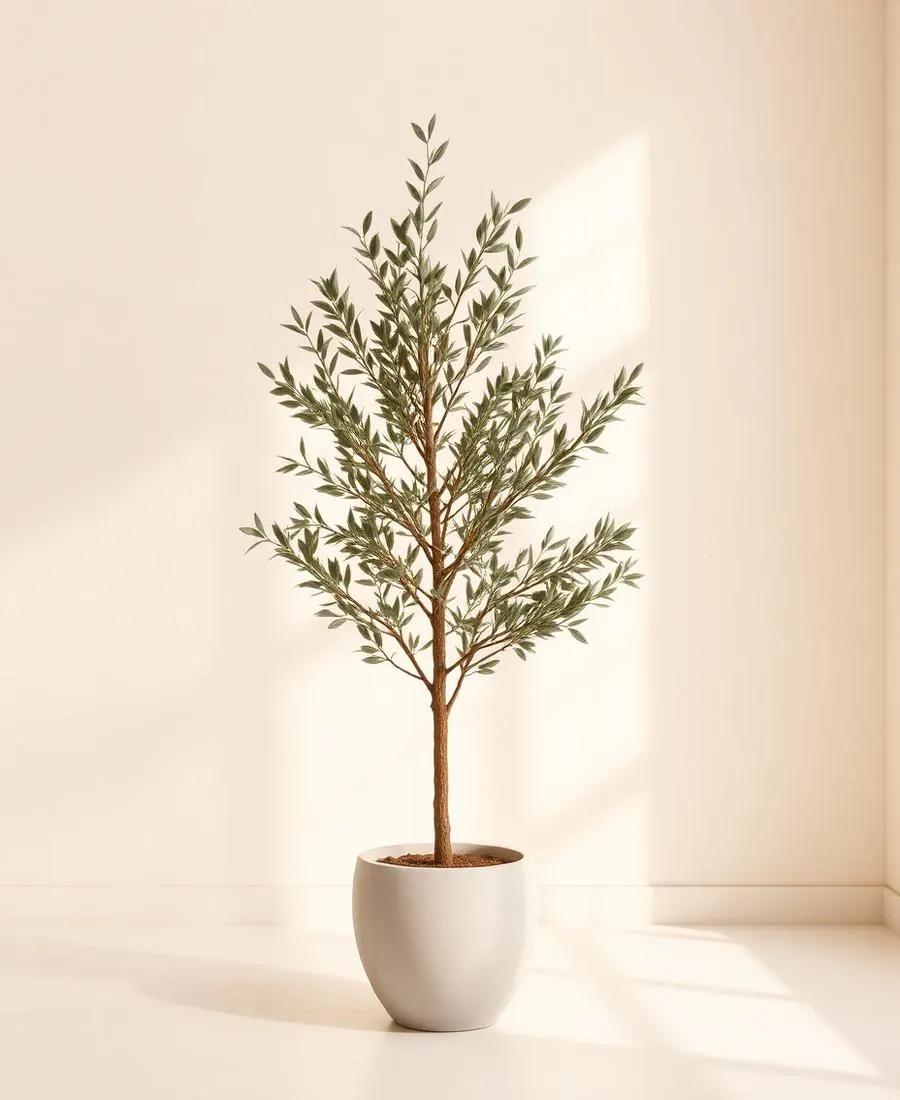
| 7 to 9 ft | $703 to $2,025 | Bengal ficus and willow-leaf ficus on a floor planter. Lobby corner scale |
| 10 to 13 ft | $2,025 to $5,687 | Banyan and ficus at feature scale, fiberglass or natural wood trunk, indoor and outdoor builds |
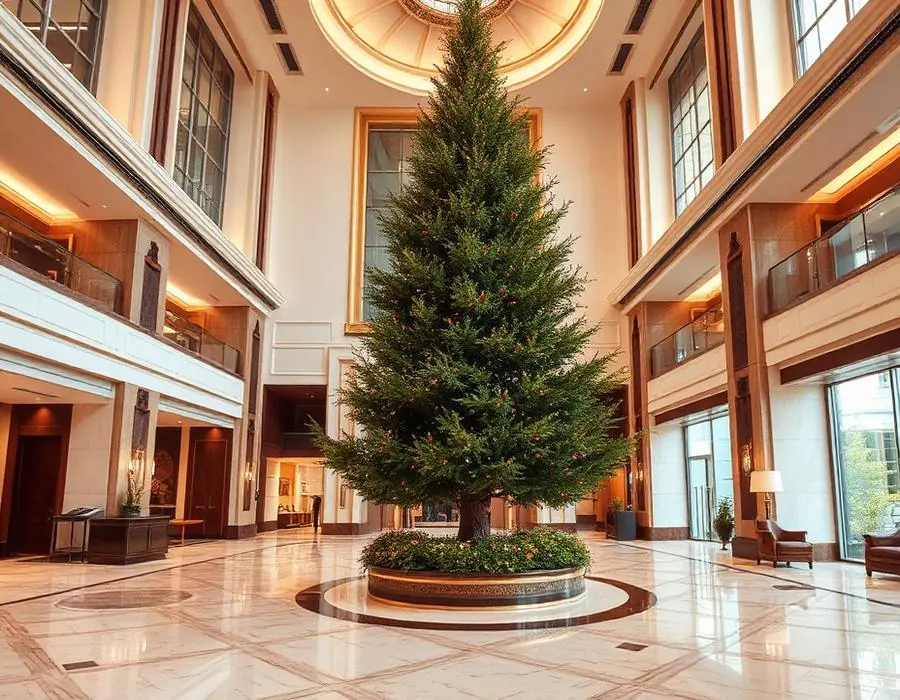
| 16 ft and above | $5,077 to $15,250 | Architectural banyan, including natural wood trunk specimens for atriums and restaurants |
Freight is not included. At 13 ft and above these ship crated and palletised, and the delivered cost depends on the destination and whether the site has a dock or needs a liftgate. Everything at feature scale is quoted rather than sold at checkout for that reason.
Why spread matters more than height
A banyan is a spreading tree. Its natural form is wide and layered rather than tall and narrow, with aerial root structure dropping from horizontal branches. That is the whole visual appeal: it reads as an established tree rather than a plant in a pot, and it fills volume in a way a palm or an olive cannot.
It also means three practical things.
- Floor clearance. Allow roughly 1.5 m of clear floor around a broad-canopy banyan, more if people walk under it. A tree whose canopy ends six inches from a wall looks pruned rather than placed.
- The route in. Canopy sections travel separately from the trunk, but the longest single section still has to clear your doorways, elevator car and stair turns. Ask for the section count and the longest section dimension before you order.
- Sightlines. A wide canopy at eye level blocks a view across a room. In a restaurant or retail space that can be the point, as a screen between zones. In a lobby where reception has to be visible from the door, it is a problem. Decide which you want before choosing the form.
Can a ficus or banyan go outside?
Some builds list outdoor placement, and that placement is published per product rather than assumed from the species. The honest complication with this species specifically is wind.
A dense broadleaf canopy traps air and behaves like a sail. A palm frond spills it. That difference is why a 13 ft banyan is a poor choice for an exposed rooftop or a waterfront terrace and a good one for a courtyard, a covered atrium or a sheltered garden. If the position is genuinely exposed, either choose a palm or accept that the base has to be engineered for the wind load rather than simply weighted.
On fading, the same rule holds as everywhere in this category: UV resistance slows it rather than stopping it. Green foliage is more forgiving than blossom or variegated leaf, so a banyan holds its appearance outdoors better than a flowering tree in the same position, but a UV-treated leaf in permanent direct sun still shifts over years. See can you put artificial trees outside and browse UV resistant and outdoor safe.
What holds a 13 ft banyan up?
Not a pot. Above roughly 10 ft, and for any broad canopy outdoors, the base is one of three things: a ballasted base sized to the height and spread, a bolt-down plate fixed into a slab, or a below-grade sleeve where the trunk should appear to grow from the ground.
Spread changes the arithmetic here too. A wide canopy puts more leverage on the base than a narrow one at the same height, so a banyan generally needs more ballast or a wider bolt pattern than an upright tree of equal height. If you are pouring a pad, get the base plate dimensions and bolt spacing in writing before the pour.
Eververda does not install. You arrange your own installer; we supply the parts and the information they need, including section weights, base type and finished footprint.
Natural wood trunk, fiberglass, or moulded?
- Moulded plastic trunk. Entry construction. Fine at distance and at smaller heights; the mould repeat shows up close.
- Fiberglass over steel. The structural answer at 11 ft and above. A trunk skin, usually taken from a real tree, over a steel core. It is what makes a 16 ft tree stand without guy wires.
- Natural wood trunk. Real timber carrying applied foliage. It reads best of all at close range because the bark grain and the irregularity are genuine, and no mould reproduces that exactly, since a mould repeats and a tree does not. It is also the most expensive route, which is why the natural-wood banyan specimens sit at the top of the ladder above.
Choose by viewing distance. If people stand within arm's reach, in an entrance or beside seating, the trunk is where the money should go. If the tree is seen from across an atrium, canopy density and spread matter more than trunk texture.
Ficus, fiddle leaf fig, benjamina or banyan?
These names overlap and get used loosely, so to be concrete.
- Ficus benjamina. Small, fine, slightly drooping leaf on a light branch structure. The classic office tree. Reads as texture rather than as a specimen.
- Ficus pandurata, the fiddle leaf fig. Large glossy violin-shaped leaf. Striking, and the hardest leaf in this family to fake convincingly, because a big flat glossy surface shows moulding and uniform colour immediately. Judge it at close range before committing.
- Willow leaf ficus. Long narrow leaf, lighter and more movement than benjamina.
- Banyan, including Bengal ficus. The spreading, aerial-root form. The specimen tree of the family and the one specified into atriums, restaurants and shopping centres.
Each of those sits on its own listing: ficus benjamina at 4.9 to 6.9 ft, the fiddle leaf fig at 6.6 and 7.5 ft, a willow leaf ficus at 9.2 ft and a banyan at 16.5 ft.
What should you ask any supplier for?
- Canopy spread in inches or centimetres, not just height. On this species it is the number that decides whether the tree fits.
- Listed placement for that specific product: indoor, covered outdoor, or full outdoor.
- Trunk construction, and whether fiberglass is over a steel core or standalone.
- Base type, bolt pattern and finished footprint, before any concrete is poured.
- Section count and longest section, to confirm the delivery route.
- Lead time and freight terms in writing before you commit.
- Fire documentation, if the space needs it. In the United States, the International Fire Code accepts either NFPA 701 (Test Method 1 or 2) or NFPA 289 (20 kW ignition source, 100 kW maximum heat release rate) for artificial vegetation, at Section 807.4.1 from the 2018 edition onward; it was Section 806.2 in the 2015 edition, which some jurisdictions still run. No product is automatically compliant for your building. Ask what test documentation exists, and confirm the requirement with your local fire marshal or authority having jurisdiction, which has the final say. See fire documentation for commercial artificial greenery.
Where Eververda fits, with the caveats
We ship to the United States and price in USD at checkout, which is where the figures on this page come from. Every listing publishes the manufacturer's specification, including trunk construction and listed placement, and anything the manufacturer has not documented is marked "Not specified" rather than guessed at.
The caveats. Everything at feature scale here is quoted rather than sold at checkout, so you cannot add a 16 ft banyan to a basket; send the height, the spread you can accommodate, the position and the delivery access and we price the tree and its freight together. The specification table on each listing is the document to read first: it records what the manufacturer documented and shows "Not specified" in place of any guess. A tree can be returned within 30 days, shipping damage is reported within 48 hours, and anything damaged, defective or incorrect is repaired, replaced or refunded at our cost, with no restocking fee on those. And we do not install.
Browse ficus and fiddle leaf trees, the largest pieces in trees over 15 ft, and for hospitality placement see artificial trees for hotel lobbies.
The spreading forms specifically are grouped in banyan and ficus trees.
Frequently asked questions
How much does a large artificial ficus or banyan tree cost?
$398 to $15,250 USD on our own listings as of 21 October 2026. A 5 to 7 ft potted ficus runs $398 to $805, a 7 to 9 ft piece $703 to $2,025, a 10 to 13 ft feature tree $2,025 to $5,687, and architectural banyan specimens from 16 ft upward $5,077 to $15,250. Freight is quoted with the tree.
How wide is a large artificial banyan tree?
Wider than buyers expect, and the spread is the figure to ask for first. A 13 ft banyan can carry a canopy around twelve feet across. Allow roughly 1.5 m of clear floor around a broad-canopy specimen, more if people walk beneath it, and check that the longest single section clears your doorways and elevator before ordering.
Can artificial ficus and banyan trees go outside?
Certain builds list outdoor placement, per product rather than per species. The species-specific issue is wind: a dense broadleaf canopy traps air and acts like a sail, so a banyan belongs in a courtyard, covered atrium or sheltered garden rather than an exposed rooftop. Green foliage holds its colour outdoors better than blossom, but UV treatment still only slows fading.
Is a natural wood trunk worth the extra cost?
At close viewing distance, yes. Real bark grain and genuine irregularity are what a mould cannot reproduce, because a mould repeats and a tree does not. If people stand within arm's reach of the tree, in an entrance or beside seating, that is where the money should go. If it is seen from across an atrium, canopy density and spread matter more.
What is the difference between a ficus and a banyan tree?
A banyan is a ficus. The name is used for the spreading form with aerial root structure dropping from horizontal branches, which is the specimen version of the family. Ficus benjamina is the small-leaved office tree, ficus pandurata is the fiddle leaf fig with its large glossy leaf, and willow-leaf ficus is the narrow-leaved form.
How are large banyan trees delivered and assembled?
Crated and freighted, in sections, with a dock or liftgate needed at the receiving end. The canopy travels separately from the trunk and assembles on site, with branch positions shaped by hand once the tree is standing. Confirm the section count, the longest section and the base type in the quote.
Prices are USD as shown to US visitors at checkout and were read from our own listings on 21 October 2026. Fire code text was verified against the publishers' own published text on 24 October 2026.
Products in this article
- Artificial Ficus Benjamina Tree, 4.9 to 6.9 ft (1.5 to 2.1 m), Real Touch, Green$547.99 CAD to $827.99 CAD
- Artificial Fiddle Leaf Fig Tree, 6.6 ft (2 m) and 7.5 ft (2.3 m), Ficus Pandurata$1,388.99 CAD to $1,948.99 CAD
- Artificial Willow Leaf Ficus Tree, 9.2 ft (2.8 m), Floor Plant$2,787.99 CAD, quoted
- Artificial Banyan Tree, 16.5 ft (5 m), Ficus Leaves, UV Resistant$6,990.99 CAD