
Artificial Trees for Pool Areas, Patios and Resort Landscapes
29 August 2026
The resort look around a pool — curved palms, broad tropical foliage, thick green screening along the fence line — does not survive as living planting in most of Canada, and it does not need to. Full-sun poolside exposure calls for a narrow slice of the artificial catalogue: pieces the manufacturer states are UV-resistant, not the indoor line pressed outside for a season. Residential patios run $219 to $769 CAD for a single UV-rated palm or topiary; a resort, hotel or clubhouse pool deck scales the same look to commercial trunks from roughly $2,787.99 CAD published, or quote-priced once trunk height and base engineering are specified. Below: which pieces are rated for sun, how chlorine and salt splash affect them, how to stop a tall piece blowing over on an open deck, how to protect a base from pool-deck traffic, and what changes for winter.
Why doesn't the tropical poolside look survive as living plants in Canada?
Palms are not hardy across most of Canada, and that is a hardiness-zone fact, not a stylistic opinion. Even the cold-hardiest palm grown outdoors anywhere, windmill palm (Trachycarpus fortunei), is rated to USDA zone 7a at best, per North Carolina State University's Extension Gardener Plant Toolbox (checked 29 August 2026). Natural Resources Canada's updated Plant Hardiness map, released July 2025, shows roughly 80 percent of the country shifting into warmer zones, and a rare 9a pocket now appears on parts of Vancouver Island and BC's Lower Mainland — mild enough that a hobbyist nursery in Ontario has reported hardy palm varieties overwintering outdoors there, per CBC News (map dated July 2025; checked 29 August 2026). That is a handful of postal codes, not a national growing zone. Every other pool deck in Canada sits well short of zone 7a, so a live palm poolside is a container plant hauled in every October, not a permanent feature. Tropical broadleaf foliage (banana, bird of paradise, monstera) fails the same test even faster, since none of it is frost-hardy anywhere in Canada. Artificial is the only way to keep the resort look standing through a Canadian winter.
What actually survives poolside as artificial — and what doesn't?
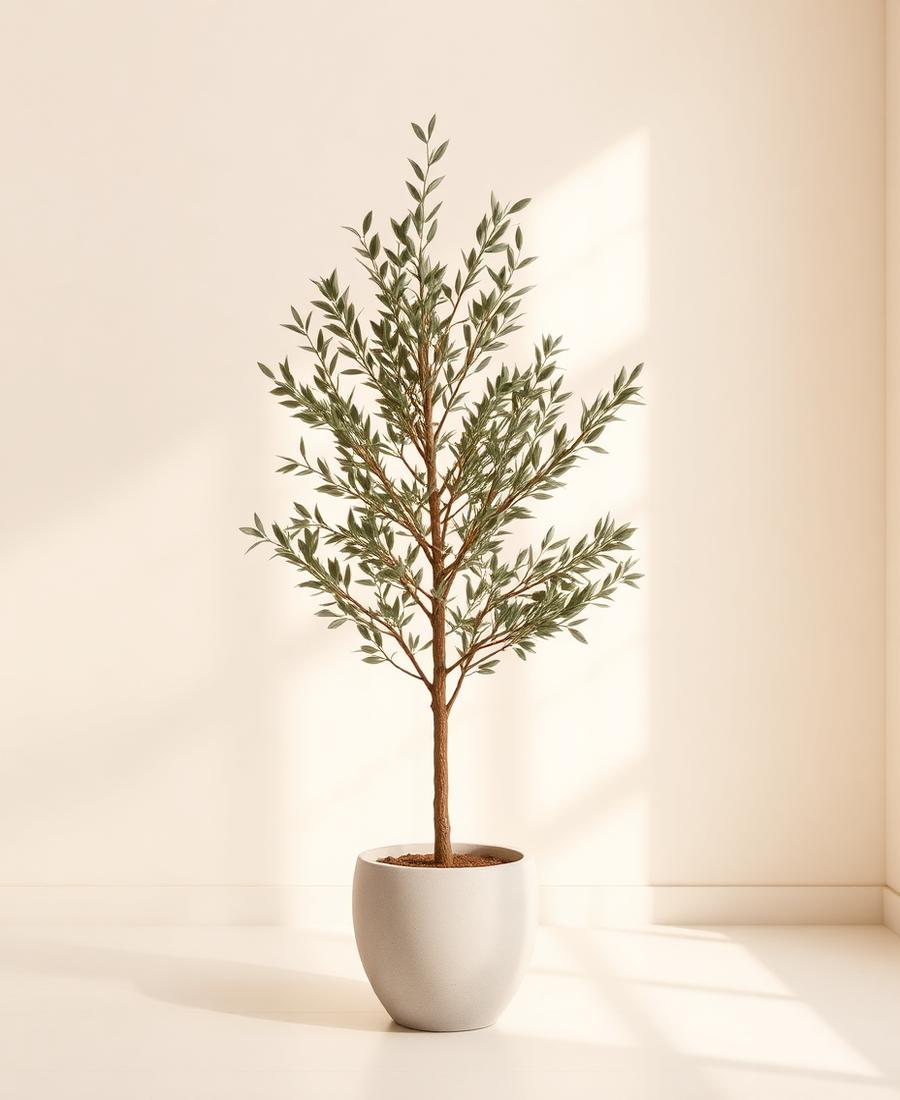
Not everything in an artificial catalogue belongs beside a pool. Full sun bleaches and embrittles standard PE and fabric foliage within one season, so the only pieces recommended here for direct poolside sun are the ones the manufacturer states are UV-resistant on the listing, checked against Eververda's current listings on 29 August 2026. On the residential side that's a short list: a 5 to 6 ft palm with UV-resistant fronds at $219 to $289 CAD, a 5 to 6 ft banana tree in UV-resistant PE with a grey planter at $299 to $449 CAD for the tropical-leaf half of the look, and a 3 to 5 ft cedar topiary on a carbon-steel trunk and cement base, rated for indoor or outdoor use, at $329 to $769 CAD for structured screening along a deck rail. Everything else in the olive, fiddle leaf fig and cherry blossom lines is built for indoor or covered-outdoor placement — a shaded cabana is fine, an open deck in July is not. If a listing doesn't say UV-resistant, treat it as indoor or covered-outdoor only.
How do chlorine and saltwater splash affect artificial poolside trees?
Chlorinated and saline splash is a rinse problem more than a material problem for UV-rated pieces. PE and PVC foliage doesn't absorb chlorine or salt the way fabric does, but both leave a residue as splash water evaporates off leaves and trunk, which dulls the surface finish over a season and can leave a mineral bloom on a cement or stone-ballasted base. The fix is mechanical: a garden-hose rinse after splash exposure, the same way you'd rinse deck furniture, before residue bakes on in the sun. Skip pressure washers on the foliage — the pressure that strips residue also strips the texture that makes real-touch leaves look real. A planter without drainage, trapping overspray against a wood-look or metal trunk fitting, is the other risk, so drainage matters more right at the water line than elsewhere on a patio.
How do you keep a tall piece from blowing over on an open pool deck?
Open decks around a pool are usually more exposed to wind than a fenced backyard patio — no hedge, no neighbouring structure, often elevated or facing open water — so ballast matters more here than in a typical yard. A weighted or cement-filled base is the starting point, which is why the cedar topiary above ships on a cement base rather than a light nursery pot. From there, the standard fixes apply: top-dress the pot with heavy stone to lower the centre of mass, and for anything genuinely tall or narrow, anchor the trunk rather than relying on base weight alone. The full method — how much weight, which anchoring approach for which height — is covered in how to stop a tall artificial tree from tipping over; it applies unchanged to a pool deck, just with the wind turned up.
How do you protect a poolside base from deck traffic?
A pool deck sees more foot traffic and more furniture dragged past than a quiet patio corner, and the base takes that abuse before the foliage does. Set pieces where swim-lane and lounge-chair paths naturally avoid them, and choose the widest stable base the space allows — a wide cement or ballasted foot resists a glancing knock far better than a narrow one, independent of raw weight. Near a gate, stair or high-traffic corner, treat it like outdoor furniture in that spot: build in base width to absorb the occasional bump rather than tip from it.
What changes for a Canadian winter?
Even a UV-rated poolside piece needs a winter plan, and Canadian outdoor conditions — freeze-thaw cycling, wind-driven cold, snow load — are covered in full in can artificial plants stay outside in a Canadian winter. The short version for a pool deck: most owners close the pool and store poolside pieces the same season, since a ballasted base sitting through freeze-thaw slush on an unmaintained deck gains nothing by staying out. If storage isn't practical, follow the placement and material guidance in that article rather than assuming a UV rating alone covers frost.
Residential patio versus resort and hotel poolside: what does scale cost?
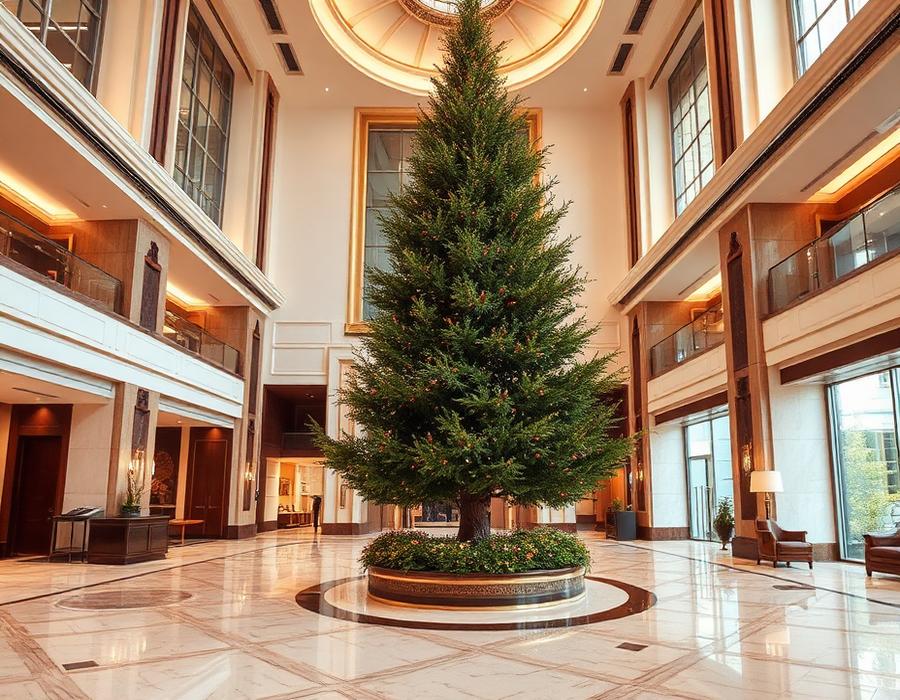
The jump from a backyard pool deck to a resort or hotel pool deck is a jump in trunk engineering, not just size. A homeowner buys one or two potted pieces at 5 to 6 ft; a resort or hotel operator specifies a run of palms at commercial height with fiberglass or reinforced trunks built to stand outdoors year after year, based to match a landscape plan rather than a living-room corner. A 9 ft commercial coconut palm on a glass-fiber trunk runs $2,787.99 to $6,291.99 CAD depending on configuration, and a 20 ft curved-trunk palm is available from $2,787.99 CAD. Full specification detail for that height range — anchoring engineering, delivery in sections, site quoting — is covered in giant artificial trees over 15 feet. Above these entry points, most large-format commercial pieces move to a quote, since trunk height, foliage density and base engineering all move the final price against the specific site.
| Scale | Typical piece | Price | Base |
|---|---|---|---|
| Residential patio | 5–6 ft UV-resistant palm | $219–$289 CAD | Standard pot, ballast as needed |
| Residential patio | 5–6 ft UV-resistant banana tree | $299–$449 CAD | Grey planter, ballast as needed |
| Residential patio | 3–5 ft cedar topiary, cement base | $329–$769 CAD | Cement-filled base |
| Resort / hotel deck | 9 ft commercial coconut palm, fiberglass trunk | $2,787.99–$6,291.99 CAD | Engineered commercial base |
| Resort / hotel deck | 20 ft curved-trunk palm | From $2,787.99 CAD | Site-engineered anchor, quote for full spec |
For hospitality and resort installs specifically, confirm fire performance before committing to a supplier, not after. Ask any supplier — Eververda included — for documentation on the specific product via the quote process, rather than taking a general "fire retardant" claim at face value. In Canada that means asking how the foliage performs against CAN/ULC-S109 and what your provincial fire code requires for the occupancy; in the US the equivalent reference is NFPA 701. No retailer can call a product "compliant" in the abstract — that determination belongs to your local authority having jurisdiction, so the documentation request goes in the RFQ and the sign-off happens on-site.
For the full palm price ladder, from a $219 potted palm to commercial trunks past $6,000, see how much do artificial palm trees cost. For help choosing a species and styling it on site, see the artificial palm tree guide.
Frequently asked questions
Can any artificial palm tree go beside a pool in full sun?
No. Only pieces the listing states are UV-resistant hold up to full-sun poolside exposure without fading or going brittle within a season. Standard indoor PE or fabric foliage, including most of the fiddle leaf fig and cherry blossom lines, is built for indoor or covered-outdoor placement, not open sun beside water.
Do I need to rinse artificial trees near a chlorinated or saltwater pool?
Yes, as routine maintenance. Chlorine and salt don't damage properly rated outdoor foliage the way they damage fabric, but both leave a residue as splash water evaporates, which dulls the finish over a season if not rinsed off with a garden hose the same way you'd rinse deck furniture.
Why do open pool decks need heavier bases than a backyard patio?
Pool decks are usually more exposed — no fence line, hedge or structure breaking the wind, often elevated or facing open water — so a tall artificial tree catches more wind there than in a fenced yard. That makes ballast weight, and for taller pieces trunk anchoring, more important poolside than elsewhere on the property.
Should I store artificial poolside trees over a Canadian winter?
Most owners do, since pool decks typically go unused through winter anyway, so a ballasted base left sitting through freeze-thaw cycling gains nothing by staying out. If storage isn't an option, follow the outdoor winter placement and material guidance covered separately rather than relying on a UV rating alone to cover frost.
What's the price difference between a residential poolside palm and a resort-scale one?
A residential 5 to 6 ft UV-resistant palm runs $219 to $289 CAD. A commercial resort or hotel installation starts around $2,787.99 CAD for a 9 ft fiberglass-trunk coconut palm and moves into quote-priced territory for taller or custom-specified pieces, since trunk engineering and base anchoring scale with height and site.
Do I need fire documentation for a resort or hotel pool deck installation?
If the installation is subject to local fire code — most hotel, resort and commercial pool decks are — request test documentation for the specific product from any supplier via the quote process rather than accepting a general fire-retardant claim. Compliance for your site is a determination your local authority having jurisdiction makes, not something a retailer can certify.
External facts checked 29 August 2026: Trachycarpus fortunei hardiness rating (North Carolina State University Extension Gardener Plant Toolbox); Canada's 2025 Plant Hardiness map update and its coastal BC zone 9a shift (CBC News, map released July 2025). Eververda prices are CAD and current as of 29 August 2026.