
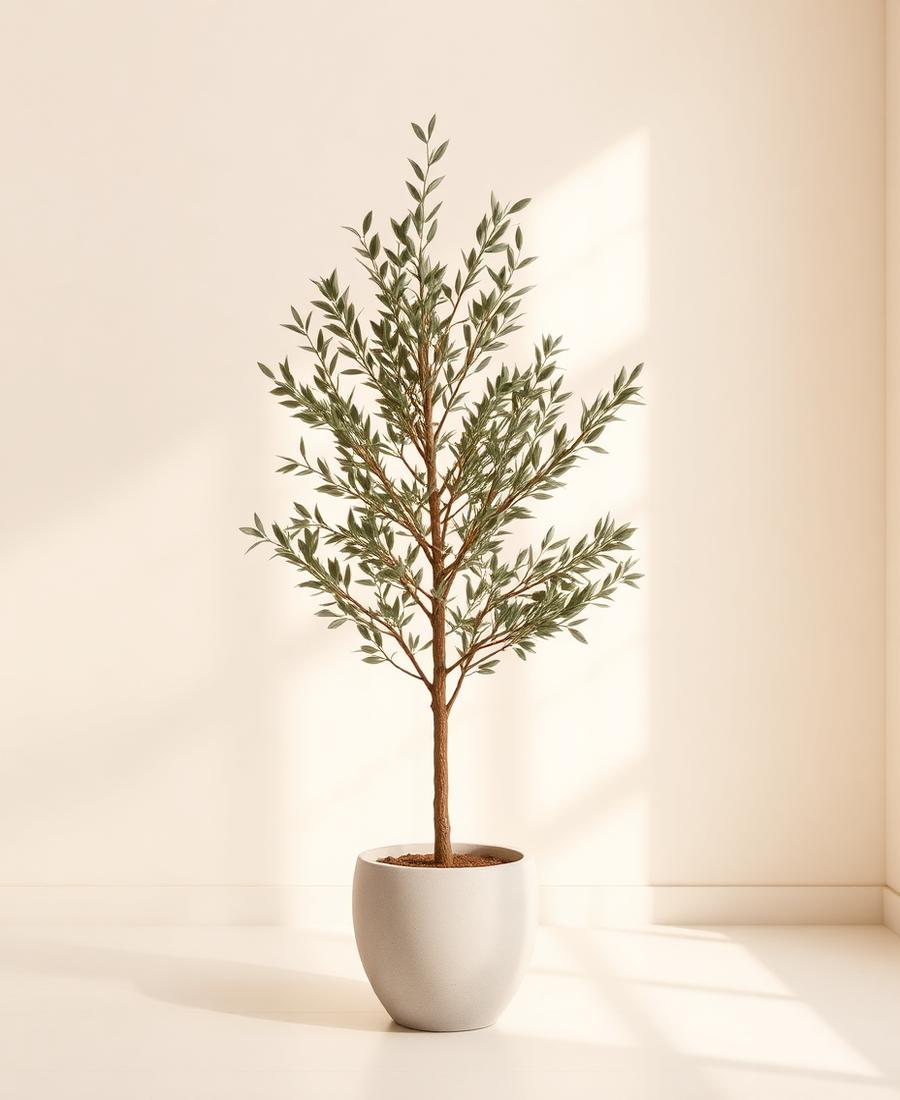
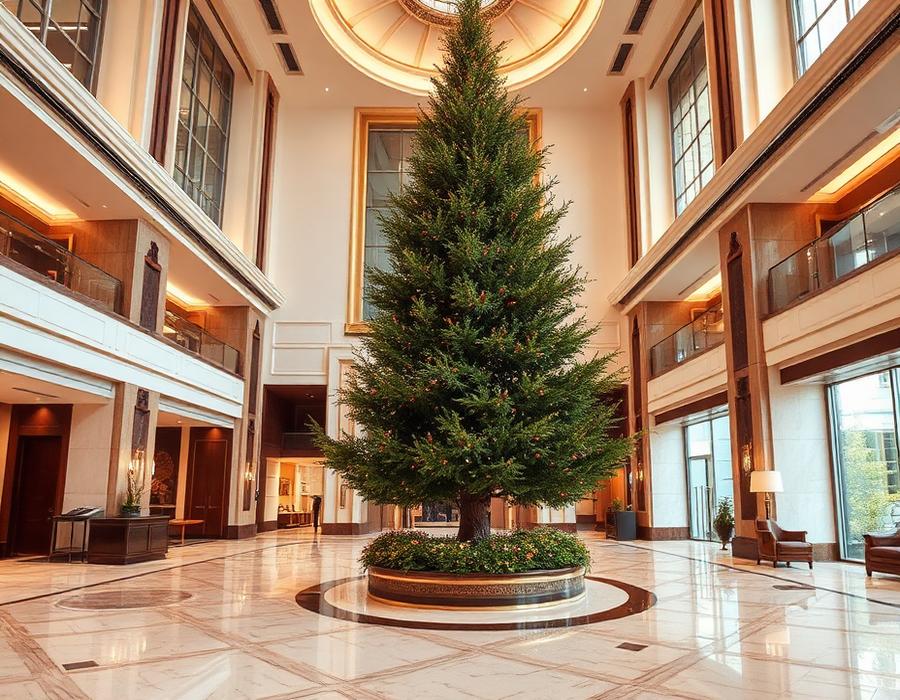
Artificial Ficus, Banyan and Rubber Trees: A Buyer's Guide
29 August 2026
The ficus family gives you three of the most useful indoor tree shapes there are: the fine-leafed, weeping canopy of Ficus benjamina, the broad glossy paddles of the rubber tree (Ficus elastica), and the sprawling, aerial-rooted silhouette of the banyan. It also gives you one of the most frustrating live houseplants in the trade, because real ficus trees respond to almost any change in their environment by dropping leaves. That combination, distinctive looks plus fussy live behaviour, is exactly why artificial versions of this family are worth taking seriously.
Here is the short version. If you want the ficus look without the leaf drop, buy artificial and judge the tree by its trunk first, because trunk realism is what separates a convincing ficus from an obvious fake in this family. In Canada, a well-made residential piece such as a 7 ft banyan with a natural wood trunk and silk leaves or a 52 in rubber tree with 72 variegated real-touch leaves runs $739 CAD, and commercial-grade ficus and banyan trees start around $547.99 CAD and climb well into five figures for room-scale statement banyans. Fiddle leaf figs are part of this same family, but they have their own dedicated guide; this article covers everything else.
What counts as a ficus, and which ones are worth faking?
Ficus is a genus of roughly 850 species, but four of them dominate interiors, and each brings a different silhouette:
- Ficus benjamina (weeping fig). Small, pointed, slightly glossy leaves on arching branches. This is the classic office and mall tree, and the one with the worst reputation for leaf drop as a live plant. Its fine foliage reads soft and airy from across a room.
- Banyan-type ficus (including Ficus benghalensis and Ficus microcarpa forms). The signature here is the trunk: thick, gnarled, often with multiple stems or moulded aerial roots that suggest a tree far older than its height. Artificial banyans lean into this and are usually bought as statement or feature trees.
- Ficus elastica (rubber tree). Large oval leaves with a thick, rubbery surface, often burgundy-tinted or cream-variegated. The leaf is simple and bold, which makes it one of the easier ficus looks to reproduce convincingly in PU and real-touch materials.
- Ficus lyrata (fiddle leaf fig). The famous cousin, with huge violin-shaped leaves. It is the most photographed member of the family and the one with the deepest artificial market, so we cover it separately in our fiddle leaf fig guide. Everything in this article about trunk realism and materials applies to fiddles too.
Why do live ficus trees drop their leaves?
Leaf drop in ficus is not a myth or a care failure; it is documented physiology. Clemson University's Home and Garden Information Center factsheet on weeping ficus (revised 15 February 2016, checked 29 August 2026) lists overwatering, underwatering, drafts, low light and nitrogen shortage as causes of leaf drop, and notes that these plants frequently shed foliage when moved to a new location or repotted, or when placed near a heat vent or draft.
The Pacific Northwest Plant Disease Management Handbook entry on weeping fig leaf drop (revised March 2026, checked 29 August 2026) attributes the problem to physiologic stress from "any sudden change in environment", including cold drafts, relocation within the home, temperature swings outside the ideal 60 to 70°F range, and short days in late fall. Both sources note the drop is usually reversible once conditions stabilise, which is honest but not much comfort if the tree sits beside a door, a vent or a drafty window, which describes most of the spots people actually want a tree.
This is the practical case for artificial ficus. A live benjamina near an entrance in a Canadian winter faces exactly the triggers the horticultural literature warns about: cold drafts every time the door opens, forced-air heat cycling, and low winter light. An artificial one holds its canopy regardless, which is why weeping figs and banyans were among the first species the commercial artificial-tree industry standardised for hotels and offices.
What should you look for in an artificial ficus?
Trunk first. In most artificial species the foliage does the persuading, but the ficus family is the exception: benjamina, banyan and rubber trees are all known for their trunks, and a printed-plastic pole under a good canopy fails instantly. Our general checklist in what makes an artificial tree look real applies, with these family-specific priorities:
- Natural wood or sculpted fiberglass trunk. Residential ficus and banyan trees at the credible end use real preserved wood trunks; large commercial banyans use sculpted fiberglass because no shippable wood trunk reaches those diameters. Either can work. Smooth extruded plastic cannot.
- Aerial-root detail on banyans. A banyan without moulded or applied root structure at the base is just a generic ficus. The root flare is the species.
- Leaf count and leaf size that match the species. Benjamina needs thousands of small leaves to read correctly, which is why cheap versions look sparse. Rubber trees need the opposite: fewer, larger leaves with a thick hand and visible central vein, ideally real-touch PU rather than thin silk.
- Colour variation. Real ficus canopies mix new light-green growth with darker mature leaves. Single-tone foliage is the fastest giveaway after the trunk.
- A weighted or plantable base. Taller ficus shapes are top-heavy; check what the listing says about the pot and ballast before you buy.
Which artificial ficus, banyan and rubber trees can you actually buy?
For homes, our residential line carries the two core non-fiddle shapes. The 7 ft banyan with silk leaves on a natural wood trunk is $739 CAD and covers the statement-tree role. The 4.3 ft variegated rubber tree, also $739 CAD, carries 72 real-touch leaves and suits the corner-of-a-living-room scale where a full tree would crowd. If you want the fiddle instead, the residential range runs $219 for a 4 ft fiddle in a white planter up to $449, with the details in the dedicated guide linked above.
The commercial catalogue is where the family gets deep, because ficus and banyan are staples of hotel and restaurant fit-outs. A 7 ft real-touch Ficus benjamina starts from $547.99 CAD, and a 5 ft commercial rubber tree from the same figure. Moving up in scale, a 6 ft indoor-outdoor banyan centerpiece starts from $827.99 CAD and a 7 ft Bengal banyan in PU with a floor planter from $966.99 CAD. At the top of the range, room-scale pieces such as a 13 ft hotel-grade banyan are quote-priced, since trees at that size are configured and freighted to the project; anything over $3,000 goes through our quote service, and that route is covered in our hotel lobby guide.
What should an artificial ficus cost in Canada?
Prices in this family are driven by the same inputs as every artificial tree, trunk material and foliage count above all, and the spread is wide because the family spans desk-side rubber plants and lobby banyans. Here is the realistic CAD landscape based on our live catalogue:
| Family member | Signature feature to check | Realistic CAD range |
|---|---|---|
| Rubber tree (Ficus elastica) | Thick real-touch leaves, visible veining | $547.99 (5 ft commercial) to $739 (4.3 ft variegated, 72 leaves) |
| Ficus benjamina (weeping fig) | High leaf count, mixed leaf tones | From $547.99 (7 ft real-touch, commercial) |
| Banyan, residential scale | Wood trunk, root flare at base | $739 (7 ft, natural wood trunk) |
| Banyan, commercial scale | Sculpted trunk, aerial-root detail | From $827.99 (6 ft); 13 ft and larger are quote-priced |
| Fiddle leaf fig (for reference) | Violin-shaped leaves, branch structure | $219 to $449 residential; see the fiddle guide |
Two calibration points. First, under about $200 you will not find a convincing benjamina or banyan at tree height, because the leaf counts and trunk work these species demand cannot be built at that price; the family's realistic entry point is the small fiddle at $219. Second, commercial pricing is not a markup on the same tree; although the commercial range opens at $547.99, its upper reaches pay for steel or fiberglass structure, higher foliage densities and, on many listings, fire-retardant foliage options for code-driven projects. If a project requires fire documentation, request it from every supplier, ours included, via the quote process; the standards themselves are covered in our fire ratings article, and your local authority decides what is acceptable.
Frequently asked questions
Do artificial ficus trees look fake?
The cheap ones do, and it is almost always the trunk that fails first. A ficus reads as real when the trunk is natural wood or well-sculpted fiberglass, the canopy mixes light and dark leaf tones, and the leaf count matches the species. Judged by those checks, a $739 CAD banyan with a real wood trunk passes casual inspection at normal room distance; a smooth plastic pole never does.
Is a banyan the same thing as a ficus?
Every banyan is a ficus, but not every ficus is a banyan. Banyan describes fig species, such as Ficus benghalensis, that develop thick aerial roots and a broad, multi-stemmed trunk. In the artificial market, banyan means a tree built around that gnarled root-flare silhouette, while benjamina and rubber trees are sold under their own names.
How big do artificial banyan trees go?
Residential banyans typically top out around 7 ft, which is the height of our $739 CAD natural-wood-trunk model. Commercial banyans go far larger: the catalogue includes 10 and 13 ft trees and custom-shaped pieces built for hotel atriums, which are quote-priced and configured per project, including trunk shape, canopy spread and anchoring.
Can I put an artificial ficus outside?
Only if the listing says so. Standard silk and PU foliage fades and goes brittle in direct sun, so outdoor use needs UV-stabilised foliage, which some commercial banyan and ficus listings state. For covered porches, ask about the specific model through the quote process; for fully exposed placements, treat any tree without a stated UV claim as indoor-only.
Why did my real ficus lose its leaves when I moved it?
Because relocation is a documented leaf-drop trigger for the species. Clemson University's factsheet notes weeping figs frequently shed foliage when moved or repotted, and the Pacific Northwest handbook attributes drop to any sudden environmental change, including relocation and drafts. The leaves usually regrow once conditions stabilise, but repeated moves restart the cycle.
Product prices are CAD and current as of 29 August 2026; horticultural sources were checked the same day.