
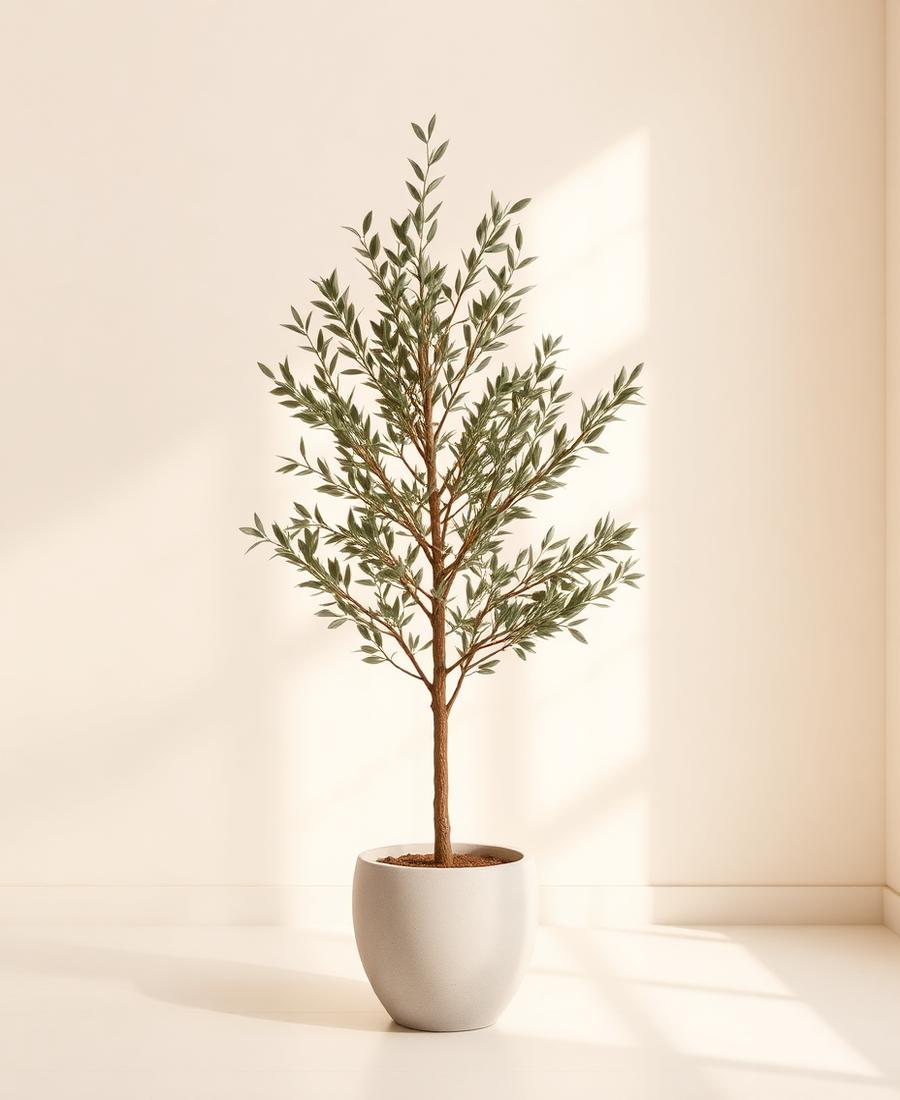

Artificial Cedar Topiary Bushes — 60 to 180 cm, Single or Set of 2
60 cm - 180 cm
From $169 CAD — request a quote
Questions before you order? Email support@eververda.com
Artificial grasses, ferns and shrubs are the mid and low layer of a planting scheme - boxwood, ornamental grasses, ferns and small filler foliage. They sit between and beneath the trees, and they are what stops a group of artificial plants reading as a row of separate pots.
Showing 11 of 11 products
60 cm - 180 cm
From $169 CAD — request a quote

From $279 CAD — request a quote

From $279 CAD — request a quote

From $439 CAD — request a quote

From $649 CAD — request a quote

48 in
From $599 CAD — request a quote

7 ft (213 cm)
From $689 CAD — request a quote

4 ft
From $369 CAD — request a quote


17.3 in - 23.2 in diameter
From $249 CAD — request a quote

36 in - 60 in
From $329 CAD — request a quote
Artificial grasses, ferns and shrubs are the mid and low layer of a planting scheme - boxwood, ornamental grasses, ferns and small filler foliage. They sit between and beneath the trees, and they are what stops a group of artificial plants reading as a row of separate pots. Designers, stagers and commercial fit-outs use them structurally rather than decoratively.
At this scale, more convincingly than at any other, because grasses and shrubs are forgiving subjects. A tree has a trunk that must survive close inspection. A clump of ornamental grass is a mass of thin blades where the eye has nothing single to fix on, and boxwood is dense enough that overall texture matters far more than any individual leaf. Outdoors this works better still, since people read garden planting from further away and expect it to look a little weathered. The giveaways to avoid are uniform colour and a flat top - real grasses vary in tone and fall at different heights, so buy mixed-tone pieces and shape them out unevenly on installation.
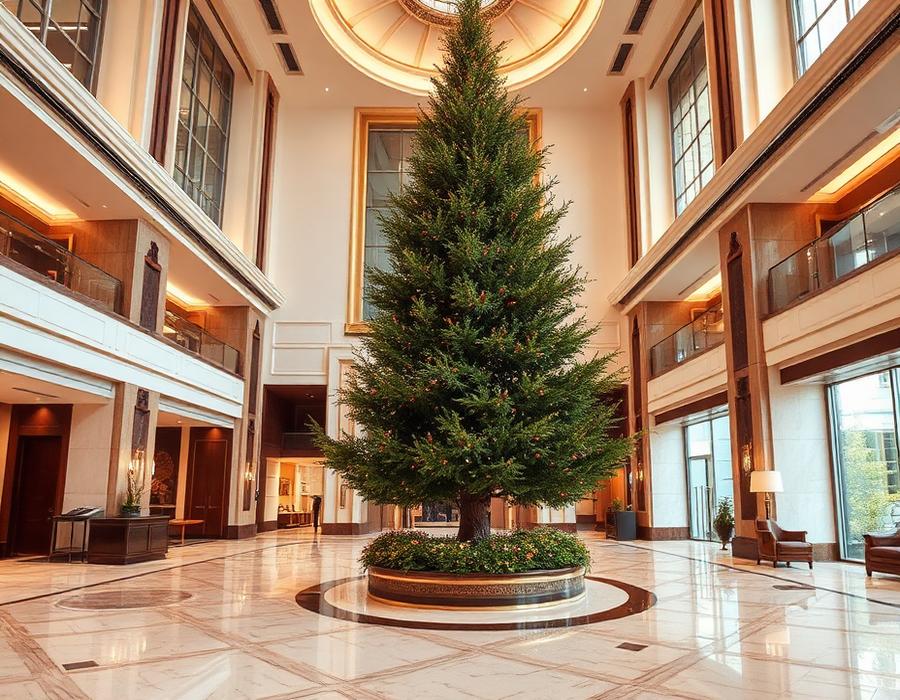
Layer the heights and let the planting touch. The reason a hotel lobby scheme looks designed and a home scheme often does not is that the commercial version has three tiers - a tree, a mid-height shrub, and low grass or fern spilling over the front edge - with no visible strip of floor between them. Group in odd numbers, vary the pot heights so the foliage staggers rather than lines up, and use trailing pieces to break the rim of the planter. One tree surrounded by four low pieces will always beat five trees in a row. Browse Artificial Plants.
Size these against the tree they support, not against the room. A reliable rule is that the mid layer should reach roughly a third to a half of the height of the tree beside it, and the low layer roughly a third of the mid layer. In a green wall or a planter run, work in linear metres rather than plant count and buy enough to overlap, because sparse planting reads as artificial far faster than dense planting does. See Green Walls and Medium Trees.
Yes, thin blades and dense frond clusters collect dust more readily than a broad flat leaf, simply because there is more surface area packed into the same space. A blast of compressed air or a low-heat hairdryer held back a little clears most of it quickly without bending individual blades, which is faster and gentler than trying to wipe each one with a cloth. Give the piece a shake outdoors first if it has been in storage, then finish with air rather than water.
Survival depends on the material rather than the species look, so check whether a specific piece is stated as UV-stabilised and outdoor-rated before leaving it out. Untreated foliage will chalk, stiffen and fade within a season or two of direct summer sun, and freeze-thaw cycles are harder on foliage than on a solid trunk. For anything staying outside year-round, choose from our UV-Resistant Outdoor range rather than an indoor-grade piece.
Very little compared with a floor tree. Most ship potted and ready to place, with blades or fronds compressed flat for the box, so the main task is fluffing them back out into a natural spread by hand, which takes a minute or two per piece. Topiary balls and spirals hold their shape as shipped. No tools are required. See our unboxing and shaping guide for the general technique.
It varies by piece: some ship in a stated decorative pot, while others arrive in a plain nursery pot meant to sit inside a container you choose, which is common for pieces sold as part of a layered planting scheme where the pot is meant to disappear behind other foliage. Swapping to your own planter generally works fine at this scale, since grasses, ferns and shrubs are lighter and less top-heavy than a tall floor tree.
A real boxwood needs regular trimming to hold a spiral or ball shape and can suffer blight in humid summers; a real fern is fussy about humidity and browns quickly in dry winter heat or direct sun, both common indoors in Canada. A faux version holds its exact shape and colour indefinitely in whatever light and humidity the spot actually has, which matters most for the small, precisely shaped forms like topiary where a real plant drifting out of shape is the most visible failure.