
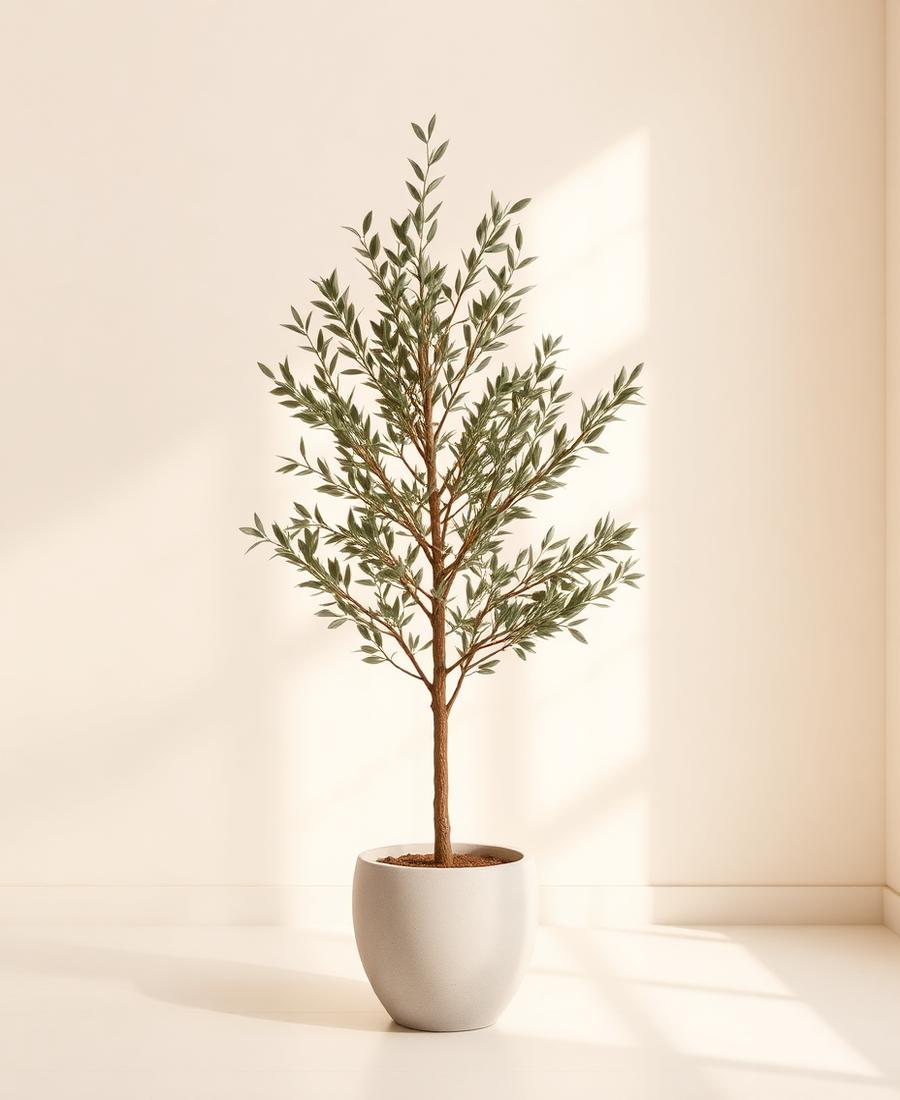


Artificial Willow Tree — 5 ft, Interlocking Root Clusters in a Black Pot
5 ft (152 cm), single size
From $469 CAD — request a quote
Questions before you order? Email support@eververda.com
Artificial willow trees are long, trailing, downward-falling branch forms — the only trees in the range whose foliage hangs rather than reaches. Faux willows are used to soften hard architecture from above: over seating areas, down stairwells, across double-height atriums, and as the anchor of event and photo installations where movement matters more than mass.
Showing 1 of 1 product
5 ft (152 cm), single size
From $469 CAD — request a quote
Artificial willow trees are long, trailing, downward-falling branch forms — the only trees in the range whose foliage hangs rather than reaches. Faux willows are used to soften hard architecture from above: over seating areas, down stairwells, across double-height atriums, and as the anchor of event and photo installations where movement matters more than mass.
Anywhere the interesting space is overhead. A willow's real value is that it occupies vertical air without occupying floor — the branch curtain falls through a void that would otherwise be dead volume, which is why they suit mezzanine edges, stair returns, atriums and the space above a banquette or bar. They also read beautifully against light: place one with a window or a downlight behind it and the trailing branches separate into individual strands instead of reading as a single mass. Related: For Weddings & Events.
They can, and it is worth knowing how to manage it. Trailing branches are wired so they hold whatever curve you set, but they also take a permanent set from however they were packed, so a willow unboxed after a year in storage often arrives kinked. Work each branch from the trunk outward with both hands to reopen the curve, then let the tree hang for a day before you judge it. Hanging is the operative word — willows look wrong propped up, and right when their weight is genuinely falling.
Measure the drop, not the height. A willow's stated height is trunk plus crown, but what decides whether it works is how far the branches fall below that crown — typically 1 to 2 m on a full-size specimen. Under a 2.4 m ceiling a tall willow pools its branches on the floor, which reads as a mistake rather than a choice, so 5 to 6 ft is the sensible domestic size. Full-height willows want 3.5 m or more, which in practice means an atrium, a stairwell or a marquee. For other tall narrow forms see Large Artificial Trees and Artificial Birch Trees.
Work with the fall of the branches rather than against it — a soft brush or a vacuum on low suction with a brush attachment, moving downward along each strand the way the foliage already hangs. A cool hairdryer on low airflow clears dust from clusters where strands overlap. Avoid lifting or bunching branches to dust them, since that's what creates the kinks described above; let them hang and work around them instead.
Only where the product page states outdoor or covered-outdoor placement — most willows in this range are built for indoor spans rather than weather exposure, since the trailing branches are typically finer than a broad-canopy outdoor tree's. Where a piece is rated for it, UV-stabilised foliage matters for sun exposure and a secured hanging point matters for wind, more than the cold itself. See artificial plants outdoors in a Canadian winter.
Check the individual product page — some ship with one and some ship as tree only. Because a willow's visual weight hangs below the crown rather than spreading outward like a broadleaf canopy, the pot matters less for stability than for a tree with a wide top, but a base with real weight is still worth choosing over a purely decorative pot for anything installed at height.
Yes — the stated height, trunk plus crown, is what ships. As explained above, that figure doesn't tell you the branch drop on its own, so check both numbers on the product page rather than judging by a photo, where a willow hung against an empty wall can look taller or shorter than it is with nothing nearby for scale.
A living weeping willow grows quickly into a large outdoor tree with an aggressive root system, and it isn't a houseplant or an indoor specimen at any scale — it belongs in a garden with room to spread. A faux willow gives you the trailing silhouette indoors, at a fixed size, with no root concerns and no seasonal bare branches. What it can't offer is the real tree's scale or its outdoor presence in a landscape.